3: Biodiversity Concepts and Measures
Conservation Biology
Wed Sep 2, 2026
Conservation Biology - Wed Sep 2, 2026
3: Biodiversity Concepts and Measures
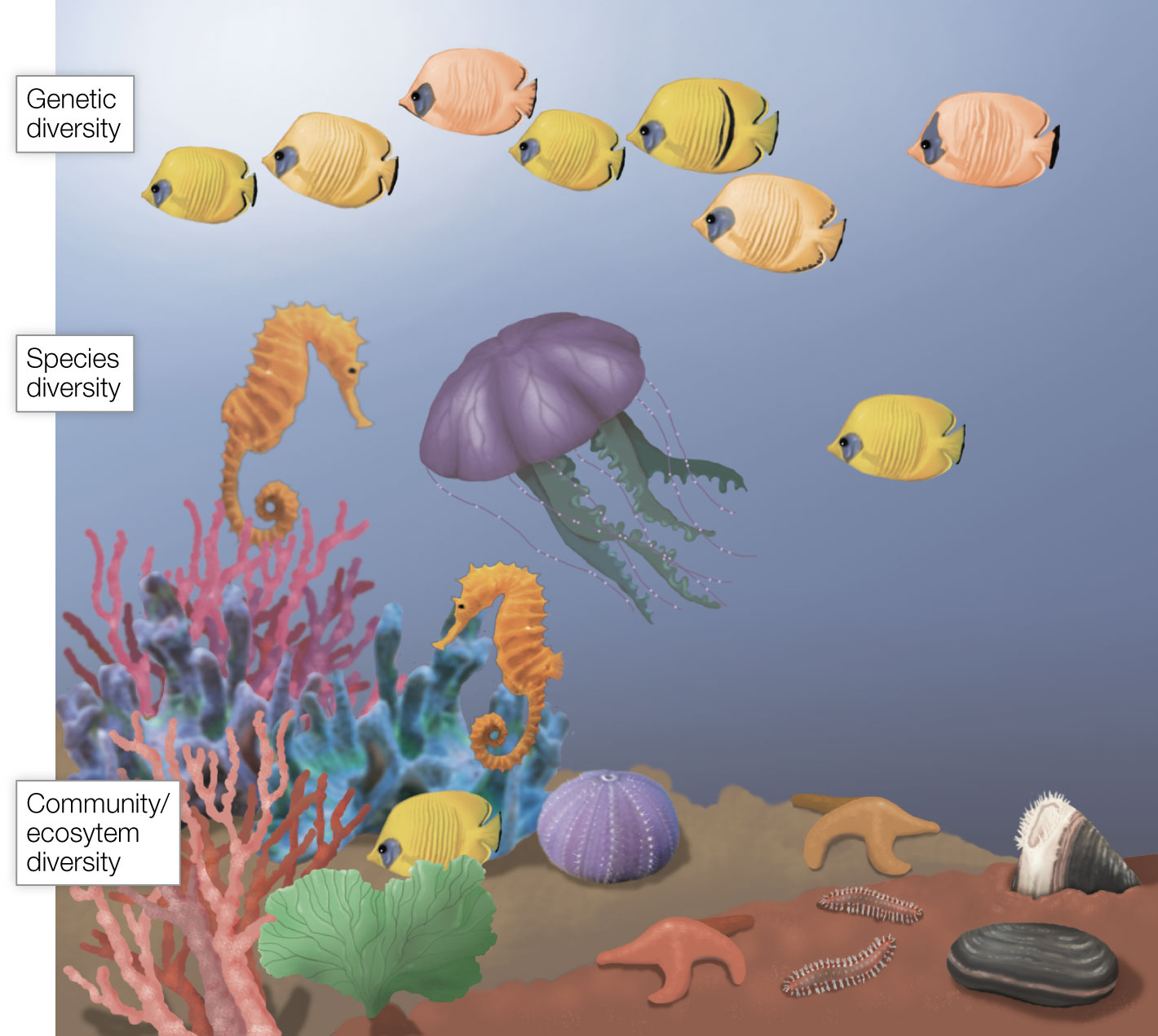
3.1 Hierarchical Levels of Biodiversity
- Genetic diversity
-
The genetic variation within species, both among individuals within single populations and among geographically distinct populations
- Species diversity
-
The variety of species that comprise a biological community—the collection of species that occupy and interact in a particular location
- Community and ecosystem diversity
-
The different biological communities and their associated ecosystems that comprise whole landscapes
Population Genetics
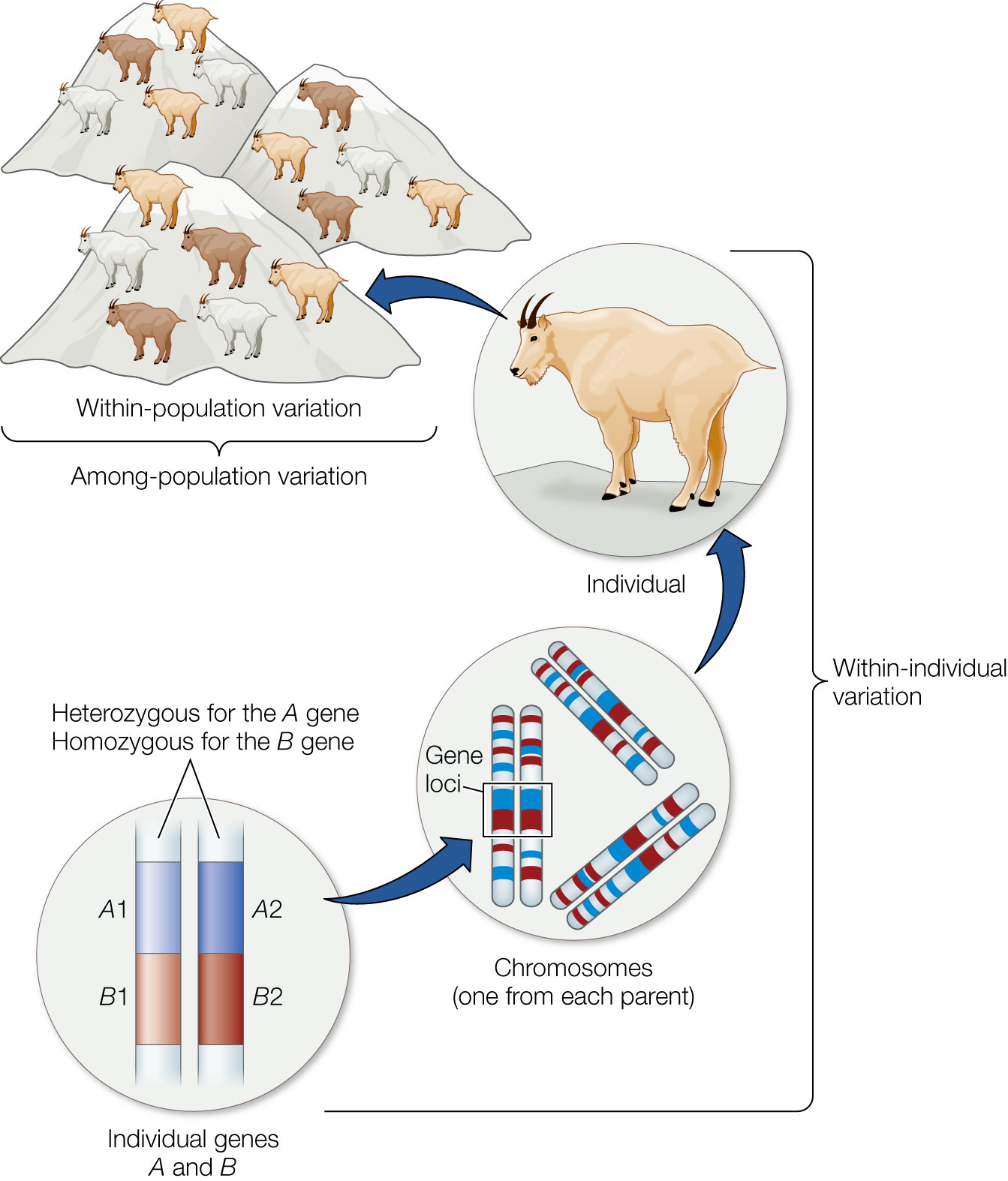
Individuals all have the same set of homologous chromosomes.
The ____ on those chromosomes are represented by different ____.
Population Genetics
Individuals all have the same set of homologous chromosomes.
The genes on those chromosomes are represented by different alleles.
Population Genetics
____ are different forms of the same ____.
Population Genetics
Alleles are different forms of the same gene.
We could also describe them as sequences of DNA that are found on the same gene ______.
Population Genetics
Alleles are different forms of the same gene.
We could also describe them as sequences of DNA that are found on the same gene locus.
Genetic Inheritance
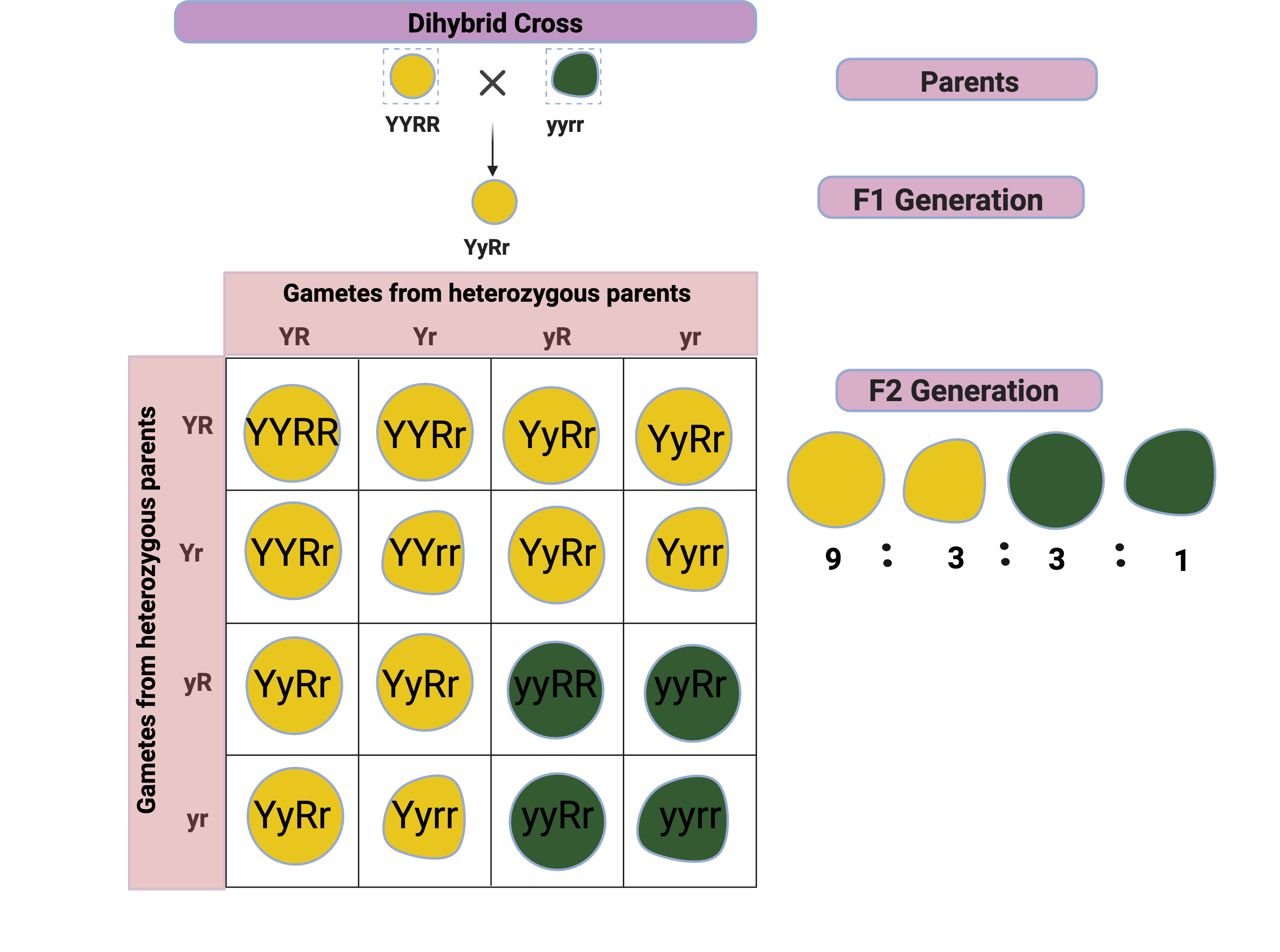
For the F2 Generation:
- What is the genotype frequency of YyRr?
- What is the allele frequency of r?
- If we only consider the Y gene, what is the frequency of heterozygotes?
- If we only consider the R gene, what is the frequency of homozygotes?
Markers in Population Genetics
- Polymorphic Locus
-
A gene for which more than one allele exists in the population
- Polymorphism
-
the fraction of gene loci in which alternative alleles of a gene occur
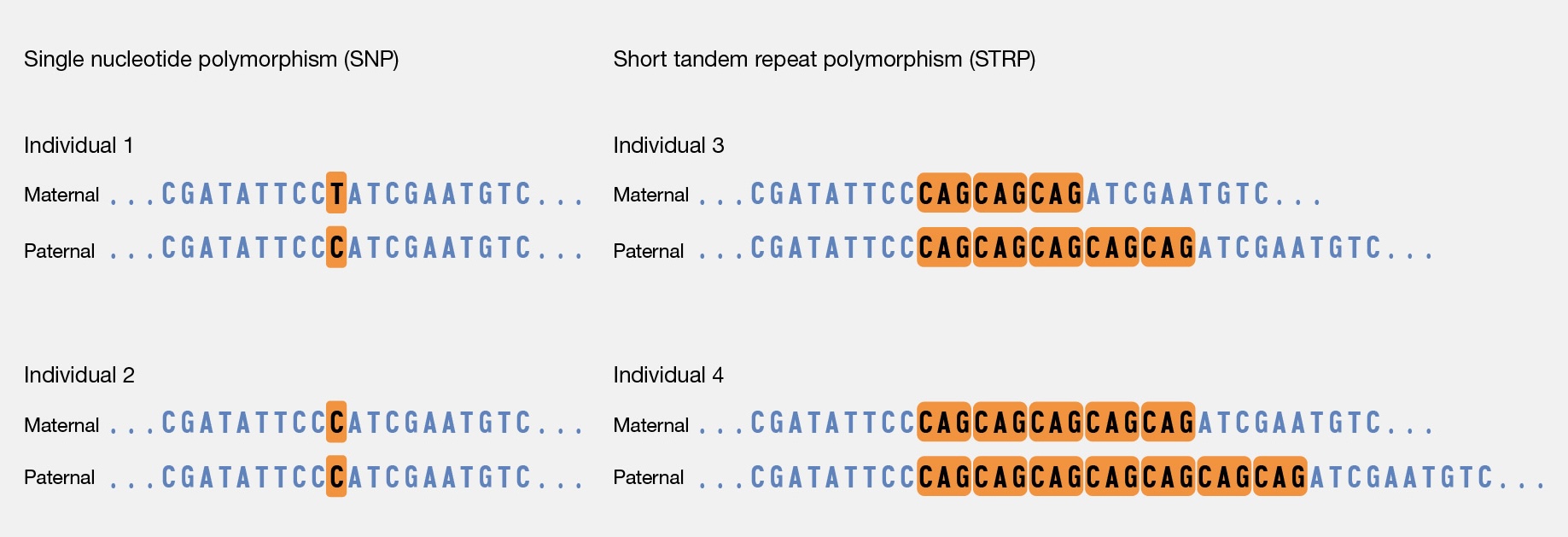
Measures of Genetic Diversity
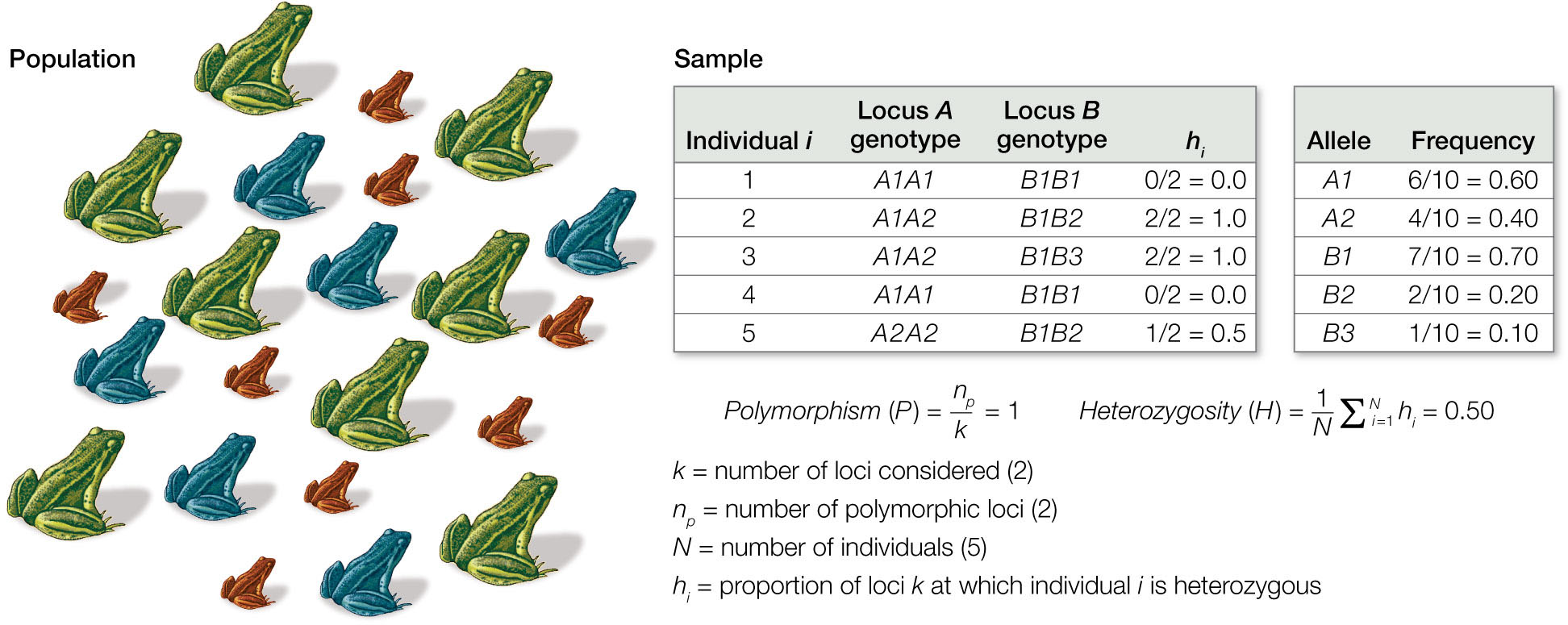
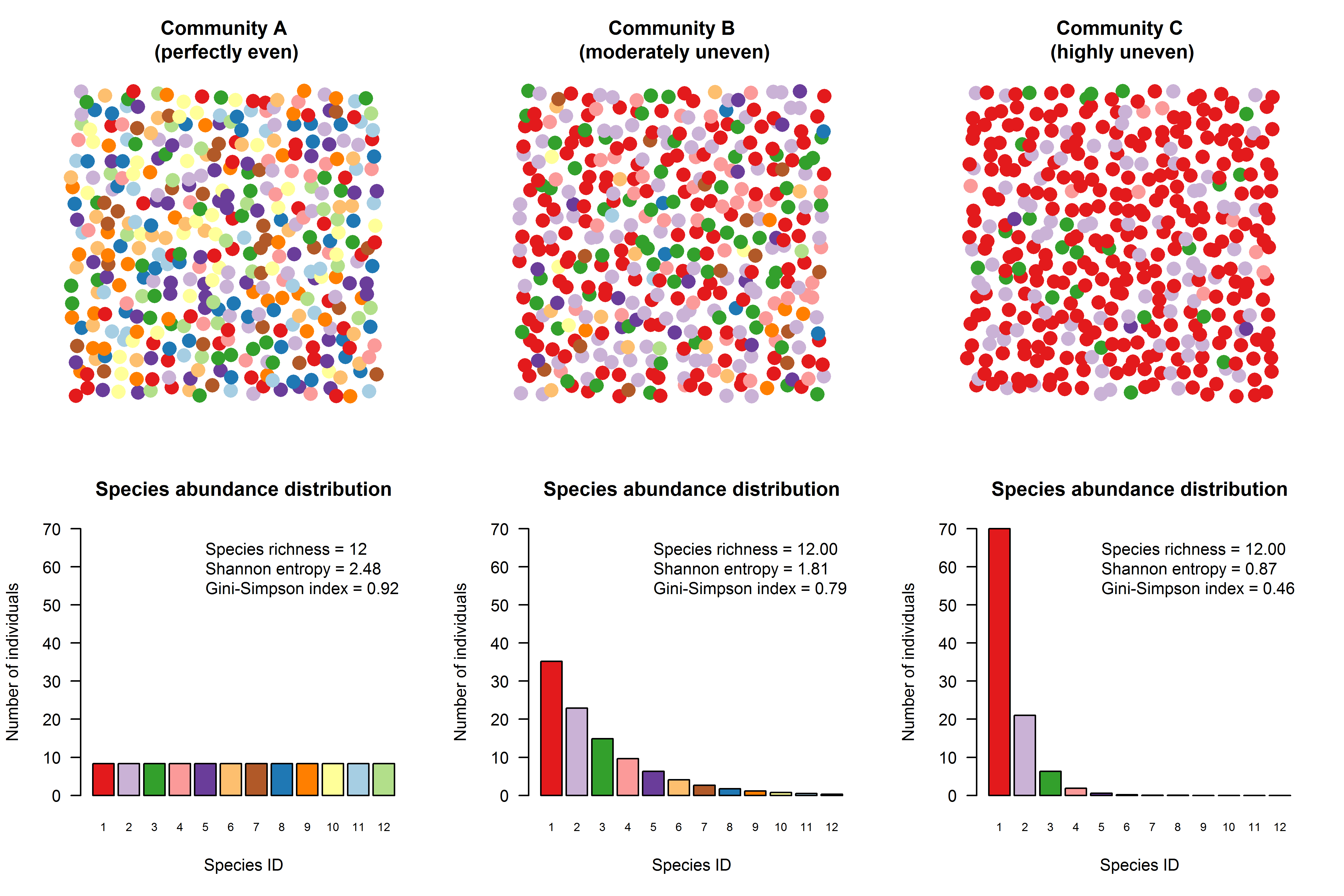
Measures of Species Diversity
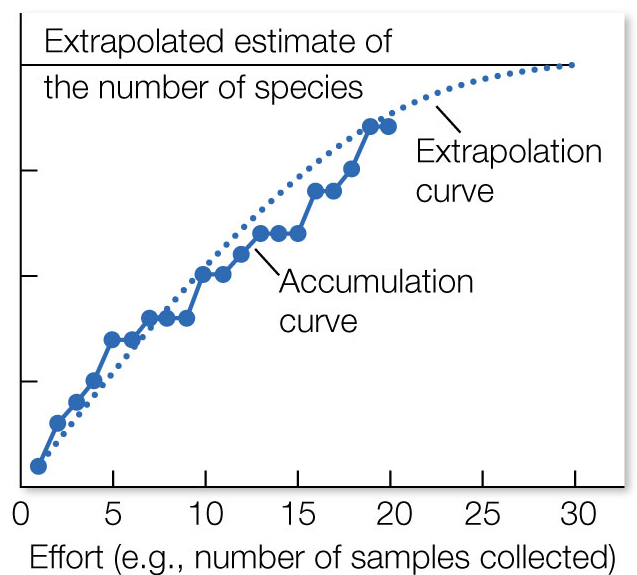
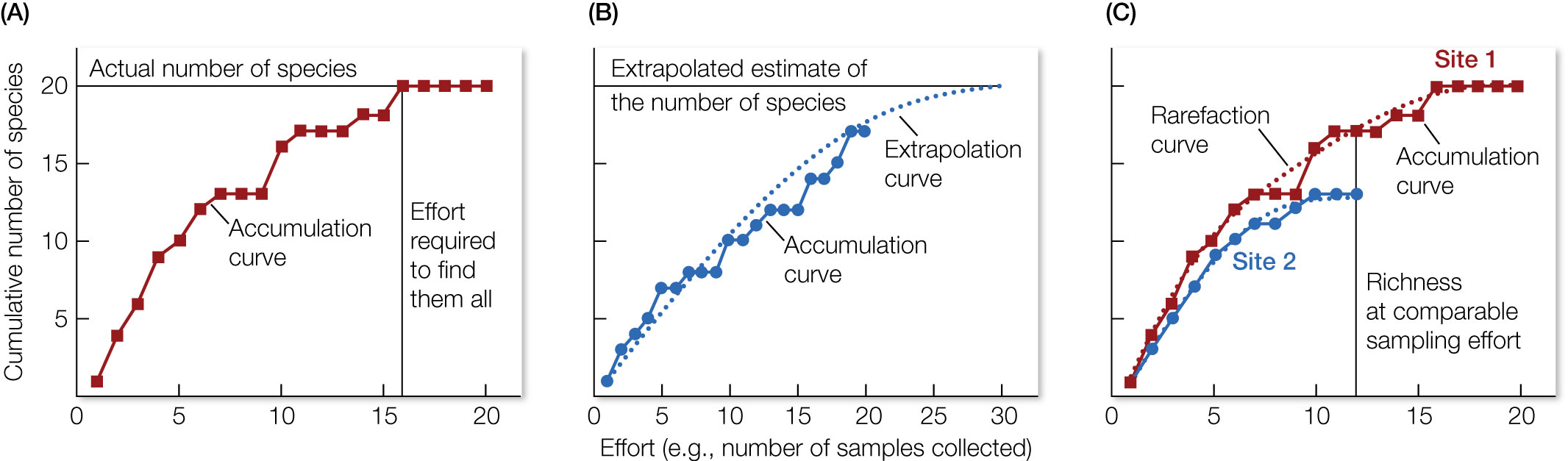
Species Accumulation Curves
- Used to show when sampling is complete and all species have been identified
- Quantifies the number of species found (y) per sampling effort (x).
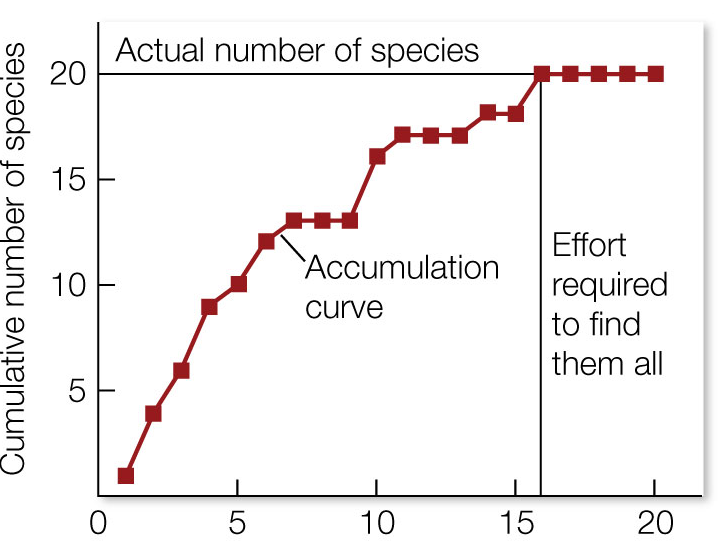
N samples
Extrapolation Curves
Fit to data from an Accumulation curve to estimate how many species there might be.
N samples
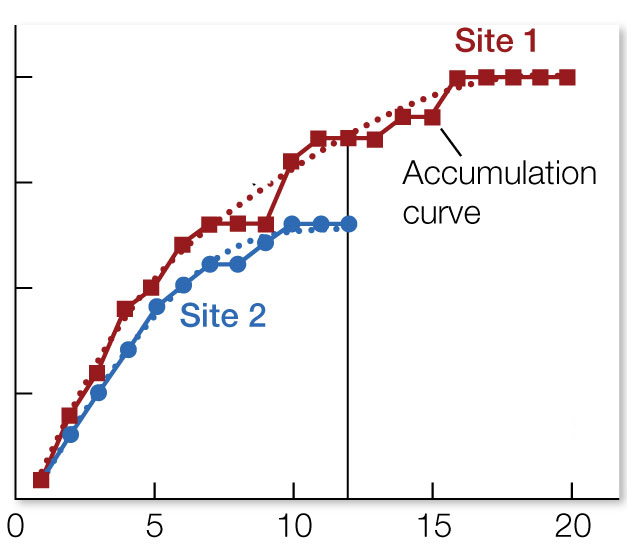
Comparing Sampling Efforts
At which site would you expect to document more species?
- Probably at Site 1, where sampling effort is greater.
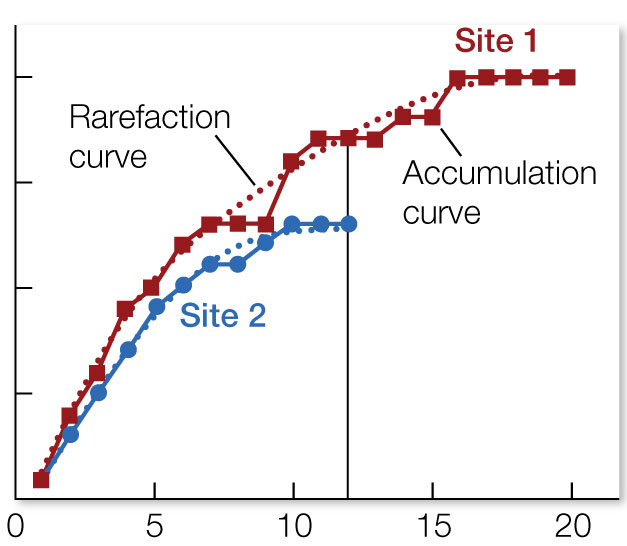
How can we test whether site differences are meaningful?
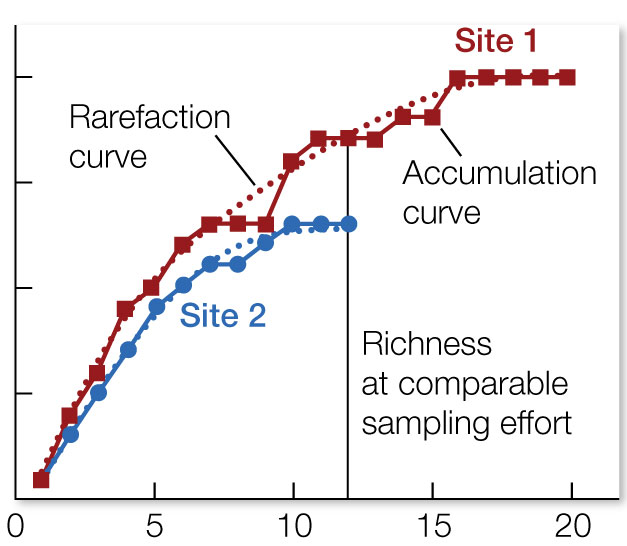
We can rarefy our counts.
- Rarefaction randomly selects a subset of observations from each site to equalize the sampling effort.
- The resulting rarefaction curve can be used to compare species richness at the same level of sampling effort.
N samples
Species Diversity and Sampling Effort
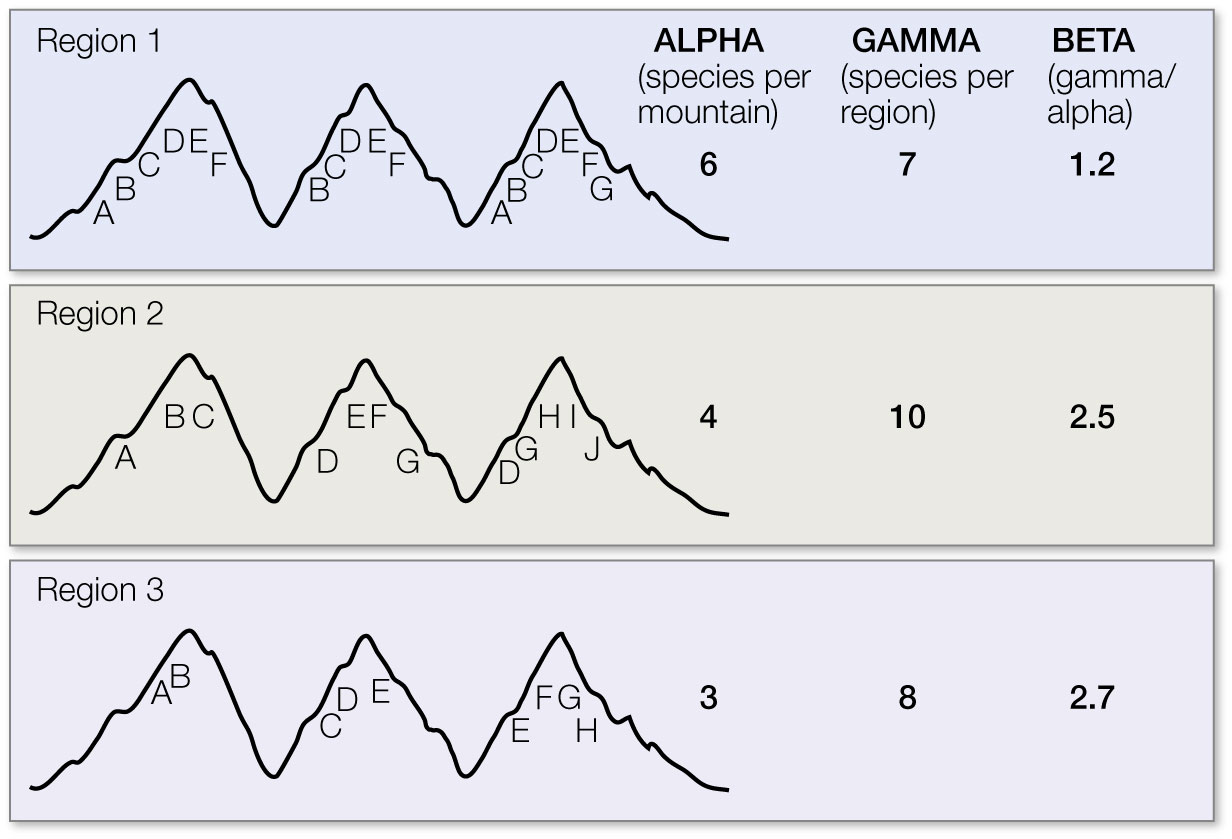
Scales of Biodiversity