Practicing the Scientific Method

BIOL 1750 – Biology II Lab

Dr. Alicia M. Rich

Thu Jan 22, 2026

BIOL 1750 – Biology II Lab
Thu Jan 22, 2026

Practicing the Scientific Method
Dr. Alicia Rich she/her

Assistant Professor of Biology

Environmental Science Program
Director, Rich Lab for Molecular Health

Office Hours
Allwine Hall 413
Remotely via Zoom
Tues 11-1 or Thur 1-2

Emailing

aliciarich@unomaha.edu

Please do not try to contact me via Canvas Messages

Before you send an email, make sure you know exactly what a productive response would look like
A few sentences?
A yes or no?
A specific file?
A time to meet?
After you send an email, expect a response
After 24-48 hours (Not in the evenings or on weekends)

1750 Laboratory Policies

  • You are required to attend and participate in lab in order to successfully complete this course.
    • If you arrive more than 15 minutes late for a lab, you will be counted as absent from that lab.
    • For EXCUSED absences, making up a lab may be done by switching between lab sections, or if necessary, using resources available in Canvas.
  • Your lowest assignment grade and two lowest quiz grades will be dropped.
  • Each lab will begin with a pre/post-lab quiz with questions chosen from a list posted in advance.
    • The quiz will be administered at the beginning of the lab period.
    • If you arrive late, you will miss the quiz.
    • Your name on the quiz form is the method by which attendance is recorded, so if you arrive late (but not more than 15 minutes late) you should ask to put your name on a quiz form, so that you will be recorded as present.
Plagiarism is UNACCEPTABLE.
Please read and sign the 1750 policy agreement and submit it before the end of lab today.
Late reports and assignments
will suffer a 20% penalty for 1-7 days late and will not be accepted if more than 7 days late.

1750 Laboratory Safety

Special medical concerns: SEE INSTRUCTOR

Be a thoughtful worker in lab.
Keep your laboratory bench neat and orderly.
No food or drink in the laboratory.
Always wash your hands after laboratory (and during).
Restrooms
out left, down hall on the right. Restrooms on each floor of building.
Be mindful of apparel and PPE choices
Loose clothing, dangling jewelry and open toe shoes put you at risk.
Goggles and gloves will be provided when needed.
Follow all waste disposal guidelines
Dispose of sharps and broken glass in designated containers.
Dispose of chemicals and specimens in designated containers.

1750 Laboratory Safety

Always report chemical spills to your instructor or TA.
Eyewash station on front sink. There is no safety shower, so pull out eye wash and use as shower if needed.
Never leave an open flame unattended
Fire extinguisher by entrance door and in prep room by door.
Emergency exits
out the door and just left, or out, left, down hall and left.

In Case of Emergency

Emergency number
402-554-2911
In case of emergency evacuations
We will assemble just inside the entrance to the H&K building.

Prelab Quiz

  1. What is an independent variable?
  2. What is a dependent variable?
  3. Can a hypothesis be proven to be true?
  4. Which organism will we use as part of the experiment you design in the first lab?

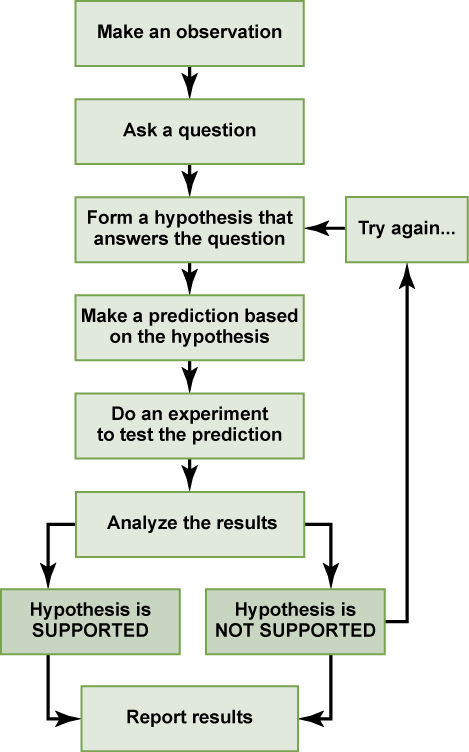
Science is a Process

  1. Determine the variables
  2. Design the experiment
  3. Make predictions
  4. Conduct the experiment
  5. Present and analyze the results
  6. Discuss and disseminate

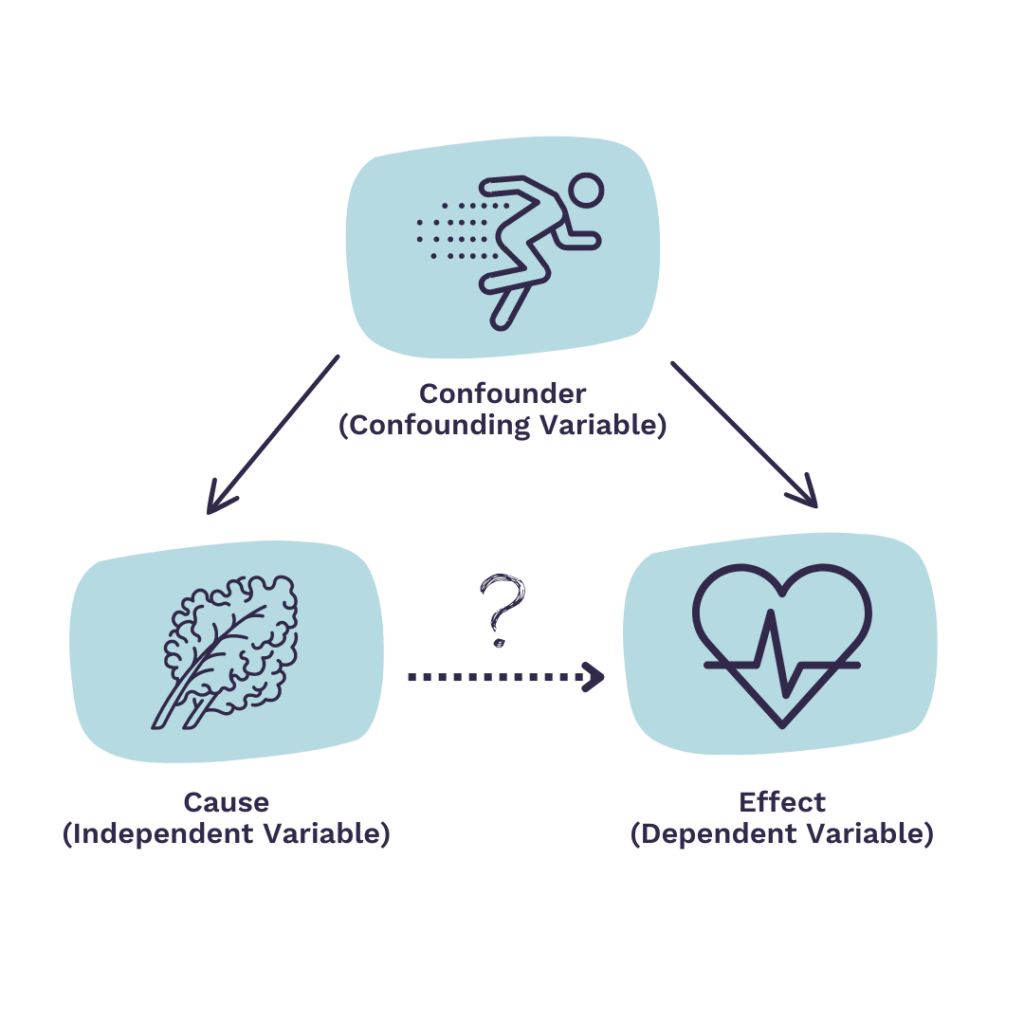
Determine the variables

Dependent (response)
what is measured
Independent (explanatory or predictor)
what is manipulated
Controlled variables
what is kept the same

Design the experiment

  • Level of treatment
    • Manipulation is more, less, 25, 85, etc.
  • Replication at different levels
    • N subjects (biological)
    • N populations (biological)
    • N treatment replicates (technical)
  • Control treatment
    • A “normal” state with which to compare other treatments
Make predictions

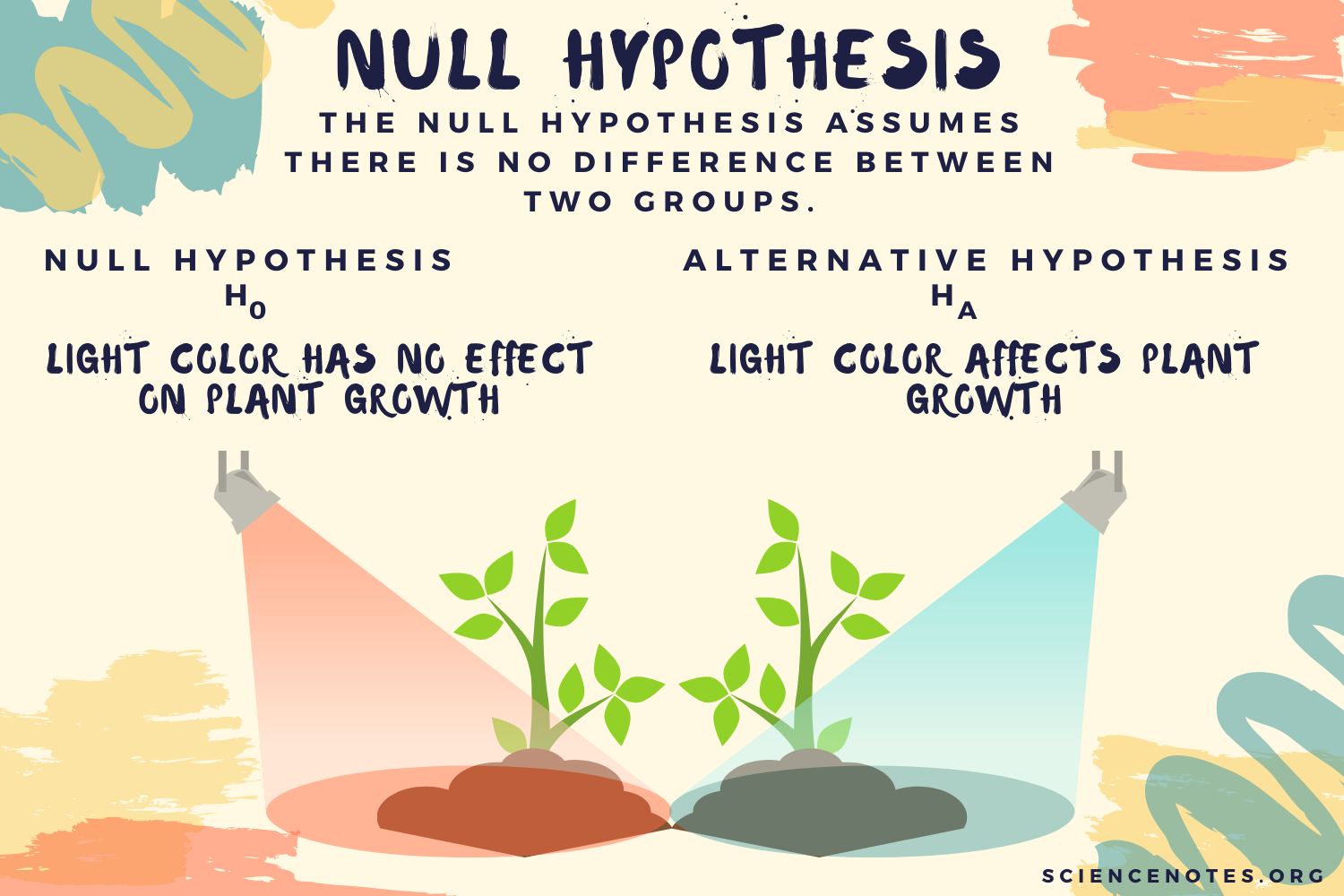
Null hypothesis:
X independent variable has no consistent effect on dependent variable Y.
Rejecting the null hypothesis
implies support for the alternative hypothesis
Alternative hypothesis:
X independent variable has more than a chance effect on dependent variable Y.
To support the alternative hypothesis
we must reject the null hypothesis

We never prove an alternative hypothesis.

Science is a Process

  1. Determine the variables
  2. Design the experiment
  3. Make predictions
  4. Conduct the experiment
  5. Present and analyze the results
  6. Discuss and disseminate

Present and analyze the results
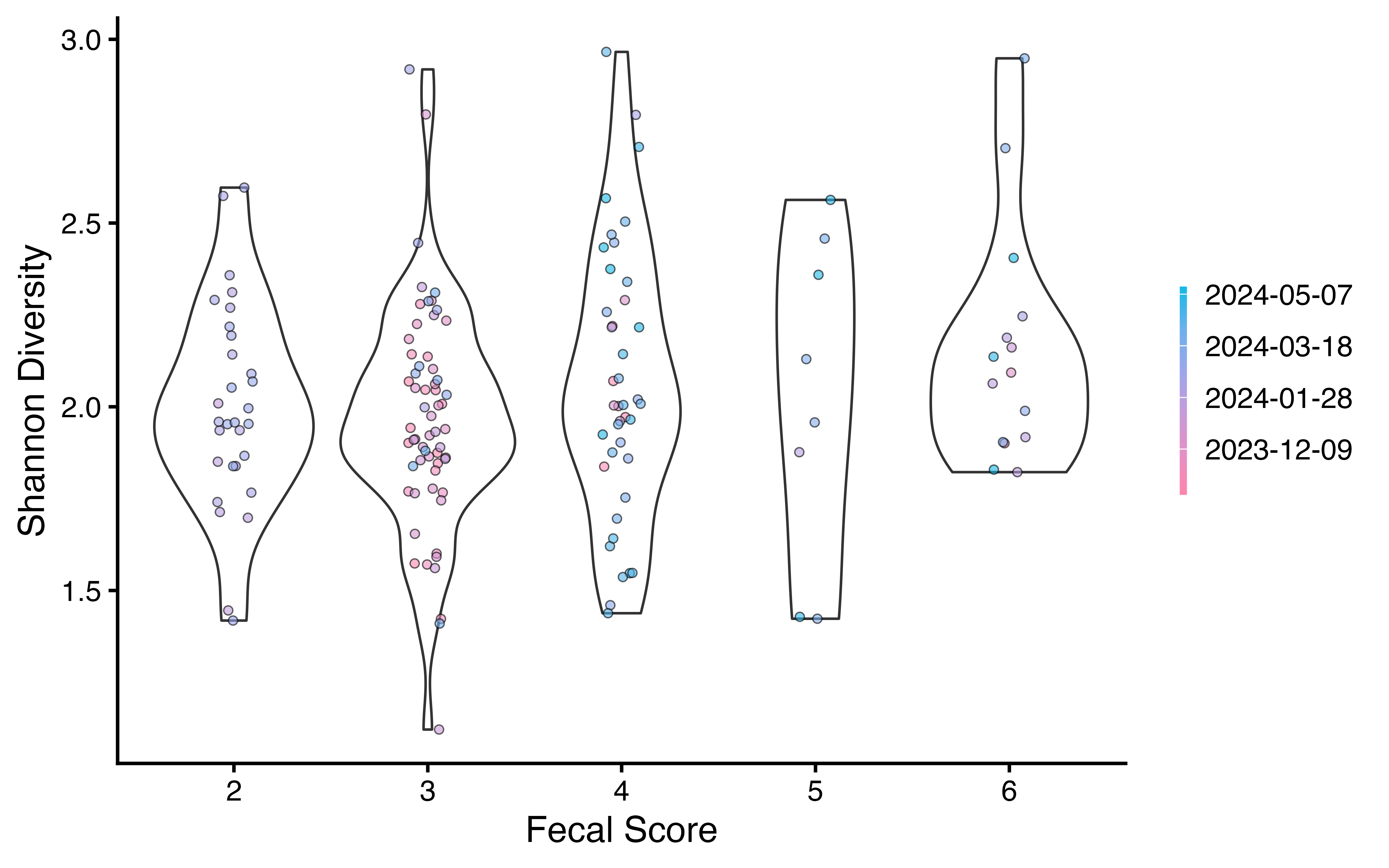
Figure 1: Shannon diversity of the fecal microbiome across fecal consistency scores in an adult male pygmy loris (Xanthonycticebus pygmaeus). Violin plots summarize the distribution of Shannon diversity values for each ordinal fecal consistency score, with individual points representing daily observations. Point colors represent sampling date to illustrate temporal dispersion within fecal score categories. This figure shows distributions for descriptive comparison and are not intended to imply normality or continuous scaling of fecal consistency scores.
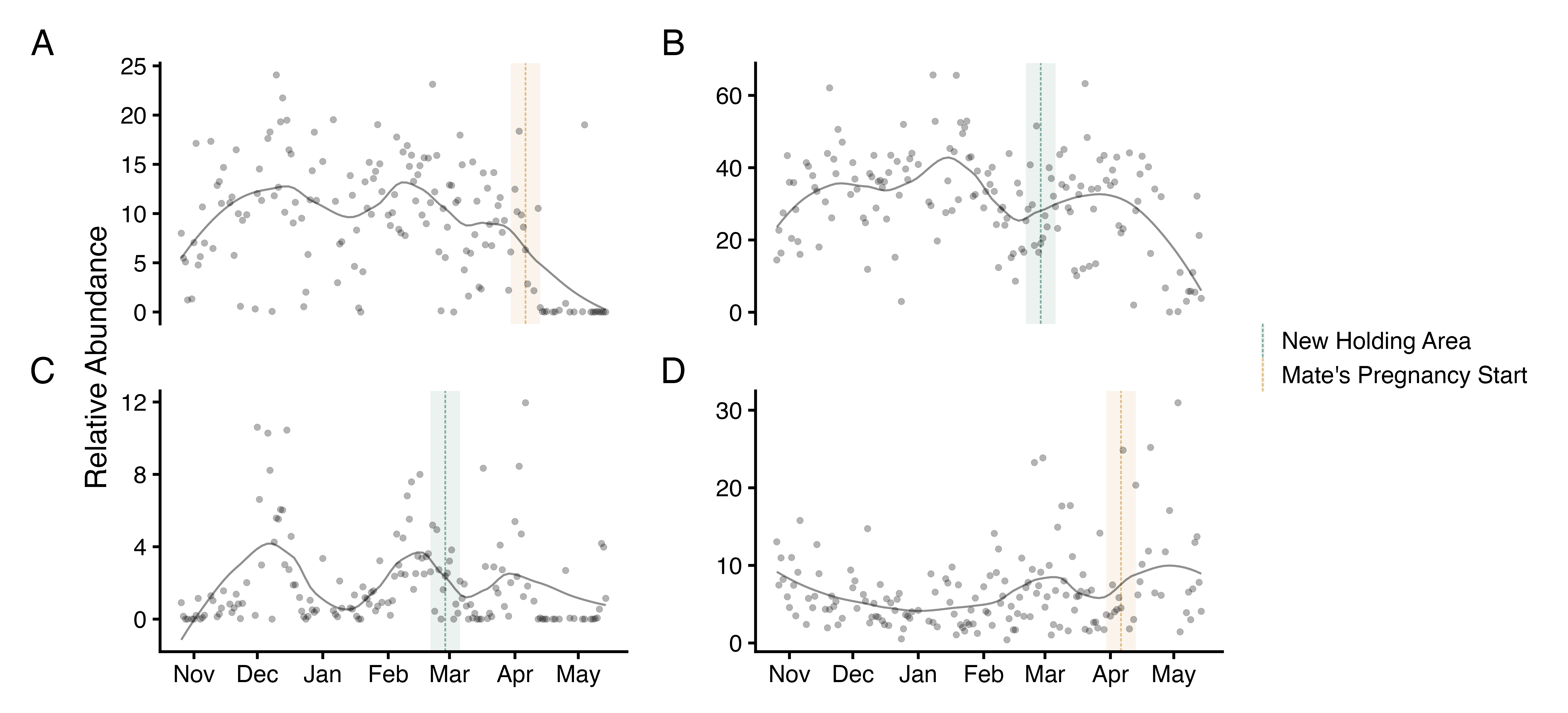
Figure 2: Longitudinal relative abundance trajectories for representative genera illustrating distinct response timing classifications associated with contextual events. Panels show trajectories for (A) Phascolarctobacterium, (B) Megamonas, (C) Segatella, and (D) Campylobacter. Points represent observed relative abundances and curves summarize smoothed temporal trends. Shaded regions indicate the ±7-day window used to assess event-aligned responses, with dashed lines marking the timing of the focal contextual event.
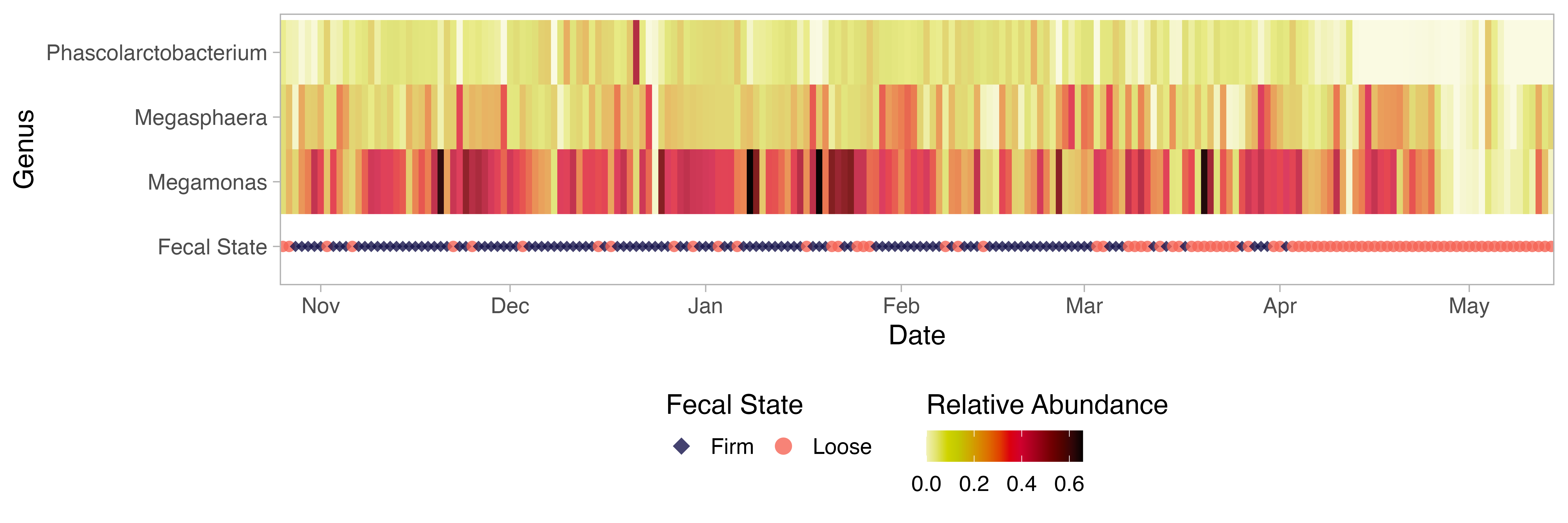
Figure 3: Longitudinal relative abundances of selected bacterial genera associated with fecal consistency state in an adult male pygmy loris (Xanthonycticebus pygmaeus). Heatmap tiles represent genus-level relative abundances across sampling dates, with warmer colors indicating higher relative abundance. Symbols along the lower margin denote fecal consistency state on each sampling date (firm vs loose). Genera shown correspond to candidate taxa identified through exploratory mixed-effects modeling and are presented to illustrate temporal variability rather than discrete state shifts.

Discuss and disseminate

One lab report (manuscript) and one presentation will be required during the semester.

  • Title page/slide
  • (Abstract)
  • Introduction
  • Methods
  • Results
  • Discussion
  • References

Reference Lab 1 when writing your reports.

Today’s Lab: The Scientific Method and Experimental Design

Turn in Assignment Sheets at end of Lab period (20 points)

Exercise 1

The Scientific Method
  • Find, read and assess a scientific paper about termites

Focus on hypotheses and types of variables

Exercise 2

Experimental Design
  • Design and conduct an experiment about termite behavior

Focus on testing your hypothesis and replication

Exercise 1: Scientific Method

  1. Find, read and assess a scientific paper about termites
  • Skim whole paper
  • Focus on the two tables
  • There are two different main experiments
  1. Choose ONE experiment (independent variable) to focus your answers
  • Answer the questions on Assignment Sheet
Spend ONLY 45 minutes on this exercise.
Be done at 10:15 am.

Exercise 2: Experimental Design

  1. Design and conduct an experiment about termite behavior
  • Read manual
  1. Construct two statements: the null hypothesis and the alternative hypothesis

  2. Design your experiment (Have TA/instructor check)

  • Dependent and independent variables
  • Replication at two levels
  • Answer questions on Assignment Sheet

Reminders

No quiz next week!

The Introduction writing assignment takes the place of the pre-lab quiz.

Due at the beginning of lab next week.