Extinction
Conservation Biology
Class Meetings
Dates: 2026-09-23T16:00:00, 2026-09-28T16:00:00, 2026-10-05T16:00:00
Videos or Films Watched
How poaching is changing the face of African elephants
Vox, 03 15, 2017
Video (5:21)
Description
It’s “natural” selection.
Subscribe to our channel! http://goo.gl/0bsAjO
Many thanks to Dr. Joyce H. Poole, Dr. Tammie Matson, Andrew Parker, and African Parks. To learn more about their ongoing work in elephant conservation, visit their websites below:
https://500elephants.org/
https://www.african-parks.org/
https://www.elephantvoices.org/
https://matsonridley.com/
And for a little pick-me-up…
Cute Baby Elephants
https://youtu.be/SNggmeilXDQ
https://youtu.be/JHlWvn_RCQI
https://youtu.be/UeTmE71uEaw
https://youtu.be/gAYCbnEZ4p8
https://youtu.be/t2kAPfUEaZM
Elephants and their ancestors have roamed the African continent for millions of years. They are the largest land animals on earth and can live up to 70 years. Elephants are profoundly intelligent and social creatures. They have trunks that serves as their nose, arm, and fingers. But elephant populations have taken a massive hit to their populations. Despite an international ban on the ivory trade and other laws to protect elephants, their overall populations continue to fall due to habitat loss and rampant poaching for their tusks. Because of that, a once rare trait is being passed onto more African elephants. The trait is tusklessness, The loss of tusks is only the beginning. The real devastation occurs with the loss of a groups matriarch. The oldest and most experienced grandmothers are the family’s living memory of migration routes, friendly elephants, food and water sources, etc. Matriarchs are also, the first in line to protect their families and without them an entire group of elephants can fall apart. But with China banning ivory in 2017, providing stronger incentives to protect elephants, and sustained conservation efforts from organizations like ElephantVoices, African Parks, and others, elephants may stand a chance to roam the continent as their ancestors once did.
Vox.com is a news website that helps you cut through the noise and understand what’s really driving the events in the headlines. Check out http://www.vox.com to get up to speed on everything from Kurdistan to the Kim Kardashian app.
Check out our full video catalog: http://goo.gl/IZONyE
Follow Vox on Twitter: http://goo.gl/XFrZ5H
Or on Facebook: http://goo.gl/U2g06o
Transcript
0:00 · Elephants are one of the most iconic creatures on this planet.
0:04 · They’re the largest land animals, the only surviving members of their order, and they’re highly intelligent, social beings.
0:10 · Reporter #1: “They’re a lot like human babies, actually.”
0:12 · Reporter #2: “These elephants in Thailand can even paint.”
0:14 · Reporter #3: “It is the matriarch who guides the herd. It’s the older females vast life experience that gives them these skills.”
0:23 · African elephants have been here for a million and a half years. And now, human intervention is literally changing the face of this incredible creature.
0:31 · During the 1500s, an estimated twenty-six million elephants roamed the African continent.
0:39 · Today, it’s less than 500,000.
1:03 · In the 1970s and 80s, elephant poaching reached crisis-levels, so in 1989, an international agreement banned the global ivory trade.
CITES (Convention on International Trade in Endangered Species of Wild Fauna and Flora)
1989 1990 Ban goes into effect
1:13 · But in the past several years, poaching has returned to high levels. This chart shows the percentage of african elephant deaths caused by poaching since 2003.
1:21 · Their ivory tusks are basically just large teeth, but for centuries, they’ve been used in artworks, ornaments, jewelry – even piano keys.
1:28 · Ivory’s value has been compared to diamonds – it’s a status symbol.
1:33 · And the rise of China’s middle class has pushed up demand for ivory there, where it sells for around $1100 per kilogram.
1:48 · One-third of an elephant’s tusks are in its skull which contains a pulpy cavity of tissues, blood vessels, and nerves.
1:55 · That means they can’t be preemptively removed by conservationists, an approach that has been applied to rhino horns, which aren’t ivory but are also sought after in Asia.
2:07 · Conservationists can safely remove up to 93% of a rhino’s horn, but it’s not possible to remove that much from elephants.
2:15 · But in recent decades there’s been an increasing trend of elephants being born tuskless.
2:30 · While most African elephants of both sexes have tusks, around 2 to 6 percent are naturally born tuskless.
2:37 · Now, decades of heavy poaching have made that trait more common.
2:41 · This chart shows that elephant populations subject to poaching have higher rates of tusklessness compared to undisturbed populations.
2:49 · Let’s use Gorongosa National Park as an example.
Gorongosa National Park
The Mozambican Civil War
2:57 · Of the older female elephants who survived the war, over half were tuskless.
3:03 · And of the younger females born after the war, 33% were tuskless.
3:09 · Because tuskless elephants were less likely to be killed by poachers, the tuskless trait became more common in the next generation.
3:16 · Scientists have also found that on average, tusks are smaller than they were a century ago.
3:41 · Like tusklessness, smaller tusks provide a survival advantage against poaching. But it comes at a cost.
4:10 · Tusklessness is not likely to save the species from poaching and habitat loss.
4:17 · Yet, there is some hope.
4:19 · Through determined conservation efforts, some African national parks are seeing growth in their elephant populations.
4:27 · And China has announced that by the end of 2017, they will end domestic sales and processing of ivory.
BBC China announces ban on ivory trade by end of 2017
4:34 · Those steps, along with stronger incentives to protect elephant habitats and support local anti-poaching programs, might give elephants the leg or tusk up they need to secure their future on this planet.
4:50 · A big thanks to African Parks and the experts I got to interview for this video.
4:59 · If you wanna learn more about their work in elephant conservation, links to their web sites are in the description box.
5:06 · And if you need a little pick-me-up, don’t worry I got you covered.
5:10 · Links to baby elephant videos are in there too.
This Is Martha, the World’s Last-Known Passenger Pigeon
Smithsonian Channel, 05 27, 2016
Video (2:48)
Description
Smithsonian’s National Museum of Natural History houses one of largest bird collections in the world. One of their most prized birds, Martha, was the last passenger pigeon to ever fly.
From: SERIOUSLY AMAZING OBJECTS: Trailblazers
http://bit.ly/1XCulD1
Transcript
0:00 · Hi. Hi. I’m Chris. Lucia. Nice to meet you.
0:05 · Welcome to the Division of Birds.
0:06 · Thanks. The Smithsonian has one of the largest collections in the world, open to scientists from all over. Anyone who wants to come and study birds. They can either come here and work with us or we can loan the specimens to them.
0:22 · One specimen stands out above the rest.
0:26 · What are you going to see today? Oh my god. You’re kidding me. That’s Martha.
Where is Martha the passenger pigeon?
0:28 · This is Martha. For a pigeon fan like Lucia, this is like seeing a movie star, the very last passenger pigeon. She died in the Cincinnati Zoo at 100 p.m. on the 1st of September, 1914. She was literally alone for about 4 years before she died. And and we knew at that time that there were no other ones in the wild. So this is one of the rare cases when you can actually place an exact time and date on an extinction.
0:59 · Today, Martha sits for posterity beside her companion, appropriately named George, a fellow passenger pigeon who died long before her.
1:10 · Hundreds of years ago, passenger pigeons were estimated to be about a quarter of the total bird population of the United States. A flock a mile wide, flying 60 m an hour, could take days to pass overhead. So where did they go? The story really is not a simple one. There are there are a lot of factors involved with any extinction. In this case, there was a lot of market hunting.
1:36 · They were easy targets because they occurred in these large flocks of over a billion birds. A hunter could go and collect thousands at a time without, you know, really having to try that hard.
1:48 · Passenger pigeons became a staple of the American diet. By the end of the 1800s, millions were being shipped back to cities in the east. Another natural factor sealed their fate. They didn’t lay as many eggs as other pigeons, so it was easier to wipe them out that way, right? Yeah. The the biology of the passenger pigeon was such that they really relied on those large flocks for a couple of reasons. One was protection from predators. you know, there’s safety in numbers and they didn’t have to lay a whole bunch of eggs to reproduce.
2:18 · So, in a matter of just a few decades, we’re just all gone.
2:24 · Once a species is gone, no amount of wishful thinking can bring it back.
2:31 · Birds still go extinct, but the loss of the passenger pigeon made people take notice. It prompted the very first legal protections for migratory birds.
2:42 · [Music]
Are We Living In the Sixth Extinction
Be Smart, 11 17, 2014
Video (9:11)
Description
This time, we’re the asteroid.
Viewers like you help make PBS (Thank you 😃) . Support your local PBS Member Station here: https://to.pbs.org/PBSDSDonate
Subscribe to It’s Okay To Be Smart: http://bit.ly/iotbs_sub
Read “The Sixth Extinction by Elizabeth Kolbert: http://amzn.to/1xGKn0K
Rodolfo Dirzo et al. “Defaunation in the Anthropocene” http://bit.ly/1H7JQdw
Stuart Pimm et al. “Biodiversity of Species and Their Rates of Extinction” http://bit.ly/1A5UZJM
Get to know an endangered species: http://discover.iucnredlist.org/
Half of world’s wildlife has died off in past 40 years: http://bit.ly/1BHl8jR
Have an idea for an episode or an amazing science question you want answered? Leave a comment below!
Produced for PBS Digital Studios
Joe Hanson - Host/Writer
Joe Nicolosi - Director
Amanda Fox - Producer, Spotzen Inc
Kate Eads - Associate Producer
Katie Graham - Director of Photography
Andrew Matthews - Editing/Motion Graphics
Dalton Allen - Post-production intern
John Knudsen - Gaffer
Theme music:
“Ouroboros” by Kevin MacLeod
Stock images by Shutterstock
Join us on Patreon!
https://patreon.com/itsokaytobesmart
http://www.twitter.com/DrJoeHanson
http://www.twitter.com/okaytobesmart
http://www.instagram.com/DrJoeHanson
http://www.instagram.com/okaytobesmart
Merch
https://store.dftba.com/collections/its-okay-to-be-smart
https://www.facebook.com/itsokaytobesmartpbs/
Transcript
The history of extinction
0:02 · [MUSIC] The California Golden Bear The Great Auk The Passenger pigeon The Tasmanian tiger The Pinta Island tortoise The Golden toad All dead. And the killer is right there in the room with you.
0:22 · [MUSIC] The walls of France’s Lascaux cave hold some of humankind’s earliest art, almost mythical species: a wooly rhinoceros, enormous-antlered Megaloceros elk and massive aurochs. The artists lived on, became us, but those cave walls are the last place that those animals still run. They’re gone. Extinct.
0:51 · We all pretty much understand extinction, it’s when a species kicks the proverbial bucket, it rides off into the great biological sunset, bites the dust from whence it came and shall return, which is all just a pretty way of saying that every last one of them dies.
1:05 · Even kids are used to the idea that sometimes groups of living things just… don’t exist anymore. Okay, mostly don’t exist.
Discovering mass events
1:13 · But extinction, as a thing, is a surprisingly new concept. In the 1790’s, by studying various fossils, naturalist Georges Cuvier was the first to show that they were not from living, yet undiscovered creatures, as many thought, but from what he called “lost species”.
1:29 · In the decades to come, scientists like Charles Lyell and ol’ Chuck Darwin began to popularize the idea that Earth’s processes, like geology, evolution, and even extinction, did occur, just very, very, verrrry slowly. So slowly that we’d surely never actually see something go extinct. The idea of so-called catastrophic change was just impossible… It wasn’t until the 1980’s that scientists were able to shake that idea. Geologist Walter Alvarez was puzzled by the sudden disappearance of tiny aquatic fossils between two rock layers that dated from about 66 million years ago, the same age as the last dinosaurs.
2:01 · With the help of his Nobel Prize winning father, he analyzed the chemistry of that boundary and found iridium levels that were off the charts. Now, there’s usually not much iridium in Earth’s crust, but it’s very common in asteroids. So Alvarez’s theory? A 10-km wide rock collided with Earth, wiping out 75% of Earth’s plants and animals. To be honest scientists kinda laughed at it… until the 1991 discovery of the Chicxulub crater near the Yucatan peninsula finally settled it.
2:36 · Everything alive today is a descendent of a survivor of that terrible, horrible, no good, very bad day, the so-called Cretaceous-Paleogene mass extinction event, the most recent of the Big 5.
The big five extinctions
2:50 · You should feel pretty lucky. When we look at all of Earth’s fossil record together, 98% of the species that have ever lived are extinct,. Only they haven’t always disappeared at a constant rate.
3:02 · In the history of life on Earth, we know of 5 different mass extinctions, when a majority of life on Earth at the time disappeared in the blink of a geologic eye.
3:13 · Besides the most recent dino-killer, there’s the Triassic-Jurassic, Late Devonian, Ordivician-Silurian, and the worst of all, the End Permian. This was the mother of mass extinctions, it wiped out as many as 96% of Earth’s species, so it got the best nickname: The Great Dying.
3:34 · We’ve learned about all these just in time to get some bad news: We are in the 6th mass extinction, and this time, we are the asteroid.
The sixth mass extinction
3:46 · The hard facts of life mean that even when things are going pretty well on Earth, there’s a background rate of extinction. Among mammals, for instance, we’d expect to see one species go extinct every 700 years, or maybe one amphibian every thousand years.
4:00 · Studies of current extinction rates say we’re roughly one thousand times past that, and in some groups, like amphibians, are disappearing forty-five thousand times faster than normal.
4:13 · And since there are so many species still unknown or uncharacterized, all of those numbers are probably underestimates.
4:19 · Goodbye, gastric brooding frog, Pyrenean ibex, the Fomosan clouded leopard. We could have been friends.
4:29 · So how do we know we’re to blame?
4:32 · Around 13,000 years ago, as Earth thawed from its most recent big freeze, all of our favorite weird megafauna like the wooly mammoth, Smilodon, and our old friend Megatherium disappeared from the Earth, thanks to a changing climate and the invention of sharp stabby hunting tools. I really wish we had saved the 8-foot long beaver though. That would be awesome.
4:53 · Along the way, through hunting and farming, humans have been altering ecosystems in small but significant ways, but since the Industrial Revolution, man we have really kicked it into overdrive.
5:05 · With the exception of maybe the first bacteria to breathe oxygen into the air, no living thing has ever altered life on Earth to the degree that we have, which is why scientists now refer to current epoch as the Anthropocene.
Drivers of species loss
5:18 · “We are the ultimate problem. There are 7 billion people on the planet, we tend to destroy critical habitats where species live, we tend to be warming the planet, we tend to be very careless about moving species around the planet.”
5:32 · According to a 2014 paper by Stuart Pimm in Science (link in the doobly do), the main cause of the current extinction is human population growth and increased consumption. But those two things lead to a whole mess of threats: The most obvious are climate change and habitat destruction. Scientists found that most land species have very small ranges, so they can’t just pack up and move when we cut down their forest or turn it into a desert.
5:55 · Ocean species have more freedom to move to better waters, unless they’re coral reefs, but thanks to the highest atmospheric CO2 concentrations in 800,000+ years turning the oceans more acidic, anything with a calcium based shell has nowhere to run… or swim. If current trends hold up and the ocean hits pH 7.8 by end of century, it could wipe out ⅓ of the species in the ocean.
6:23 · Then there’s the invaders! Thanks to a species of snake hitching a ride on military cargo in the 1940s, Guam has lost all of its native birds. “I have had it with these (invasive) snakes on this (Guam-bound cargo) plane” In Africa’s Lake Victoria, 100s of species of cichlid fish species vanished after fishermen introduced the Nile Perch. Go us! We’re erasing species faster than we can even name them.
6:50 · Stanford’s Rodolfo Dirzo says that in the past 40 years, invertebrate populations, which might make up 97% of species on Earth, have declined 45% worldwide, and that’s just the ones we know about. (Link in the doobly do to that one too) You have to feel worst for the amphibians. Over the past 350 million years, they’ve survived multiple mass extinctions, but this time we’re giving them all we’ve got.
7:17 · Dirzo gives this loss of animal life a rather harmless sounding name: Defaunation. But there is nothing cute about it. There is not a group of living things on Earth today that is not threatened by the current and coming extinction. That includes us.
Why saving species matters
7:34 · Extinction is about more than gorillas, tigers, polar bears, and rhinos, and the dozens of other “famous” or “charismatic” species out there. Those are all important and worth saving, but we need to care just as much about the humble beetles, the ugly little worms, and the slimy frogs.
7:52 · Every species, big or small, panda or protozoa, is important and worth saving, whether or not we understand exactly why it’s worth saving.
8:02 · John Muir once said, “When we try to pick out anything by itself we find that it is bound fast by a thousand invisible cords that cannot be broken, to everything in the universe.”
8:15 · I’ve put some links down in the description where you can get to know some of Earth’s less-loved endangered species. Go make friends with one.
8:23 · Our knowledge and understanding of the planet’s ecosystems may be incomplete, but our effect on them knows no bounds. I hope the same tools and technology that we’ve used to push life on Earth to the edge might also give us power to bring ‘em back.
8:39 · So what are we gonna do? Let’s talk about it down there.
8:43 · Stay curious.
8:44 · If you want to read more about the brilliant and tragic stories of extinction in this age of humans, check out “The Sixth Extinction” by Elizabeth Kolbert, link in the description.
Vanishing Act
Episode 6 of Human Footprint (Season 2) - Released: 2025-07-30 - Duration: 00:55:39
<iframe width=“560” height=“315” title=Human Footprint Vanishing Act Season 2 allow=“autoplay; encrypted-media; fullscreen” allowfullscreen=“” src=https://player.pbs.org/portalplayer/vanishing-act-4bp9fu/?uid=2486c076-d951-436d-bf82-bac59b0b60f5&userPassportStatus=yes&callsign=KUON&station_id=b107784d-680c-48d5-8d48-ccb870cbb9dc&unsafeDisableUpsellHref=true&unsafeDisableContinuousPlay=true>
Description
Shane meets species on the brink of oblivion, and the people who won’t let them slip away.
Transcript
(“Ready or Not” by Fugees plays) (Shane) The story of our planet is a tale of equal and opposite forces: Life… (female singer) Ready or not, here I come (Shane) …and death.
We’ve never known one without the other.
(female singer) And take it slowly Ready or not (Shane) From the first primordial cell, to the loftiest tree, to beasts we’ve never known, each species walks its own path… …but they all end in the same place.
(female singer) Ready or not (Shane) Extinction is Mother Nature’s way of pruning the Tree of Life.
(female singer) Ready or not (Shane) And she is a tireless arborist.
Ninety-nine percent of all the species that ever existed no longer do.
(female singer) I play my enemies like a game of chess (thunder, explosions) (Shane) Of Earth’s eight million living species, one has become a force of nature in its own right.
And, ironically, we humans– the only species that can fathom extinction– are driving it faster than any other species in our planet’s history.
What fate awaits the Tree of Life in the Age of Humans?
And can we change course before putting our future in peril?
Welcome to the age of humans, where one species can change everything, and what we do reveals who we truly are.
This is Human Footprint.
(serene music) For most of our history, the world was a pretty scary place.
Colossal predators hunted massive herbivores.
And we were definitely on the menu.
(roaring) Today, there aren’t many places where the land still pulses with the ancient rhythms of giants.
(animals grunting) Where you’re grateful for the safety of a safari vehicle.
People travel thousands of miles to experience Africa’s megafauna, yet these iconic animals are dwarfed by the titans that roamed North America in the not-so-distant past.
(“To Live & Die in L.A.” by Tupac Shakur plays) (engine revving) The sprawl of L.A. feels a world apart from the Serengeti… (Tupac) It never rains in Southern To live and die in L.A. (Shane) But if you want to meet the giants that once ruled this continent, this is the place to do it.
(chorus) To live and die in L.A. (vocalizing) (Emily) This is my favorite critter here.
This is a giant ground sloth.
(Shane) Yeah, what makes this your favorite?
(Emily) It’s a sloth and it was giant.
(laughter) (Shane) Need you say more?
(bicycle bell rings) Meet paleontologist Emily Lindsey.
Her commute through L.A.’s urban jungle helps her connect with the present… (relaxing music) …but when she gets to the La Brea Tar Pits, her thoughts turn to the ancient world.
(Emily) This is called a short-faced bear.
(Shane) The idea that there was an animal this large is deeply disturbing to me.
How much bigger is this than, like, a polar bear?
(Emily) A lot.
(laughter) (Shane) Today, La Brea is almost as iconic as Disneyland or Hollywood, drawing visitors from around the world.
But at the start of the 20th century, people flocked here for another reason.
(Emily) The L.A. basin is the richest oil basin of its size in the world.
In the early 20th century, we were producing about a quarter of the world’s oil.
(Shane) In those days, Rancho La Brea was a rich source of the densest form of crude oil: asphalt.
(Emily) They were digging it up and shipping it up to San Francisco, where it was being used to pave the roads.
(Shane) In some places, finding asphalt didn’t even require digging.
(Emily) And because the other thing we have a lot of in L.A. is earthquakes, there are places where these fissures occur in the ground.
(Shane) Here, the asphalt seeps up to the surface in shallow, sticky pools.
Before long, miners noticed bones– a lot of them.
They assumed the bones belonged to cattle from the ranch they were digging on until a traveling geologist took a closer look.
(Emily) And he was like, “That’s not a cow bone.”
It was the saber of the saber-toothed cat.
Exactly what part of the cow do you think this came from?
(laughing) (Emily) Over time, plants, animals, big, small, get stuck in there.
(Shane) At La Brea, the miners had stumbled onto the world’s largest deposit of Pleistocene fossils– an entire ecosystem sealed in an asphalt time capsule.
Soon, a new kind of excavation was underway.
(Emily) In about two and a half years, they collected about a million fossils.
Whoa.
(rhythmic music) Is, like, this density, like, normal for the pits?
(Emily) Yeah, it’s just bone on bone, on bone, on bone, on bone.
It makes them really challenging to excavate.
So, imagine playing, pick-up sticks.
But every stick is, like, a different size and shape and also fragile and also priceless.
And then, somebody has dumped a bunch of cement on top of it.
(Shane) In the last century, scientists have excavated over five million fossils here, representing 40,000 years of ecological history.
(Emily) This is our dire wolf wall.
So, there’s 400 skulls of dire wolves on this wall.
That represents maybe 10% of the dire wolves that we’ve discovered so far at the tar pits.
(serene music) (Shane) Thousands of apex predators died in the pits, along with the massive herbivores they hunted.
Then, suddenly, mysteriously… the megafauna stopped getting stuck.
(Emily) Through intensive radiocarbon dating, we were able to figure out exactly when they stopped getting stuck, which is a proxy for when they stopped being on the landscape.
So, these are the very last animals of their kind that we know of at La Brea, and in many cases, in all of North America.
This is the last dire wolf.
(Shane) Like, the last.
The last one that we know of.
(Shane) Wow.
(Emily) 13,000 years ago.
The last saber-toothed cat that we know of, 13,000 years ago.
This is a piece of the last American lion.
-13,000 years ago?
-Yeah.
13,000 years ago was a bad year.
So, what happened 13,000 years ago?
Gosh.
(Emily) So, this is a Columbian mammoth and these are one of the species here that we know overlapped with and interacted with the first humans in the Americas.
We find a lot of mammoth kill sites.
(Shane) It takes a brave person to point to one of these things and say, “You hungry?”
(Emily) Yeah.
(laughter) (Shane) Humans are brave.
We’re also smart, social, and skilled at making and using tools, which is why, in the late 1960s, paleontologist Paul Martin proposed an idea to explain these extinctions: the “overkill hypothesis.”
(dramatic drumming music) (Emily) We know that humans are perfectly capable of hunting species to extinction.
(Shane) Before the overkill hypothesis, experts attributed the loss of North American megafauna to the end of the last Ice Age.
But Martin questioned how these animals had survived so many previous warming periods, only to vanish when humans arrived.
Overkill had an intuitive appeal amidst the growing environmental movement.
It was easy to envision us hunting species to extinction.
(Emily) One of the counterarguments is, well, you know, these small bands of hunter gatherers couldn’t possibly have, like, driven all the mammoths to extinction.
(Shane) Megafauna kill sites do exist, but they’re rare.
And it’s not just species that ancient humans hunted that vanished, lots of other plants and animals disappeared in the same timeframe.
So, what really happened?
(Emily) The problem is that when you have two things happening at pretty much exactly the same time, you need a really high-resolution understanding.
(Shane) La Brea provides that high-def view of a long-gone ecosystem.
Emily and her team used radiocarbon dating to determine the precise timing of each species’ disappearance, then compared those dates with data gathered from lake-bottom sediment cores, which record climate and vegetation before and after the megafauna disappear.
(Emily) For about the 2,000 years leading up to that, we were going through some pretty substantial climate change.
(Shane) As the Ice Age ended and the ice sheets receded, the climate got warmer and drier.
(Emily) We have multiple mega-droughts that last decades at a time.
We see half of the tree species start to die off.
So, the landscape is becoming more open and drier.
Megafauna populations are decreasing, and then, about 13,200 years ago, something really remarkable happens.
Everything catches on fire.
(flames hissing) (Shane) How do they know this?
Because fire leaves behind charcoal.
So, the amount of charcoal in any layer of a sediment core is a good indication of how much fire was happening.
(Emily) The first 20,000 years of that core record, there’s, like, essentially no evidence of fire.
There’s very, very little charcoal in that record.
(Shane) But over time, more and more charcoal appears in the cores.
(Emily) And then we see an order of magnitude increase in the charcoal, right around 13,200 years ago.
(flames hissing) (Shane) For 400 years, fires engulfed California again and again, burning its forests into charcoal we would discover 13,000 years later.
(Emily) And when we come out of it, we are in a completely new ecosystem.
The large mammals are gone.
This is when we see the modern flora of coastal Southern California, the chaparral, which is an assemblage of fire-adapted species.
And humans are common on the landscape.
(Shane) So, what caused the fires?
(Emily) We don’t really get lightning here.
We don’t really have naturally occurring fire, and in fact, 97% of wildfires in Southern California today are caused by humans.
The most powerful tool that humans have ever invented is fire.
We use it to cook our food, we use it to keep warm, to have light in the dark.
So, humans are spreading in an ecosystem that is really prone to fire.
It’s ready to go, but there isn’t an ignition source until humans bring it into the ecosystem.
That is a plot twist I was not expecting.
It’s really shown me the degree to which humans can have really large-scale impacts on ecosystems, unanticipated impacts, especially when combined with climate change.
(flames hissing) (Shane) That combination sounds uncomfortably familiar today.
(haunting music) (Emily) Extinctions didn’t stop happening at the end of the Pleistocene.
Scientists usually define a mass extinction as 75% or more of all species going extinct.
Okay.
(Emily) And there have been five of these so far.
And the most recent one was 66 million years ago.
There’s a lot of discussion about whether the biodiversity crisis that we’re experiencing today will result in the sixth mass extinction.
(Shane) If it does, it’ll be the first mass extinction caused by a single species.
In the past 200 years, we’ve pushed more than 900 species over the brink–a rate up to a thousand times faster than the natural pace of extinction.
Nearly 50,000 other species are considered threatened by the IUCN.
And few animals are at greater risk today than the megafauna that survived the end of the Pleistocene.
(birds chirping) The story of one of those species starts where you’d least expect.
(serene music) With more than 650 species– many rare or endangered– the San Diego Zoo offers a window into our planet’s living diversity.
But behind the public exhibits, there’s another zoo with specimens found nowhere else.
(Marlys) So, these are our cryo tanks, this is where we keep the samples, living dividing cells from all of the 11,000 individuals and 1,300 species and subspecies, all in primarily three tanks.
(“Got ’Til It’s Gone” by Janet Jackson, Q-Tip, and Joni plays) (Shane) If the Frozen Zoo had a zookeeper, it would be Marlys Houck.
Her bespoke beaded wine glass charms keep her guests from mixing up their drinks.
(female singer) Don’t it always seem to go (Shane) And that attention to detail pays off at work, too.
(Marlys) So, in there is the liquid nitrogen.
Each one of these vials contains about one to three million living cells.
(Shane) Oh, wow.
Today, the Frozen Zoo is the largest, most diverse, and longest-running cryobank in the world.
But when it started in the 1970s, its ambitions felt like science fiction.
(Marlys) It was started by Dr. Kurt Benirschke in 1975.
He had the idea that because we had this new technology where you could grow cells from skin biopsies that we should do this and bank them because we don’t really know how technology will evolve in the future and what those cells could be used for.
(Shane) The samples here aren’t just on ice.
While many of the animals they came from are dead, the cells stored here are very alive.
(Marlys) If you just take a skin biopsy and throw it in the freezer, it will form ice crystals.
And the ice will pierce the cell membrane, destroy the cell, it will no longer be living.
So, we have to go through this process of adding a cryoprotectant.
It’s kind of like an antifreeze… and then they have to be frozen at -196 °C in liquid nitrogen.
And they’re just resting there without aging.
And then, when we pull them back out, they start growing and dividing again.
That’s incredible.
Marlys joined the Frozen Zoo because of her concern for one species in particular.
(Marlys) When I came, there were probably 60 northern white rhinos.
I never would have thought when I first came that I would be watching the extinction of one of the animals I was working with.
(Shane) But that’s exactly what happened.
So, this box is really special.
Maybe you can read what species?
(Shane) Northern white rhino.
(Marlys) Right, and these are not just any northern white rhino, they are Sudan, the last male of the species.
(downbeat music) Put that on… and then you can just go like that.
You are holding living cells of Sudan, the last male northern white rhino of the species.
What does that feel like?
Really intense, actually.
Wow.
(sighs) -Thank you.
-Yeah.
(Shane) His cells may still be alive, but Sudan, the rhino, died on the other side of the globe, with the whole world watching.
(Zach) I’ve been looking after these northern white rhinos for 16 years now.
I consider these rhinos as my second part of my family.
(“Guess Who’s Back” by Rakim plays) (male singer) Yeah (male singer 2) Once again, back is the incredible (male singer) It’s the return of the… (Shane) Meet Zach Mutai.
(male singer) Smashin’ hits, make it hard He started here as a fence builder, but soon became a ranger, and eventually, a caregiver to the last northern white rhinos.
(male singer 2) Incredible, the incredible (Shane) The day Sudan died, Zach was by his side.
(Zach) I spent, like, nine years taking care of Sudan until he passed away on 19th of March day of 2018.
(camera snaps) (melancholic music) (Shane sighs) That must have been a really intense experience.
Yeah…it was such a difficult day.
It was really sad.
Losing a rhino to me is more like losing one of my family members, and it was really such sad news by losing the last male of its kind.
It really shook the whole world.
(news anchor) The world’s last surviving male northern white rhino has died.
(dramatic music) (Shane) Ol Pejeta is one of the world’s most important wildlife conservancies.
Yet even here, under constant surveillance, rhinos aren’t always safe.
(clicking sound) At the turn of the 20th century, half a million rhinos roamed Africa and Asia.
But wars, habitat loss, and most of all, poaching for their horns caused catastrophic declines.
Driven by false beliefs of rhino horn’s healing powers and its luxury status, illegal markets have fueled a deadly trade.
Today, only 5% of rhinos that existed a century ago remain.
The last wild northern white rhinos were killed in the early 2000s.
In a desperate attempt to keep the species alive, conservationists transported the final captive individuals from a zoo in the Czech Republic to create a breeding program here.
Among them were Sudan and two females.
(Zach) So, this is Najin, uh, the mama, and her daughter Fatu is the other one.
And this is their friend, a southern white rhino.
-Okay.
-Yeah.
She’s a good friend and a trainer for them because these two, they were raised in captivity and they never know how to do all natural things like grazing, socializing, and all other natural activities.
Hi, good girl.
I know.
Have you ever feel and touch a rhino?
(Shane) No.
(Zach) You can just come closer to me, you can just feel.
(serene music) Kind of here, just.
It’s quite soft behind the ears but the rest part of the body is quite rough and thick skin.
(Shane) Yeah.
(Zach) Fatu, no.
I think I just fell in love.
(Zach) Fatu, good girl, Fatu.
(Shane) This is one of the most incredible experiences.
(Zach) Could you imagine that you are watching the last two of their kind?
(Shane) Yeah, that’s… (Zach) And they are being killed only for the two horns and nothing else.
(Shane) Yeah.
(Zach) We have got only the last two in the whole entire planet.
If anything happens and they are gone, there will be no more northern white rhinos species.
I’ve come to realize that extinction is something real, and we have just learned that we are the most dangerous creatures on this planet, yeah.
(rhino grunts) Man, this… this is intense.
And… you can’t help but look at these… just big, beautiful animals and just… like, what… what do we do?
How did we get here?
We are a hell of a conundrum as a species.
One hell of a conundrum.
Just like, we’ve had so many opportunities to correct our actions, like– (rhino farting repeatedly) (farting continues unabated) Wow.
That’s impressive.
(soulful music) Even if there were a male of their kind, Najin and Fatu aren’t healthy enough to have babies.
But that’s not stopping scientists from trying this species alive.
(Dr. Florence) Every experience I have is so surreal.
It’s so amazing to be working with such big animals.
So, you basically have the coolest job in the world.
(Dr. Florence) Mm-hmm.
(laughter) (Shane) As one of Ol Pejeta’s resident veterinarians, Dr. Florence Kang’ethe has a big job.
From health check-ups with the conservancy’s anti-poaching dogs, to wound care with a blind and very grumpy black rhino, her to-do list is long.
At the top of it is saving the northern white rhino.
(“If I Ruled the World” by Nas playing) (Dr. Florence) Today, I had to be here early to do stimulations.
So, that involves me injecting a hormone.
(Shane) Dr. Florence is part of a groundbreaking initiative that aims to bring baby northern white rhinos back into the world.
Using cryo-preserved sperm from deceased males, researchers fertilize eggs collected from the last females to create embryos, which they can implant into surrogate females of the closely related southern white rhino.
(Dr. Florence) It’s sad that we have come to that point where we have to do such efforts, but we’re quite hopeful that soon we shall be talking about a northern white rhino baby running around, yeah.
(Shane) If, for whatever reason, the northern white rhino were to go extinct without a baby coming to be, what will we have lost?
We would have lost the chance to redeem ourselves.
(soulful vocalizing) (Shane) The people fighting to save these rhinos embody humanity’s compassion for wild species, yet this species’ story also reveals our capacity and willingness to destroy them.
And while losing a rare species like the northern white rhino is a tragedy… …losing an abundant species can unravel the fabric of an ecosystem.
(percussive hip-hop music) (Sara) You always like it when you can’t get your arms all the way around it, right?
(assistant) I know, that’s a good sign.
(Sara) Beautiful.
(Shane) This is Sara Fern Fitzsimmons.
Her love of spreadsheets– used for everything from planning family weekends to tracking her hikes– is matched only by her passion for a tree whose ghost still haunts Eastern forests.
(Sara) The American Chestnut Foundation is a nonprofit organization dedicated to restoring the American chestnut back to its original range.
(serene music) (Shane) American chestnuts once numbered in the billions.
They sustained wildlife– from deer to turkey, and black bears to passenger pigeons– and they were the foundation for an entire subsistence culture in Appalachia (Sara) So, I grew up in southern West Virginia, and they called it a cradle-to-grave species because it could be used for cribs, coffins, and everything in between.
(Shane) But the American chestnut can’t do any of those things anymore.
The chestnut blight put an end to all that.
(Sara) The chestnut blight is a fungus.
Um, and it was brought over in the 1800s.
(Shane) The blight hitchhiked here on another chestnut species imported from Asia for landscaping.
And exactly what does the blight do to the tree?
(ripping sound) (Sara) The cambium tissue of a tree is its living layer; a fungal spore can get in, germinate in that tissue.
It completely strangles the tree by eating the tissue around it.
It’s pretty gruesome, actually.
(Shane) It sounds like a horror movie.
It really is.
(Shane) The fungus was discovered in 1904, and it spread fast.
(Sara) By 1950, pretty much the entire range from Maine to Georgia had become infected and all the big trees had–had succumbed.
(Shane) Today, the scale of that loss is hard to comprehend.
(Sara) It’s approximately 180 million acres.
And, in some locations, especially Southeastern Pennsylvania, some areas of Massachusetts and Virginia, it was as much as 50% of the forest.
(Shane) Today, some of those places are still covered in trees… but without the chestnut, it’s not the same forest.
No one alive remembers the forest that was.
Some of its parts remain, but the ecosystem is gone.
For the chestnut as a tree, it’s more complicated.
(Sara) So, the American chestnut is not technically extinct.
But, it’s functionally extinct.
There’s an estimated 400 million sprouts out there on the landscape.
(Shane) But Sara’s using the word “sprouts” in the same way that a zombie “sprouts” from its grave.
(Sara) So, this is a pretty classic oak-hickory forest type.
Back in the day, chestnuts would have covered this forest.
(Sara) Here’s a perfect example of an American chestnut that has died back and then is sending up these new re-sprouts.
(Shane) This definitely isn’t a normal sapling.
(Sara) So, the roots are probably older than the blight.
(Shane) Because chestnut blight doesn’t attack the roots.
(Sara) So, this is still original genetics from when the blight first swept through.
It’ll die back, it’ll re-sprout.
This will continue forever, I imagine.
(Shane) It’s like a very sickly phoenix that keeps rising.
(Sara) There you go.
I like that.
-Okay.
-Yeah.
(birds chirping) (Shane) This little tree– through a series of past lives, each cut tragically short– might have been here longer than the blight has.
(Shane) God, this is weird to look at.
The sprouts rarely get large enough to produce nuts because the blight is never far away.
(Sara) Even when the tree dies, the fungus is still around, just, you know, spewing spores into the, into the atmosphere.
(Shane) But that doesn’t mean the American chestnut is doomed.
Sara and her colleagues are trying to breed a better chestnut– one that can hold its own against the blight.
(Sara) You say, “Well, this tree looks really good, it has really good resistance.
This tree looks really good, it has good resistance.”
And then you have to put that together and see if you can build that up in the population.
(Shane) So, where can you find these genes for resistance?
One strategy is to look for the rare American chestnut that’s doing more than just sprouting and dying.
A new find in Central Pennsylvania might be the biggest chestnut tree in the state.
(Sara) There we go.
Ha ha!
Look at that.
That’s awesome.
So, these two are good and then that one’s, that one’s a dud.
(cameraman) That’s exciting.
It’s very exciting.
We grow the tree up, we take the fungus, we put it in the tree and we say, did it survive?
(Shane) It’s painstaking work, made possible by an army of volunteers.
(man) .3, Sara.
(Shane) Another source of potential blight-resistant genes are Chinese chestnut trees, which evolved with the fungus and are naturally resistant.
Scientists are hybridizing the two species, trying to breed trees that are mostly American, but have the disease resistance of the Chinese species.
Some chestnut researchers are even using genome editing, although the exact genetic causes of resistance are still mostly unknown.
(smooth bass music) The chestnut’s allies aren’t taking anything off the table.
(Sara) It’s not that it’s an American chestnut and it’s got, uh, you know, waving an American flag and has eagles flying over, you know, it’s not that which we are trying to, you know, restore into this tree.
It’s its ecological function.
Can it feed the insects?
Can it produce the nuts that all of our wildlife wants to eat?
(serene music) (Shane) Sara knows that American chestnuts won’t reclaim their former glory in her lifetime.
That kind of success could still be generations away.
But that doesn’t make her, or the chestnut’s other champions, any less devoted to the cause.
(Sara) In this world of instant gratification, I think having something that’s more of a slow movement, I think that that’s kind of refreshing.
(Shane) And it’s the least we can do for a species that’s fighting so hard to keep going.
(Shane) Are there any American chestnuts that existed before the blight that are still, like, adult trees now?
(Sara) We think we know of about four that survived the original pandemic.
Four?
Oh, God.
(Sara) It’s not, so, from an estimated four billion, I mean, those aren’t great odds.
(Shane) But one of those one-in-a-billion trees– surviving despite the fungus growing under its bark– stood alone in a farmer’s field, not far away.
What are we all here for, if not to serve a function?
So, to be functionally extinct, to be around but serve no function… somehow seems sadder to me than just being gone.
You think about forests that contained billions of these trees, and now this is one of a handful of this age.
I mean, yeah, one of four.
When chestnuts vanished from Eastern forests, a whole ecosystem was lost to human memory.
An interdependent web of life, built around a single “keystone” species.
For generations, humans have played a similar “keystone” role on the lands they call home.
But with Earth’s cultures disappearing as fast as its biodiversity… these fading connections leave some species in even greater peril.
(deckhand) To the right of that shiny spot.
Making giant splashing– look at that!
(Giles) Yeah, that’s whales.
Good eyes.
Okay.
Everybody hang on.
(Shane) This is Deborah Giles, or as most people know her, Giles.
She’s been studying orcas, also known as killer whales, for nearly 20 years.
But it’s her newest assistant who might just be the team’s MVP.
(dog barks) (Giles) She’s trying to orient to smell.
(Shane) Okay.
(Giles) And then, as we’re coming into the scent cone, she’ll move to the front of the bow, she’ll start maybe whining.
(Shane) Okay, but she’s basically your poop compass.
(Giles) She is our poop compass.
The tip of her nose is gonna point us at that smell.
(Shane) Okay.
(Giles) And then she’s working for playtime, that’s her reward, is playtime.
(Shane) Aww.
You heard that right.
The hero of Giles’s research is an Orca-poop-sniffing pooch named Eba.
(quirky music) (Giles) We go in and we collect the scat sample off the water.
(Shane) Whale poop can yield a smorgasbord of data with minimal disturbance.
DNA identifies the pooper, while other tests paint a detailed picture of the whale’s diet, hormones, and overall health.
Giles is monitoring these orcas, a distinct population known as the southern resident killer whales– because they’re in deep trouble.
(Giles) So, 70% of the females in this population who are getting pregnant are unable to bring their calves to term.
So, they’re miscarrying or the baby is born alive and dies right away, 70%.
How long is an orca pregnant before she gives birth?
Seventeen months.
(Shane) Wow.
Long time.
(grim music) (news anchor) A mother orca whose calf died after birth is still carrying her baby, 17 days later.
(Shane) The southern residents aren’t the only orcas in the Salish Sea, but they are the most endangered.
(Giles) By far the biggest problem is the lack of prey.
(Shane) Most orcas hunt other mammals, but the southern residents prefer fish.
(Giles) The fish eaters are dictated by what mom says, what grandmother says.
These are matriarchal societies.
(Shane) The southern residents are particularly reliant on Chinook or King salmon, which have declined by more than 90% in the last century.
Without the salmon, orca mothers are starving and many can’t carry their babies to term.
Despite legal protection, the population is still dwindling.
(melancholic music) When I visited, there were just 73 left.
(Ellie) We’re a perfect triangle.
We call orca Quahamitchdon.
So, us, Quahamitchdon, and salmon, we need all three to be able to survive.
(Shane) Quahamitchdon are more than neighbors.
(Ellie) We believe they’ve just put on their underwater regalia and they’ve become Quahamitchdon.
Hmm.
(Ellie) So, they are just members of our family.
(Shane) Ellie Kinley is a member of the Lummi Nation.
(mellow music) When she’s not working on a beautiful flower arrangement, you might find Ellie on her boat– fishing in waters that the Lummi, the orca, and the salmon all call home.
(Ellie) I just love the fact that there is no word for famine or starvation in our language, because we never starved.
(Ellie) A lot of our stories talk about all our creeks and rivers being so full of salmon, you could walk across their backs.
(Shane) Whoa.
(Ellie) We’ve always had plenty from the Salish Sea.
(solemn music) (Shane) But in the past century, dams, pollution, development, and overfishing have decimated the salmon runs, while many Lummi fishers have been displaced from their traditional fishing grounds.
And the Lummi’s underwater relatives faced another threat.
(news anchor) The so-called “killer whale” was the first of the whale family to be successfully kept in captivity.
(Shane) In the 1960s and ’70s, amusement parks and aquariums were stocking up, and the southern residents proved easy to catch.
At least 50 orcas, including babies, were captured for aquariums around the world.
A female named Tokitae was kept in a tiny tank at the Miami Seaquarium, mostly alone, for more than half a century.
For the Lummi, the story is painfully resonant.
(Ellie) The aquarium was the residential school.
She was taken there, and the savage was taken out of her.
She was taught to perform.
It’s the same thing our children went through.
(Shane) Like other indigenous children in the U.S. and Canada, Lummi children were often sent to boarding schools with the explicit goal of forced assimilation.
(teacher) Now, let’s pick up where we left off yesterday, with the English lesson.
(Shane) As Ellie sees it, the Lummi and their underwater family have both suffered the same trauma.
And it’s only by repairing that trauma and restoring their connection to the Salish Sea that both can thrive again.
(Ellie) Family takes care of family.
So, it’s our job to make the Salish Sea healthy enough to provide for us all again.
(Shane) That means rebuilding the legendary salmon runs that once sustained the orca and the Lummi.
(tranquil music) (Ellie) We’re still the biggest tribal fishing fleet in the nation, but we were once twice the size.
What you see is people that aren’t fishing.
There’s a lot of broken people.
-I know where home is.
-Mm-hm.
And when I get there, I know it.
I can just stand on the bow of my boat, and I just feel it.
There has never been a generation in my family that hasn’t fished.
(Shane) Mh-hm…never.
Yep.
(Shane) In the Salish Sea, a culture was born of this place and the creatures who share it.
The erosion of that culture puts species at risk just as surely as the loss of those species diminishes the culture.
Our ties to other life run deep.
It might be why extinction feels so wrong.
But look around, and it kinda feels like humans are just getting started.
Whether by ignorance, apathy, or greed, we don’t have any trouble ending another species’ journey.
Which is why, for some, preventing extinction just isn’t enough.
(Beth) We get drawings from kids every week of pictures of mammoths and dodos and thylacine.
Some of them are good, some of them are not.
(laughter) (Shane) This is Beth Shapiro.
She’s trying to put the pieces of lost ecosystems back together using biotechnology to undo extinction.
Beth is chief science officer of Colossal Biosciences, a startup that’s captivated the world with their goal of reviving extinct animals from ancient DNA.
Sound familiar?
(“Jurassic Park” soundtrack plays) (Beth) There’s no DNA in dinosaurs, we can’t do that.
(Shane) I’m never gonna get Jurassic Park?
-No, I’m sorry.
-Okay.
A flesh-and-blood T. rex is still firmly in the realm of sci-fi.
But Colossal is working on species that disappeared more recently.
(news reporter) At Colossal Biosciences in Dallas, the mission is clear.
(researcher) We are less than five years away from seeing mammoths back on the planet.
(Shane) When Beth wrote her first book in 2015, she was…ambivalent about de-extinction.
(Beth) I thought that… it’s a little far-fetched.
Probably too hard, probably too many technical, ethical, ecological hurdles that need to be overcome.
(Shane) But her perspective has evolved.
(Beth) As we make these advances, we are creating new tools that can be applied to stop extinctions from happening today.
(Shane) High on Colossal’s list is a species I got to know at the La Brea Tar Pits.
(wolf howling) In April 2025, Colossal announced the birth of three puppies, which they described as the first living dire wolves in 10,000 years.
They hailed the achievement as “the world’s first de-extinction.”
But a lot of scientists cried foul.
Were these really dire wolves?
(Beth) It is never going to be possible to bring back a species that is 100% identical in every way, genetically, physiologically, behaviorally, to a species that is extinct.
(Shane) In this case, the team created the so-called dire wolves by cloning cells from modern gray wolves, with DNA edited to give them dire wolf-like traits.
The goal isn’t so much to bring back lost species as it is to create new ones to do the same job.
(Beth) I think it’s about interactions in ecosystems, so, I don’t care what species is there that’s doing this really important role, as long as it’s there.
(Shane) Some of Colossal’s critics say, “Okay…then why dire wolves?”
Their Pleistocene ecosystem is long gone.
(wolf howling) But Beth points out that it’s big flashy species like the dire wolf that make this work possible.
(Beth) It is incredibly hard to raise money to do conservation work.
(Shane) Yet Colossal is doing exactly that.
(Beth) That is new money, tech money, that’s directly going to develop tools that we can use to stop species from becoming extinct, and that is really what I think an incredible benefit of the idea of de-extinction is.
It’s energizing.
(Shane) But not everyone is convinced that de-extinction is a goal worth chasing.
(phone ringing) (Christopher) If we bring them back, can we ensure that they stay alive this time?
There’s no good evidence that we can do that.
(“Born to Roll” by Masta Ace plays) (Shane) This is Christopher Preston.
When he isn’t prepping for mountain bike season, Christopher teaches environmental philosophy at the University of Montana.
He’s thought a lot about extinction and why it matters.
(Christopher) In some ways, what you’re losing when you lose a species is you– you’re losing a thread.
You’re losing a DNA thread that goes back in time over tens of millions of years, sometimes.
If you put an end to that continuous chain back into the past, you’ve lost something really that has philosophical value, and arguably, something that has moral value, too.
(Shane) Our species has proven all too capable of breaking those chains, but we can’t necessarily repair them.
(Christopher) To make restitution to a species, that thing has to be around, but it’s not around anymore.
So, what exactly are you making restitution to?
I don’t think we’re making things right again.
(Shane) But even skeptics understand why de-extinction has gotten so much attention.
(dark music) (Christopher) That word “extinction” has such a central place in the whole environmental discussion.
It’s the worst of all environmental sins, and we all know extinction is forever, right?
And so, if someone walks in the room and says, “Hey, extinction, it’s not forever,” we’re gonna look up, and we’re gonna get excited.
(moody music) (Shane) Will de-extinction become part of our conservation toolkit?
I honestly don’t know.
But what would it look like if it did?
What if someone really did bring back a mammoth?
African elephants are among the woolly mammoth’s closest living relatives.
And a big reason why they’re endangered is that they’re not so easy to live with.
Just ask folks in Kenya who have them as neighbors.
To me, they are good animals,1000 (Shane) David Mwiti has been farming on the edge of Kenya’s Lewa Wildlife Conservancy for 30 years.
(“Jamboree” by Naughty by Nature feat.
Zhané plays) (male singer) I want to see y’all who wanna plan with me Wave your hands across the land If we family Say hot damn (Shane) Most of his neighbors rely on their farms to make a living.
So, when elephants raid their fields, the results can be devastating.
(Shane) Whoa.
(Shane) And hungry elephants aren’t just destructive, they’re dangerous.
-Okay.
-Yeah.
(Shane) But everything’s different now.
(serene music) (Shane) Okay.
(Shane) This electrified fence keeps most elephants out of the village and out of harm’s way.
(Shane) Nearby, an elephant underpass prevents deadly vehicle collisions on the highway.
These huge infrastructure investments are part of a bigger strategy to make human-elephant coexistence possible.
(“Fight the Power” by Public Enemy plays) (male singer) Let’s get down to business Mental self defensive fitness (Shane) Meet John Pameri, head of general security at Lewa Conservancy.
The way John takes care of himself, you’d never know he’s been working here for 30 years.
As human and elephant populations have grown, managing conflict between the two has gotten more demanding.
(Shane) Some elephants cause more problems than others.
(elephant trumpeting) GPS collars allow the team to monitor the habitual troublemakers 24/7.
(Shane) Yeah.
(calm music) (speaking foreign language) That monitoring effort is just one part of a comprehensive security operation that John oversees.
(phone beeping) (Shane) When the call comes in, a human-wildlife conflict team deploys to defuse the situation before it escalates.
The ops room can also rapidly mobilize anti-poaching units.
But Lewa’s strategy isn’t just reactive, it’s proactive, too.
The Conservancy has spent decades building goodwill with the surrounding communities– digging wells, constructing schools, and creating good, reliable jobs, all funded by conservation.
(Shane) It’s been really successful, but also hugely expensive.
If the elephants were gone, do you think farmers, like, would they be upset about it?
Would they be happy about it?
(Shane) It all makes me think again about mammoths.
(deeply percussive music) If we brought them back, could we coexist with them?
-Mmm.
(Shane) Here in Kenya, people are keeping megafauna alive in a fast-changing world.
But it means doing things differently.
(Christopher) I think behavioral change is difficult.
If someone comes along and says, “Hey, I can fix that for you, and you don’t have to change a thing,” that is going to be very appealing.
(Shane) And that might be why de-extinction gets so much attention.
The same day Colossal made its “dire wolf” announcement, critics of the U.S.
Endangered Species Act claimed that de-extinction– not regulations that protect wildlife– could become the bedrock of species conservation.
Could the promise of a techno-fix for extinction change how we value our fellow species?
(Beth) It’s a good question, and I think it assumes both something beautiful about humanity, but also something that’s wrong.
And that is that most people value biodiversity now.
I think most people don’t value biodiversity or think about extinction, and I worry that that’s a problem.
(solemn music) (Shane) Beth might be right about a lot of folks, maybe even most.
But everywhere I’ve gone, I’ve met amazing people taking extraordinary measures to keep species from disappearing.
(Christopher) Humans, unlike other species, can choose to do differently.
If we can put empathy at the center of our world, I think that helps in human relations and it helps in our relationships with the natural world.
So, let’s choose to do something differently.
(Shane) We’re living in a new age of extinction, one crafted by our own hands.
It might be the first time one species has snuffed out so many others.
But we’re also the first of this planet’s creatures to grasp the consequences of our actions and to consider changing our ways.
I want to believe that we can turn the tide, that we can keep wild species from going over the brink, or maybe even bring them back.
If we act thoughtfully, empathetically, and urgently, maybe our species will redefine the legacy we leave on all the others that share our one incredible planet.
(announcer) This program is available with PBS Passport and on Amazon Prime Video
Assigned Background
Extinctions and the practice of preventing them
Chapter: Extinctions and the practice of preventing them
Ch No.: 10 (Threats to Biodiversity)
Pages: 181-198 (Extinction)
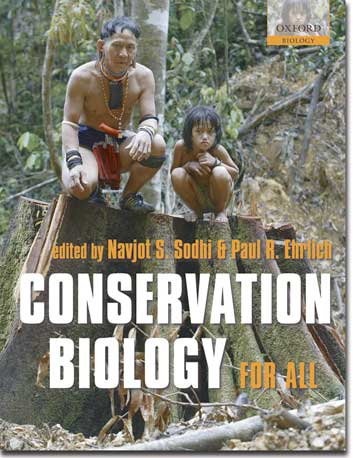
Textbook: Conservation Biology for All (see details below)
Days Covered: BIOL4120_W4D1, BIOL4120_W4D2, BIOL4120_W5D1, BIOL4120_W5D2
Text: Conservation Biology for All by Stuart L. Pimm, Clinton N. Jenkins
Edition: (2010)
ISBN: 978-0-19-955423-2
Optional Material (Dive Deeper)
Readings
Ch 8 Extinction
Textbook: Conservation Biology (see details below)
Chapter: 8 (Threats to Biodiversity)
Sections Assigned: 8.1, 8.3 (Extinction)
Days Covered: BIOL4120_W4D1
Text: Conservation Biology by
Edition: 2nd (2025-01-17)
ISBN: 9780197667033 (textbook)

Extinctions and the practice of preventing them
Chapter: Extinctions and the practice of preventing them
Ch No.: 10 (Threats to Biodiversity)
Pages: 181-198 (Extinction)
Textbook: Conservation Biology for All (see details below)
Days Covered: BIOL4120_W4D1, BIOL4120_W4D2, BIOL4120_W5D1, BIOL4120_W5D2
Text: Conservation Biology for All by Stuart L. Pimm, Clinton N. Jenkins
Edition: (2010)
ISBN: 978-0-19-955423-2
Video Clips
Are We Living In the Sixth Extinction
Be Smart, 11 17, 2014
Video (9:11)
Description
This time, we’re the asteroid.
Viewers like you help make PBS (Thank you 😃) . Support your local PBS Member Station here: https://to.pbs.org/PBSDSDonate
Subscribe to It’s Okay To Be Smart: http://bit.ly/iotbs_sub
Read “The Sixth Extinction by Elizabeth Kolbert: http://amzn.to/1xGKn0K
Rodolfo Dirzo et al. “Defaunation in the Anthropocene” http://bit.ly/1H7JQdw
Stuart Pimm et al. “Biodiversity of Species and Their Rates of Extinction” http://bit.ly/1A5UZJM
Get to know an endangered species: http://discover.iucnredlist.org/
Half of world’s wildlife has died off in past 40 years: http://bit.ly/1BHl8jR
Have an idea for an episode or an amazing science question you want answered? Leave a comment below!
Produced for PBS Digital Studios
Joe Hanson - Host/Writer
Joe Nicolosi - Director
Amanda Fox - Producer, Spotzen Inc
Kate Eads - Associate Producer
Katie Graham - Director of Photography
Andrew Matthews - Editing/Motion Graphics
Dalton Allen - Post-production intern
John Knudsen - Gaffer
Theme music:
“Ouroboros” by Kevin MacLeod
Stock images by Shutterstock
Join us on Patreon!
https://patreon.com/itsokaytobesmart
http://www.twitter.com/DrJoeHanson
http://www.twitter.com/okaytobesmart
http://www.instagram.com/DrJoeHanson
http://www.instagram.com/okaytobesmart
Merch
https://store.dftba.com/collections/its-okay-to-be-smart
https://www.facebook.com/itsokaytobesmartpbs/
Transcript
The history of extinction
0:02 · [MUSIC] The California Golden Bear The Great Auk The Passenger pigeon The Tasmanian tiger The Pinta Island tortoise The Golden toad All dead. And the killer is right there in the room with you.
0:22 · [MUSIC] The walls of France’s Lascaux cave hold some of humankind’s earliest art, almost mythical species: a wooly rhinoceros, enormous-antlered Megaloceros elk and massive aurochs. The artists lived on, became us, but those cave walls are the last place that those animals still run. They’re gone. Extinct.
0:51 · We all pretty much understand extinction, it’s when a species kicks the proverbial bucket, it rides off into the great biological sunset, bites the dust from whence it came and shall return, which is all just a pretty way of saying that every last one of them dies.
1:05 · Even kids are used to the idea that sometimes groups of living things just… don’t exist anymore. Okay, mostly don’t exist.
Discovering mass events
1:13 · But extinction, as a thing, is a surprisingly new concept. In the 1790’s, by studying various fossils, naturalist Georges Cuvier was the first to show that they were not from living, yet undiscovered creatures, as many thought, but from what he called “lost species”.
1:29 · In the decades to come, scientists like Charles Lyell and ol’ Chuck Darwin began to popularize the idea that Earth’s processes, like geology, evolution, and even extinction, did occur, just very, very, verrrry slowly. So slowly that we’d surely never actually see something go extinct. The idea of so-called catastrophic change was just impossible… It wasn’t until the 1980’s that scientists were able to shake that idea. Geologist Walter Alvarez was puzzled by the sudden disappearance of tiny aquatic fossils between two rock layers that dated from about 66 million years ago, the same age as the last dinosaurs.
2:01 · With the help of his Nobel Prize winning father, he analyzed the chemistry of that boundary and found iridium levels that were off the charts. Now, there’s usually not much iridium in Earth’s crust, but it’s very common in asteroids. So Alvarez’s theory? A 10-km wide rock collided with Earth, wiping out 75% of Earth’s plants and animals. To be honest scientists kinda laughed at it… until the 1991 discovery of the Chicxulub crater near the Yucatan peninsula finally settled it.
2:36 · Everything alive today is a descendent of a survivor of that terrible, horrible, no good, very bad day, the so-called Cretaceous-Paleogene mass extinction event, the most recent of the Big 5.
The big five extinctions
2:50 · You should feel pretty lucky. When we look at all of Earth’s fossil record together, 98% of the species that have ever lived are extinct,. Only they haven’t always disappeared at a constant rate.
3:02 · In the history of life on Earth, we know of 5 different mass extinctions, when a majority of life on Earth at the time disappeared in the blink of a geologic eye.
3:13 · Besides the most recent dino-killer, there’s the Triassic-Jurassic, Late Devonian, Ordivician-Silurian, and the worst of all, the End Permian. This was the mother of mass extinctions, it wiped out as many as 96% of Earth’s species, so it got the best nickname: The Great Dying.
3:34 · We’ve learned about all these just in time to get some bad news: We are in the 6th mass extinction, and this time, we are the asteroid.
The sixth mass extinction
3:46 · The hard facts of life mean that even when things are going pretty well on Earth, there’s a background rate of extinction. Among mammals, for instance, we’d expect to see one species go extinct every 700 years, or maybe one amphibian every thousand years.
4:00 · Studies of current extinction rates say we’re roughly one thousand times past that, and in some groups, like amphibians, are disappearing forty-five thousand times faster than normal.
4:13 · And since there are so many species still unknown or uncharacterized, all of those numbers are probably underestimates.
4:19 · Goodbye, gastric brooding frog, Pyrenean ibex, the Fomosan clouded leopard. We could have been friends.
4:29 · So how do we know we’re to blame?
4:32 · Around 13,000 years ago, as Earth thawed from its most recent big freeze, all of our favorite weird megafauna like the wooly mammoth, Smilodon, and our old friend Megatherium disappeared from the Earth, thanks to a changing climate and the invention of sharp stabby hunting tools. I really wish we had saved the 8-foot long beaver though. That would be awesome.
4:53 · Along the way, through hunting and farming, humans have been altering ecosystems in small but significant ways, but since the Industrial Revolution, man we have really kicked it into overdrive.
5:05 · With the exception of maybe the first bacteria to breathe oxygen into the air, no living thing has ever altered life on Earth to the degree that we have, which is why scientists now refer to current epoch as the Anthropocene.
Drivers of species loss
5:18 · “We are the ultimate problem. There are 7 billion people on the planet, we tend to destroy critical habitats where species live, we tend to be warming the planet, we tend to be very careless about moving species around the planet.”
5:32 · According to a 2014 paper by Stuart Pimm in Science (link in the doobly do), the main cause of the current extinction is human population growth and increased consumption. But those two things lead to a whole mess of threats: The most obvious are climate change and habitat destruction. Scientists found that most land species have very small ranges, so they can’t just pack up and move when we cut down their forest or turn it into a desert.
5:55 · Ocean species have more freedom to move to better waters, unless they’re coral reefs, but thanks to the highest atmospheric CO2 concentrations in 800,000+ years turning the oceans more acidic, anything with a calcium based shell has nowhere to run… or swim. If current trends hold up and the ocean hits pH 7.8 by end of century, it could wipe out ⅓ of the species in the ocean.
6:23 · Then there’s the invaders! Thanks to a species of snake hitching a ride on military cargo in the 1940s, Guam has lost all of its native birds. “I have had it with these (invasive) snakes on this (Guam-bound cargo) plane” In Africa’s Lake Victoria, 100s of species of cichlid fish species vanished after fishermen introduced the Nile Perch. Go us! We’re erasing species faster than we can even name them.
6:50 · Stanford’s Rodolfo Dirzo says that in the past 40 years, invertebrate populations, which might make up 97% of species on Earth, have declined 45% worldwide, and that’s just the ones we know about. (Link in the doobly do to that one too) You have to feel worst for the amphibians. Over the past 350 million years, they’ve survived multiple mass extinctions, but this time we’re giving them all we’ve got.
7:17 · Dirzo gives this loss of animal life a rather harmless sounding name: Defaunation. But there is nothing cute about it. There is not a group of living things on Earth today that is not threatened by the current and coming extinction. That includes us.
Why saving species matters
7:34 · Extinction is about more than gorillas, tigers, polar bears, and rhinos, and the dozens of other “famous” or “charismatic” species out there. Those are all important and worth saving, but we need to care just as much about the humble beetles, the ugly little worms, and the slimy frogs.
7:52 · Every species, big or small, panda or protozoa, is important and worth saving, whether or not we understand exactly why it’s worth saving.
8:02 · John Muir once said, “When we try to pick out anything by itself we find that it is bound fast by a thousand invisible cords that cannot be broken, to everything in the universe.”
8:15 · I’ve put some links down in the description where you can get to know some of Earth’s less-loved endangered species. Go make friends with one.
8:23 · Our knowledge and understanding of the planet’s ecosystems may be incomplete, but our effect on them knows no bounds. I hope the same tools and technology that we’ve used to push life on Earth to the edge might also give us power to bring ‘em back.
8:39 · So what are we gonna do? Let’s talk about it down there.
8:43 · Stay curious.
8:44 · If you want to read more about the brilliant and tragic stories of extinction in this age of humans, check out “The Sixth Extinction” by Elizabeth Kolbert, link in the description.
Giant Pythons Have Overrun Florida. Here’s Why
PBS Terra, 08 08, 2023
Video (13:31)
Description
Watch the full first episode of Human Footprint here: https://youtu.be/m36E3n7y3mY
Ever heard of the phrase “when pet pythons outgrow their owners”? Well, host Shane Campbell-Staton is about to take us on an adventure to find out what happens next in this episode of Human Footprint. Join Shane as he meets bounty hunter Donna Kalil, exotic animal trader Hillary Dupont, and biologists Matthew McCollister and Kristen Hart as they battle the invasive Burmese Pythons of the Everglades.
Human Footprint is a show that delves into the impact of humans on the planet. Join Shane as he travels from farms to restaurants, from high-tech labs to street markets, and from forests to cities to uncover the consequences of our unique history. Are you ready to explore our past, present, and future as a species?
PBS Member Stations rely on viewers like you. To support your local station, go to: http://to.pbs.org/DonateTerra *****
Transcript
0:07 · Another monster gone!
0:09 · Oh my gosh.
0:11 · Burmese Pythons have transformed the entire ecosystem of South Florida.
0:17 · After arriving here as seemingly innocent pets, these snakes have overrun their new environment in just a few decades.
0:23 · The thing is, there’s still a lot we don’t know about how these elusive snakes live in the wild, like how long they live, how far they move, or even how many offspring they have.
0:33 · And the only way to find out… well, is to catch them.
0:36 · So I met up with a python hunter, an exotic pet dealer, and a team of wildlife biologists to get the story behind the invasion, and see how these dedicated south Floridians are working together to protect these natural habitats.
0:50 · I’m Shane Campbell-Staton, and this is Human footprint.
0:55 · Once I see it, adrenaline starts pumping and, you know, the game’s on.
1:13 · I’ve caught on full moons, I’ve caught below 75.
1:16 · I’ve caught on windy days.
1:17 · So, you know, you just got to be out here.
1:20 · You never know when a python’s going to be out here moving around.
1:25 · In 2017, Donna Kalil quit her job in real estate to become a full-time Burmese python hunter.
1:34 · I’m loving the, loving this uh, the snake leather. It’s nice and supple.
1:39 · Right there.
1:39 · Yeah!
1:40 · Love the trim.
1:41 · It helps my volunteers, you know, remember what you’re looking for out there.
1:47 · What made you decide to take up the mantle of python wrangler?
1:50 · I know how to catch snakes.
1:52 · I’ve known how to all my life.
1:54 · And I knew that I can make a difference to the environment that I love.
1:57 · What is the largest python you’ve caught?
2:00 · The largest I’ve caught was 16 even.
2:03 · Oh wow!
2:04 · These guys didn’t sprout wings and fly over from Southeast Asia.
2:07 · We brought them here.
2:08 · So we made the problem.
2:09 · We got to, we got to fix it.
2:12 · One way Florida is trying to fix the problem is by paying folks like Donna to capture and kill the pythons.
2:19 · So far, she’s brought in more than 600 of them.
2:26 · So if you do see something on the road, yell “Python,” and then we’re good to go.
2:31 · Awesome. Let’s ride.
2:38 · I so highly respect these things because they’re in an environment that they were put in, and they took over.
2:45 · Oh, will you stop?
2:47 · Back up just a little bit.
2:48 · Got something?
2:49 · Stop.
2:53 · Let me go check.
2:55 · It was down by the trees?
2:56 · Both of us saw it.
2:58 · When they feel vibrations coming at them, when they think that there’s something’s coming at them, they’re going to take off.
3:12 · There is a gator right there.
3:14 · You definitely saw a python though?
3:17 · I’m positive.
3:24 · If it was a python, it got to the water before we got to it.
3:33 · To understand how the python problem started, you need to understand the Florida pet trade.
3:40 · Some of the snakes Donna and I were looking for came from stores a lot like this one in Palm Beach County.
3:46 · We had a 22 foot reticulated python named Heather.
3:50 · We named her after my sister.
3:53 · I never really had a fear of big snakes.
4:02 · Hillary Dupont took over the store from her parents, who started it in the 90s.
4:12 · Her dad was a herpetologist and zookeeper, so Hillary’s been around exotic animals her whole life.
4:19 · So I grew up, back in the day, I have pictures, where my Dad used to bring home the lions and the chimpanzees from lion country, back when that was “OK”!
4:32 · Hillary’s bringing up her children in this world too, and from what I can see, they’re into it.
4:37 · I mean, really, what kid wouldn’t love growing up with all these animals in the family?
4:46 · Did a lot of Burmese pythons come through this store?
4:50 · Were they sold here?
4:51 · Yeah, we did.
4:52 · We had a lot of Burmese pythons come in and out and people would buy them.
4:56 · And then, of course, when they got to a certain size, they were like, oh, where are we going to keep this?
4:59 · Where are we going to put this?
5:00 · And they would bring them back.
5:01 · But not everyone took their pythons back to the store.
5:05 · Many dumped them into the closest wetland.
5:07 · Yes, we’re 100% at fault for contributing to that back in the day, but that’s where I’m redeeming myself.
5:16 · Florida Fish and Wildlife called us and said, do you want to be a drop center?
5:19 · And we said, absolutely.
5:21 · And so that’s when they started getting dropped to us.
5:23 · Wildlife drop centers provide a safe place for people to bring unwanted pets… so Hillary’s store is a rare place where you can see Burmese pythons kept legally in Florida.
5:35 · Can I see one of these guys?
5:35 · You wanna go see one of them?
5:36 · Oh, yeah.
5:37 · I’ll bring you over there.
5:39 · Come on, darling.
5:40 · Oh, my goodness.
5:42 · Come on.
5:43 · Boy’s got body, as they say.
5:47 · This is Satan.
5:48 · This is Satan?
5:49 · I know.
5:50 · It’s a horrible name.
5:53 · He’s kind of heavy and lanky.
5:55 · Alright Satan, let’s say hello to everybody.
5:58 · How long is Satan?
6:00 · Well, he’s around eight feet.
6:01 · Okay.
6:02 · And how old is the Prince of Darkness?
6:04 · We’ve had him for around five or six years.
6:06 · In a glass cage, these snakes seem harmless.
6:10 · But when they were released into a new environment, the results were devastating.
6:18 · Scientists are still trying to understand just how large of an impact they’re having.
6:23 · What they do know is that with their indiscriminate appetite, these snakes are wreaking havoc on the ecosystem’s native species.
6:31 · Burmese Pythons can take out the ecosystem’s apex predators, like alligators and crocodiles, upsetting the delicate balance in the Everglades which is home to endangered species like the Florida panther.
6:42 · And they can pose a risk to humans too.
6:45 · While Burmese Pythons typically stay far away from us, they can strike with and constrict to defend themselves and are fully capable of devouring cats and dogs.
6:54 · The animal is a challenge like no other.
6:57 · There’s a lot of surprises.
7:00 · This is ecologist Kristen Hart of the US Geological Survey.
7:04 · When she’s not chasing personal bests, she’s chasing down pythons… Kristen and Matt McCollister of the National Park Service are part of a team that’s trying to learn everything they can about how these snakes live in the Florida swamps.
7:23 · Today on the to-do list is to check two of our transmitted females.
7:28 · Okay.
7:29 · She was around 125 pounds when she was caught about this time last year.
7:36 · This is a basic radio tag.
7:37 · Okay.
7:39 · This is for an adult.
7:40 · We anchor it to the rib.
7:41 · So, there’s a surgery to put the tags in.
7:45 · We put two in, so we don’t lose them.
7:47 · They have a different frequency.
7:49 · So should one die, one tag, the battery expire, we still have a backup.
7:54 · And so it goes actually in the body in a surgery.
7:57 · And then we feed the antenna also right under the skin.
8:02 · You can hear it in the animal.
8:04 · It’s all inside.
8:06 · So they come in for surgery based on the expected battery life.
8:11 · It seems pretty straightforward, but at the same time, it’s a very technologically advanced solution.
8:19 · It’s a really important tool for us.
8:21 · If we’re just walking around the woods, you’re not likely to find a python.
8:24 · The tags are definitely the thing that help us track these animals.
8:28 · The team has radio tagged over 60 pythons.
8:31 · But they’re still learning the most basic facts about this species’ biology… like how long they live, how far they move, and how many babies they have… because to control them, we’ve got to understand them.
8:44 · So we’ll end up going around this marsh and then back in the pine.
8:48 · I think they’re adapting very well.
8:50 · And very quickly here in South Florida, it is a landscape scale phenomenon.
8:57 · This is not an easy environment to get around in… much less find a snake that doesn’t want to be found.
9:11 · It makes me realize how large I am as a human being.
9:15 · Not exactly built for stealth, but I’m trying my best.
9:19 · If it was easy, it would have been done before.
9:27 · Burmese pythons are very cryptic.
9:28 · They are in the canals.
9:30 · They are on the levees.
9:33 · They can be up in trees and underground.
9:41 · I believe it’s right here, just off the signal.
9:44 · You know, the animal is close to 16 feet long, so it could be in a few places.
9:48 · But if she’s in a ball, it’s likely right here.
9:53 · Just off where the signal feels hot.
9:55 · Prove once again why they have been able to conquer this habitat.
10:01 · Believe it or not there’s a snake here.
10:03 · The radio tag doesn’t lie… there’s a 16-foot python right under our feet, we just can’t get to it.
10:11 · Unfortunately, y’all have received the typical track experience.
10:17 · We will have to try another one.
10:23 · I mean, I think it’s like an alien thing.
10:24 · Right?
10:25 · I mean, they lose teeth and they grow them back.
10:28 · They have regenerative organ growth.
10:30 · So they can actually like their heart can shrink, their stomach can shrink, and then they can grow it back.
10:37 · This is a vast wilderness with lots of prey.
10:41 · We’ve seen everything in their diet – mammals, birds, gators.
10:46 · Once gators are on the menu, you’ve reached official gangster status.
10:52 · It’s just unbelievable.
10:53 · Burmese pythons eat prey as small as mice, and as large as deer.
10:58 · And in some part of the everglades, these mammal populations have dropped by more than 90% from their python numbers.
11:08 · She’s at the base of this squash myrtle.
11:10 · I see her, I think.
11:12 · You see it in there?
11:13 · I do.
11:13 · Go and get your blood stuff out.
11:14 · It’s moving.
11:14 · I see it.
11:15 · You see it in there?
11:17 · Get the camera right in there.
11:17 · You see it?
11:19 · Wanna let her move out.
11:20 · You ready?
11:21 · Yeah.
11:23 · Nope, she wiggled out.
11:26 · Here’s a head.
11:37 · [Inaudible] To touch this animal and feel how muscular the whole thing is.
11:51 · Giving me all kinds of presents back here.
11:54 · You appreciate the beauty of it.
11:56 · But it’s also like this cannot be out there.
12:00 · I mean, but it is.
12:03 · You wanna go and cinch, cinch the drawstring?
12:08 · 20.1.
12:09 · Tare the bag.
12:11 · It’s hard to believe that this 10-foot snake is the smallest python we tracked today.
12:17 · After taking measurements and collecting blood, the team releases the snake back into the wild.
12:23 · For Kristen, that’s a necessary evil.
12:27 · It is a big ask to put them back, right?
12:29 · Because you have an invasive in your hand, just put it down, get it out of the system.
12:34 · But if we do that, we lose the ability to learn.
12:36 · It is like driving the car while you’re building it in many ways.
12:39 · The rulebook is not there for these animals.
12:44 · The better we understand these snakes, the more likely we are to find a weakness that we can exploit to control them and reduce their impacts.
12:53 · What is the outlook?
12:54 · Is the goal like eradication?
12:56 · Is that beyond what is possible now?
12:58 · Trying to manage and mitigate the impacts that they’re having is sort of the shifting, shared goal I think.
13:05 · I love the Everglades.
13:07 · I have to work on this issue like I can’t back away as hard as it gets or as frustrating it gets sometimes.
13:16 · If you want more Human Footprint, you can tune in to the full length series on the PBS App or on your local PBS station.
13:23 · Check out the link in the description to watch a full episode and to find out more about the show.
How Otters Are Saving Earth’s Underwater Forests
PBS Terra, 08 15, 2024
Video (10:06)
Description
Hidden beneath the surface of our coastal seas are towering forests - of kelp. These underwater ecosystems are as crucial to our environment as their land-based counterparts. We’ll explore them alongside conservationists who are working to restore these threatened habitats. We’ll also meet some adorable sea otters and learn about the role they play in maintaining the balance in this sensitive environment.
Hosted by Joe Hanson from Be Smart, Overview uses stunning 4k drone footage to reveal the natural and human made marvels shaping our planet–from a 10,000-foot view–literally.
PBS Member Stations rely on viewers like you. To support your local station, go to: http://to.pbs.org/DonateTerra *****
Subscribe to PBS Terra so you never miss an episode! https://bit.ly/3mOfd77
And keep up with PBS Terra on:
Facebook: https://facebook.com/pbsdigitalstudios
Tiktok: https://www.tiktok.com/@pbsterra
Instagram: https://instagram.com/pbsterra
Transcript
0:00 · (birds squawking) (light music) (water moving) This is one of the most important forest ecosystems on earth.
0:10 · Okay, not a forest like you were expecting, right?
0:13 · But trust me, this forest ecosystem is every bit as beautiful and epic as a forest on land, only instead of being made of trees, this one is made of giant towering strands of kelp.
0:25 · (light music continues) But this epic forest is in danger of disappearing.
0:30 · Luckily, an unlikely team of marine mammal researchers, underwater ecologists and algae farmers is fighting to bring this forest back from the brink.
0:41 · Like every forest, this one has predators to help keep it in balance, and one of those predators is really stinking cute.
0:53 · I mean, have you ever seen anything that adorable in your life?
0:57 · (light music continues) Kelp forests are the foundation of this marine ecosystem.
1:06 · Without them, this environment would not exist as we know it.
1:11 · They support over 800 species and provide crucial habitat and food.
1:16 · Kelp forests like this one can be found in cold water regions all over the world.
1:21 · Now, you might be tempted to call kelp a plant, but don’t.
1:24 · Kelp is a type of macroalgae, which means it doesn’t have roots, stems, or leaves like plants.
1:32 · Kelp forests have been a part of these coastlines for more than 30 million years.
1:38 · One of the dominant species of kelp here in California is bull kelp.
1:42 · It’s the trees of this underwater forest, and these kelp forests thrive in part because of animals like sea otters.
1:50 · They’re part of a complex love/lunch triangle between predators like otters, kelp, and underwater plant eaters like sea urchins.
1:59 · Here’s how it all works.
2:01 · Urchins eat kelp, which is fine, so long as someone eats the urchins.
2:05 · Someone like our cute and hungry friend here who can eat up to 15 pounds of seafood a day.
2:11 · An otter’s appetite protects the kelp forest from being overgrazed.
2:16 · The kelp keeps the urchin happy and fed.
2:18 · The urchin keep the otter healthy and fed, and the otter eating the urchin keeps the kelp from being overgrazed.
2:25 · Scientists call this type of carefully balanced relationship between different species a trophic cascade.
2:31 · (gentle music) But here’s the thing.
2:35 · This carefully balanced trophic cascade has fallen apart in Northern California.
2:41 · Otters are fighting for their lives here.
2:44 · European settlers decimated the otter population in the mid 1700s and early 1800s as part of the fur trade, but researchers are trying to bring them back one otter at a time.
2:57 · (gentle music continues) (birds squawking) [Sandrine] My name is Sandrine Hazan and I rescue and rehabilitate sea otters.
3:08 · You get to take care and rehabilitate and release the cutest animal on earth into the wild?
3:13 · I do that.
3:14 · Yes, I have that badge. This is a receiver that’s used to pick up a signal that a released otter would have, so they are implanted with a transmitter that has a specific frequency, and we can pick that up with this receiver. We recently released Otter 956 just out here in the kelp bed, and so we have been tracking her on a daily basis.
3:37 · Let’s cut this joyous otter release footage.
3:40 · (soft music) Why do all this work?
3:51 · Why do all this trouble to to track, you know, one otter?
3:54 · Well, it’s really part of the bigger picture of helping to bring these otters back to their historic habitat. They are keystone species and they really do so much for these kelp forests, keeping them healthy and keeping them balanced.
4:12 · [Joe] After the otter population disappeared, another predator stepped up, sea stars, particularly the Sunflower Sea star, with its dinner plate sized body and up to 24 limbs. They began to dine on urchins becoming formidable urchin hunters themselves, but then a series of events turned hundreds of miles of California coastline, a spiky purple.
4:36 · Suddenly a mysterious marine disease nearly wiped out sea star populations, and then a roving ball of warm ocean water known as the blob rolled through the region causing sea temperatures to rise by two to three degrees Celsius. The trophic cascade fell out of balance. The sea stars disappeared, the urchins went wild, and 96% of the kelp canopy along Northern California’s coastline has disappeared in the past decade. A region spanning 350 kilometers of the coast.
5:10 · (soft music) (waves lapping) (bird squawking) I think we’re ready to go.
5:22 · Got my camera.
5:23 · Yeah, let’s do it. (soft music continues) [Joe] One of the last remaining strongholds of bull kelp is here in Mendocino County in Northern California.
5:32 · We’re kind of left in a situation where there is no natural predator in the sea right now. And so what I work on specifically is trying to find ways where human can temporarily mitigate and help fill that role until we’re able to have some level of apex predator back in the system. (soft music continues) This is our coral reef. This is our great barrier reef for Californians.
5:53 · It’s kelp forests.
5:54 · Kelp and the ecosystems they create are why we have any fish in the ocean. They create food, habitat and shelter for hundreds, if not thousands of organisms, including human.
6:08 · [Joe To understand the extent of the loss, scientists like Tristan have turned to aerial imagery and high resolution mapping, looking at kelp from both below the water and from above.
6:19 · So what you’re looking at right there is the dark green patches, and this was just this past fall, and that’s where, that’s the only area where we saw kelp. And so what we’re focused on now is looking at where kelp has been persistent and it’s survived, so then we can really focus our kelp recovery efforts in a way that’s meaningful, impactful, and then also leveraging persistent kelp refugia.
6:44 · [Joe] One of those recovery efforts involved roping in aquaculture researcher, Andrew Kim and his team to plant lab grown kelp in the waters of Northern California.
6:54 · [Andrew Kim] We’ve developed these methods for being able to grow kelps year round. Being able to put kelps out that are already ahead of the curve and giving them really just a headstart in the environment, I think is a big breakthrough because for an annual species, like the bull kelp, it extends the potential window for them to be reproductive and to put spores into the environment.
7:19 · [Joe] Bull kelp like this regenerates every year growing from a microscopic spore to a huge structure dozens of meters tall. (soft music) This kelp can grow up to 60 centimeters per day, making it one of the fastest growing organisms in the ocean. After three years of trial and error, Andrew and his team are seeing success with new ways of planting their lab grown kelp designed to protect young kelp from predators and harsh conditions.
7:47 · Kind of like you would plant a raised garden bed if you had animals like running through your garden, you could put your seaweed in, in a raised bed and keep it out of the hungry reaches of the urchins. About a month ago, we put out kelps that were about six to 10 inches, and we came back and we surveyed these modules, and in the last month, they’ve grown several feet and they’re already attracting lots of fish.
8:13 · Every time we put kelp out, we’re putting a piece of hope out. You know the hope that it’ll create home for some little fish. It’s a big ocean. We just need to keep working and chipping away. We’re all in this together and we need to keep trying.
8:30 · (soft music continues) Back in the rich marine waters of Monterey, Sandrine is working hard to support otters as the cute, hungry predators fight to retake their place as the keystone species of this ecosystem.
8:44 · Do we have ears on 956 right now?
8:46 · We do, yep.
8:47 · This is her signal and she is somewhere nearby and based on this signal, she is resting.
8:52 · Do you think in your lifetime that otters in the kelp forest will be restored north of here?
9:00 · I hope so.
9:00 · The sea otters are trying really hard to expand their range, and we are doing everything we can to support conservation efforts to help them restore back to their range.
9:09 · It sounds like you take it day by day, otter by otter around here.
9:13 · Yes, very, very much so.
9:14 · 956, wherever you are, I hope that you’re getting lots of good urchin snacks. (gentle music) The kelp forest reminds us of the wonder that’s out there in nature, sometimes literally right beneath the surface. It’s also precious and so fragile. We just have to take it one breath at a time. (gentle music continues)
How poaching is changing the face of African elephants
Vox, 03 15, 2017
Video (5:21)
Description
It’s “natural” selection.
Subscribe to our channel! http://goo.gl/0bsAjO
Many thanks to Dr. Joyce H. Poole, Dr. Tammie Matson, Andrew Parker, and African Parks. To learn more about their ongoing work in elephant conservation, visit their websites below:
https://500elephants.org/
https://www.african-parks.org/
https://www.elephantvoices.org/
https://matsonridley.com/
And for a little pick-me-up…
Cute Baby Elephants
https://youtu.be/SNggmeilXDQ
https://youtu.be/JHlWvn_RCQI
https://youtu.be/UeTmE71uEaw
https://youtu.be/gAYCbnEZ4p8
https://youtu.be/t2kAPfUEaZM
Elephants and their ancestors have roamed the African continent for millions of years. They are the largest land animals on earth and can live up to 70 years. Elephants are profoundly intelligent and social creatures. They have trunks that serves as their nose, arm, and fingers. But elephant populations have taken a massive hit to their populations. Despite an international ban on the ivory trade and other laws to protect elephants, their overall populations continue to fall due to habitat loss and rampant poaching for their tusks. Because of that, a once rare trait is being passed onto more African elephants. The trait is tusklessness, The loss of tusks is only the beginning. The real devastation occurs with the loss of a groups matriarch. The oldest and most experienced grandmothers are the family’s living memory of migration routes, friendly elephants, food and water sources, etc. Matriarchs are also, the first in line to protect their families and without them an entire group of elephants can fall apart. But with China banning ivory in 2017, providing stronger incentives to protect elephants, and sustained conservation efforts from organizations like ElephantVoices, African Parks, and others, elephants may stand a chance to roam the continent as their ancestors once did.
Vox.com is a news website that helps you cut through the noise and understand what’s really driving the events in the headlines. Check out http://www.vox.com to get up to speed on everything from Kurdistan to the Kim Kardashian app.
Check out our full video catalog: http://goo.gl/IZONyE
Follow Vox on Twitter: http://goo.gl/XFrZ5H
Or on Facebook: http://goo.gl/U2g06o
Transcript
0:00 · Elephants are one of the most iconic creatures on this planet.
0:04 · They’re the largest land animals, the only surviving members of their order, and they’re highly intelligent, social beings.
0:10 · Reporter #1: “They’re a lot like human babies, actually.”
0:12 · Reporter #2: “These elephants in Thailand can even paint.”
0:14 · Reporter #3: “It is the matriarch who guides the herd. It’s the older females vast life experience that gives them these skills.”
0:23 · African elephants have been here for a million and a half years. And now, human intervention is literally changing the face of this incredible creature.
0:31 · During the 1500s, an estimated twenty-six million elephants roamed the African continent.
0:39 · Today, it’s less than 500,000.
1:03 · In the 1970s and 80s, elephant poaching reached crisis-levels, so in 1989, an international agreement banned the global ivory trade.
CITES (Convention on International Trade in Endangered Species of Wild Fauna and Flora)
1989 1990 Ban goes into effect
1:13 · But in the past several years, poaching has returned to high levels. This chart shows the percentage of african elephant deaths caused by poaching since 2003.
1:21 · Their ivory tusks are basically just large teeth, but for centuries, they’ve been used in artworks, ornaments, jewelry – even piano keys.
1:28 · Ivory’s value has been compared to diamonds – it’s a status symbol.
1:33 · And the rise of China’s middle class has pushed up demand for ivory there, where it sells for around $1100 per kilogram.
1:48 · One-third of an elephant’s tusks are in its skull which contains a pulpy cavity of tissues, blood vessels, and nerves.
1:55 · That means they can’t be preemptively removed by conservationists, an approach that has been applied to rhino horns, which aren’t ivory but are also sought after in Asia.
2:07 · Conservationists can safely remove up to 93% of a rhino’s horn, but it’s not possible to remove that much from elephants.
2:15 · But in recent decades there’s been an increasing trend of elephants being born tuskless.
2:30 · While most African elephants of both sexes have tusks, around 2 to 6 percent are naturally born tuskless.
2:37 · Now, decades of heavy poaching have made that trait more common.
2:41 · This chart shows that elephant populations subject to poaching have higher rates of tusklessness compared to undisturbed populations.
2:49 · Let’s use Gorongosa National Park as an example.
Gorongosa National Park
The Mozambican Civil War
2:57 · Of the older female elephants who survived the war, over half were tuskless.
3:03 · And of the younger females born after the war, 33% were tuskless.
3:09 · Because tuskless elephants were less likely to be killed by poachers, the tuskless trait became more common in the next generation.
3:16 · Scientists have also found that on average, tusks are smaller than they were a century ago.
3:41 · Like tusklessness, smaller tusks provide a survival advantage against poaching. But it comes at a cost.
4:10 · Tusklessness is not likely to save the species from poaching and habitat loss.
4:17 · Yet, there is some hope.
4:19 · Through determined conservation efforts, some African national parks are seeing growth in their elephant populations.
4:27 · And China has announced that by the end of 2017, they will end domestic sales and processing of ivory.
BBC China announces ban on ivory trade by end of 2017
4:34 · Those steps, along with stronger incentives to protect elephant habitats and support local anti-poaching programs, might give elephants the leg or tusk up they need to secure their future on this planet.
4:50 · A big thanks to African Parks and the experts I got to interview for this video.
4:59 · If you wanna learn more about their work in elephant conservation, links to their web sites are in the description box.
5:06 · And if you need a little pick-me-up, don’t worry I got you covered.
5:10 · Links to baby elephant videos are in there too.
Pablo Escobar’s ‘Cocaine Hippos’ Might Finally Need to Be Killed
VICE News, 06 03, 2021
Video (4:59)
Description
It might be time to cull the world’s largest invasive species: Pablo Escobar’s cocaine hippos. The rapidly reproducing 80 hippos have taken over Colombia’s waterways, poisoning wildlife with their toxic urine and feces, scientists say. But not everyone can agree on what to do with them.
Subscribe to VICE News here: http://bit.ly/Subscribe-to-VICE-News
Check out VICE News for more: http://vicenews.com
Follow VICE News here:
Facebook: https://www.facebook.com/vicenews
Twitter: https://twitter.com/vicenews
Tumblr: http://vicenews.tumblr.com/
Instagram: http://instagram.com/vicenews
More videos from the VICE network: https://www.fb.com/vicevideo
Transcript
Project aims to count Africa’s shrinking elephant population
PBS NewsHour, 01 17, 2015
Video (8:10)
Description
The Great Elephant census, an ambitious two-year initiative funded by an American philanthropist, aims to count all of the elephants in Africa to save the species. But as numbers continue dwindle, due in large part to poaching, researchers – already faced with a herculean task and countries resistant to join the census – must first establish how many they are trying to save.
Transcript
Search ongoing for extinct Tasmanian tiger amid efforts to revive species 60 Minutes
60 Minutes, 04 16, 2024
Video (13:19)
Description
Thylacines — marsupials known as Tasmanian tigers — were declared extinct decades ago, but efforts to find one in the wild are thriving. Scientists are also working to bring back the species.
“60 Minutes” is the most successful television broadcast in history. Offering hard-hitting investigative reports, interviews, feature segments and profiles of people in the news, the broadcast began in 1968 and is still a hit, over 50 seasons later, regularly making Nielsen’s Top 10.
Subscribe to the “60 Minutes” YouTube channel: http://bit.ly/1S7CLRu
Watch full episodes: http://cbsn.ws/1Qkjo1F
Get more “60 Minutes” from “60 Minutes: Overtime”: http://cbsn.ws/1KG3sdr
Follow “60 Minutes” on Instagram: http://bit.ly/23Xv8Ry
Like “60 Minutes” on Facebook: http://on.fb.me/1Xb1Dao
Follow “60 Minutes” on Twitter: http://bit.ly/1KxUsqX
Subscribe to our newsletter: http://cbsn.ws/1RqHw7T
Download the CBS News app: http://cbsn.ws/1Xb1WC8
Try Paramount+ free: https://bit.ly/2OiW1kZ
For video licensing inquiries, contact: licensing@veritone.com
Transcript
Intro
0:04 · there’s The Lochness Monster in Scotland and in the Himalayas there’s the yeti the Abominable Snowman in Tasmania a teardrop of an island under the eye of the Australian Mainland there’s the thyine a creature that brings out folklore and folks armed with grainy images convinced they’ve seen the thing but unlike other mythical creatures the thyine or Tasmanian tiger actually indisputably existed an apex predator
0:32 · the size of a small wolf roam the island as recently as last century which gives hope to so many obsessives dreamers and True Believers looking for the Tasmanian tiger in the bush and as you’ll see in the lab this is a story that says as much about human nature as it does nature nature further proof that even in the face of Science and logic passion survives in the wild just fine the story will continue in a
The Tasmanian Tiger
1:03 · moment you’ve been doing this how many years now I’ve been doing this for over 30 years and every day is in adventure all right here we go getting there wasn’t easy but Adrien richo Richardson a retired military man turned self-declared tiger Seeker retraced his steps tramping around the dense Outback of Tasmania on January January 28th 2017 12:45 p.m. he heard
1:34 · the sound and then all of a sudden was this a mighty H like this I was Gob smacked the hairs on my arm and my neck stood on end and as that call finished another one come from the other side of the forestry track another how like that what that one sound like exactly like richo craned his neck but saw no
2:02 · creature still he’s sure of what it was a Tasmanian tiger the whole environment went quiet for about a minute there was unbelievable feeling I just can’t explain it yeah you’re still emotional talking about this look I’ve got to remember that call for the time I di and then I had to try and prove to
2:24 · others of what I’ve heard when he returned to his home in Hobart tasmania’s capital he didn’t go down to the pub to share his account no he took to his desk and stayed up writing a detailed report flush with 22 footnotes what my passion is it’s the thyine I know it’s there and this only reinforced your faith oh without a doubt one slight
2:49 · hitch one crimp on the Barbie as it were the creature richo described so vividly and breathlessly it was declared extinct almost 40 years ago thought you know maybe it’s a dingo may maybe it’s a wolf in Tasmania we do not have anything
3:06 · remotely like it we do not even have wild dogs in any form the only feral thing we have around here is deer or cats I don’t think deers are making that noise you just made no sir they did not the Tasmanian Tiger roam these parts for thousands of years more wolf than tiger it was is a marsupio weighing about 55
More wolf than tiger
3:28 · lb the Tas tiger easily distinguished by his straight unjointed tail it was also a carnivore that prayed on Farmer sheep recalling the fate of the wolf of the American West around the same time the local government paid out bounties to Hunters presenting carcasses by the mid 1930s the tazzy tiger population had dwindled to one captive at hobart’s bis
3:52 · Zoo where it died in 1936 with the required 50 years elapsing without a confirmed sighting the tiger was put on the extinct list in 1986 yet putting the Mania in Tasmania the search became a national Obsession and the Tasmanian Tiger not the Tasmanian devil became a sort of local mascot its image adorns tasmania’s coat
4:15 · of arms and government buildings here’s the Island’s current license plate at local watering holes the regulars put down their tazzy Tiger Beer long enough to tell you they’ve seen the animal or know someone who has I stood there and held the torch on it for 40 seconds I Reon when Nick money was a full-time Hobart biologist it felt to him to investigate the various Tasmanian tiger accounts now in retirement he’s
4:43 · the Island’s unofficial Arbiter I know several people who’ve got clusters of cameras in very remote areas um serviced remotely by setlight and who um go and check on the cameras with their own helicopter um all sorts of things they moved Way Beyond the guy with binoculars saying I think I may have seen something oh absolutely he can’t help notice no one ever quite captures a clear image still reported
5:13 · sightings come by the thousands have you ever gotten a report or ever looked into something that gave you a little pause yes um sometimes people are dead accurate with the times the places the distances and
5:30 · they’re very good naturalists often don’t exaggerate like they take their skills very seriously and it’s very hard to say to those people um I don’t think you saw a thylene for the devoted Army of seekers the investment isn’t just one of Hope and time each year richo spends um more than he cares to admit dollars on trail cam batteries alone how much money have you sunk into this excession sir I wouldn’t like to speculate and
5:59 · please don’t tell my wife make it our secret that’s our secret she often asks and I go don’t get your head ony I stop that one can I stop that one can you redo that one again in the bush we met another Enthusiast Chris rayberg who flies down from Mainland Australia and approaches the search in the manner of a CSI detective apart from the cameras I GA you’ve been scouring for
6:30 · fur even poo yeah everything so scats Footprints is a big one um and I I found a a series of 18 19 individual steps in a track line that are an excellent match for tazy Tiger not only are they an excellent match the quality of the prince is pristine scats keep an eye out check it out you know what’s the animal been eating um yeah and calls if you hear them there are even tracking collectives richo was part of the booth Richardson tiger team thank you for joining us on what we believe is a
7:03 · historic day which made worldwide news in 2017 after calling a press conference to announce a sighting but when they provided this image as proof Nick money assessed it as a chance but not an official confirmation what is the middle ground you can be right you can be lying or or you can have an illusion and there’s all sorts of ways that memory can be um um affected by time I’ve had
7:31 · lots of talks with psychiatrists and detectives trying to figure out this you really often have to make a choice a personal call in the end to essentially tell them they’re they’re wrong and their mind is deceiving them oh you can’t tell them that because you don’t know essentially if you weren’t there you don’t know richo and all the other Seekers won’t have to wait long they won’t even have to go into the bush if a group of tech investors and biologists deliver on their goal Andrew pass counts
The quest
7:58 · himself among the tazzy tiger transfixed he comes to the quest though armed not with binoculars but a microscope in his tiger lab Envision that day when you’re you’re not just wearing another P yeah 100% I think about it all the time what it would be like to be in that landscape and just to see one walking past in the bush an actual one rather than a crappy photograph tell us exactly what you’re doing we can’t magically bring the Tasmanian Tiger back we have to start
8:27 · with a living cell and then end engineer our phocine back into existence so the way you do that is you find the closest living relative to your animal that has gone extinct and for us that is a small mass of P species called the fat tiled dut a developmental biologist at the University of Melbourne pascus raised $15 million for a de Extinction project
8:49 · that recalls Jurassic Park in partnership with American company colossal biosciences which counts wait for it Leonardo DiCaprio Paris Hilton and even the CIA among its backers he’s adamant he’ll replicate the Genome of a dard a mouse like marsupial and turn it into a much larger tazzy tiger we’ll let him explain we examine all of its DNA We
9:15 · compare that to the DNA of your extinct species the Tasmanian tiger and we look at everywhere that those two genomes or those two uh piles of DNA if you like are different and once you’ve identified those differences it’s just a matter of them going in and making all of those edits to turn your fatile dard genome or
9:35 · cell into a phocine cell and you’re saying that dunard that little little field mouse marsupial duner is closer than say the Tasmanian devil but that little dut is a ferocious carnivore even though it’s very very small and it’s a very good surrogate for us to be able to do all of this editing in a native of Minnesota Chris Helgen is director of the Australian Museum Research Institute in Sydney he understands the push to De extinct the tazzy tiger this is one of my favorite mammals really and I love
The skeptic
10:07 · all mammals I am a mammal Guy this is a special special animal he took us upstairs to his lab to show us why so this is Tasmanian tiger of the 19th century see the stripes see the thick tail see this gaping mouth with the sharp teeth what do you make of this de
10:28 · Extinction effort with respect to the Tasmanian Tiger you know I would be the first person to line up to see this animal if it could be somehow brought back from Extinction that said Helgen is the skeptic gently explaining that wishing tazzy Tigers were running rampant doesn’t overcome science the idea that you could actually tweak the DNA of this mouthsize animal into making
10:54 · this apex predator of Australia yeah it stretches imagination in many different ways this is an Impossible Project we all love optimism we all love Innovation what they’re saying is we’re going to modify the Genome of a dart to create a genetically
11:12 · modified Dart that might look a bit more like a thine maybe we’ll be able to tweak it genetically and it gets a bit bigger maybe we’ll be able to tweak it genetically and it has some stripes on it but there’s about a thousand one steps in between H has thought about the source of the current tazzy tiger passion and wonders how much of it is driven by remorse it’s a special symbol about Australia and about what we’ve lost we’ve had a lot of extinctions here in the last 100 200 years 30 mammals
11:45 · alone so in the United States only one or two mammal species have disappeared entirely so why are people taking this seriously and why are people investing so much in this so many people have the dream if we could just get this animal back maybe it would help us think different about Extinction or the guilt that we might feel of having removed such a special animal from the planet whether you know they imagine it might be still hiding in Tasmania or in a lab to be reborn there’s this Burning hope
12:19 · richo reckons that if his countrymen in the DNA sequencing Labs can resurrect a tazzy tiger good on them but regardless he’ll continue coming here Faith unshaken he’s certain this animal most famous for being extinct is not extinct at all if someone accused you of
12:39 · being obsessed would you please guilty oh sir I’ll put my hand up to that your honor I am guilty you’re a Tasmanian tiger obsessive I am indeed it’s been my love why is that why have you continued to search so so long for this I just know it’s there I do I in my own heart I know it’s there and if it isn’t there
13:01 · well we say what’s the harm in searching coming to the Planet Sub basement Bush bashing this gorgeous terrain there are worse ways and places to spend your days
Selection for Tuskless Elephants HHMI BioInteractive Video
biointeractive, 09 23, 2016
Video (6:39)
Description
Working in Gorongosa National Park, Mozambique, Dr. Joyce Poole and colleagues make a striking observation: many female elephants lack tusks.
Most African elephants have tusks, but some–about 2 to 6% of females and even fewer males—never grow them. Elephant tusks are important for obtaining food and water, and essential to male elephants for competing for mates, so there is a strong natural selection for having tusks. But the proportion of tuskless elephants has increased in some populations. In this video Dr. Joyce Poole explains a possible reason. Elephants with large tusks are targeted by poachers who sell the tusks on the ivory market. Poaching is artificially selecting for tuskless elephants who can better survive, mate, and pass on their genes to the next generation. In Gorongosa National Park, Poole found that among the older female elephants, who survived a period of heavy poaching in the park, over 50% are tuskless. Among the younger females, who were born after this period of heavy poaching, 33% are tuskless.
For more short films and resources on elephants, visit http://www.hhmi.org/biointeractive/elephants
Transcript
0:11 · DOMINIQUE DEMILLE: Oh, they is coming.
0:18 · NARRATOR: For over 40 years, Joyce Poole has been studying elephant populations in Africa.
0:26 · She’s one of the world’s experts on elephant behavior and communication.
0:30 · Her work has taken her to Gorongosa National Park in Mozambique, where she’s working with local scientists.
0:37 · DEMILLE: Oh, the big guy is coming out, right?
0:42 · JOYCE POOLE: He’s the same guy on the camera traps who was in the farms.
0:47 · I’m studying the status of the Gorongosa elephants, looking at how they have and are recovering from a period of heavy poaching.
1:00 · NARRATOR: Many of the large mammals, and over 90% of Gorongosa’s elephants were killed during a civil war that lasted from 1977 to 1992.
1:12 · POOLE: So even though it’s 20 years, we can see that there’s real scars on this population.
1:20 · DEMILLE: [SPEAKING PORTUGUESE] NARRATOR: The scientists are monitoring a peculiar characteristic, one that they’ve also seen in other African parks.
1:42 · Some elephant populations seem to be missing their tusks.
1:50 · Since 2008, the Gorongosa Restoration Project has been protecting wildlife in the park and monitoring their recovery.
1:57 · The elephant population is slowly growing back to a healthy size.
2:02 · DEMILLE: [SPEAKING PORTUGUESE] NARRATOR: By studying the recovery of Gorongosa’s elephants, Poole observed that many females lacked tusks.
2:24 · POOLE: The first day I was here in 2011, I met a group of 50 elephants.
2:29 · Most of them were tuskless.
2:31 · So I knew straight away when I came here that there was a high proportion of tusklessness.
2:43 · NARRATOR: Tusks are a pair of elongated teeth, the incisors, that continue to grow throughout an elephant’s lifetime.
2:53 · Elephants use their tusks to strip bark off trees and dig holes for water and minerals.
3:04 · Males use them in contests against other males to win over females.
3:10 · POOLE: Elephants use their tusks all the time.
3:12 · For males, tusks are really important because males are fighting one another for access to females.
3:19 · And if you don’t have tusks, you risk being severely wounded.
3:24 · So there’s a very strong selective pressure among males for tusks.
3:30 · NARRATOR: Because tusks are so critical to the survival of males, tuskless males are extremely rare.
3:37 · But a proportion of female elephants are typically tuskless.
3:41 · In populations less affected by poaching, tuskless females are only 2% to 6% of the total number.
3:47 · POOLE: Tusklessness, just like having tusks, is a natural trait.
3:54 · And it’s inherited, like bigger ears or smaller ears, or green eyes or blue eyes.
4:00 · It’s an inherited characteristic.
4:03 · NARRATOR: During the Civil War in Mozambique, large-tusked elephants in Gorongosa were killed for their ivory, which was sold to buy arms and ammunition.
4:15 · More of the tuskless female elephants survived.
4:17 · POOLE: Here in Gorongosa, among the older age class, that is, the ones who were already adults during the war, when there was heavy poaching, they are 50% tuskless.
4:30 · NARRATOR: Poaching selected for tuskless females.
4:33 · POOLE: It ends up with a higher proportion of tuskless animals, who then reproduce, and tend to produce tuskless offspring.
4:44 · NARRATOR: Surveys conducted by Poole and colleagues indicated that 33% of females 10 to 20 years old are tuskless.
4:53 · No tuskless males have been found.
4:56 · POOLE: Any animal who’s under 20 was born after the war.
5:01 · So they are not a consequence of poaching, or at least not directly, but they would be a consequence of maybe being born of tuskless mothers.
5:14 · NARRATOR: Poole has observed large tuskless populations in other African countries where elephants are heavily poached to support the ivory trade.
5:22 · POOLE: Somewhere like the Selous in southern Tanzania, Queen Elizabeth.
5:28 · Both of those populations went through heavy poaching in the ’80s, and Selous, again, now.
5:35 · And they have also very high levels of tusklessness.
5:41 · In this day and age now, with all the poaching that’s going on, actually, the tuskless elephants are at an advantage because they are not being targeted for their tusks.
5:55 · NARRATOR: The insatiable demand for ivory is driving complex changes in elephant populations.
6:03 · Not only are elephant numbers decreasing across the African continent due to habitat loss and poaching, but elephant traits are also changing as a result of this ongoing threat.
Should zoos exist BBC Ideas
BBC Ideas, 10 27, 2022
Video (6:28)
Description
Are zoos a great way to teach people about nature and save species from extinction? Or a cruel way of using animals for entertainment?
Made by Daniel Nils Roberts, in partnership with the Open University.
Find more of our favourite videos about animals and our nature world here 👉 https://www.youtube.com/playlist?list=PLMrFM-P68Wh5uUpacj1pGDSJLirgyjQCZ
Subscribe to BBC Ideas 👉 https://bbc.in/2F6ipav
Do you have a curious mind? You’re in the right place.
Our aim on BBC Ideas is to feed your curiosity, to open your mind to new perspectives, and to leave you that little bit smarter.
So dive in. Let us know what you think. And make sure to subscribe! 👉https://bbc.in/2F6ipav
Visit our website to see all of our videos: https://www.bbc.com/ideas
And follow BBC Ideas on Twitter: https://twitter.com/bbcideas
Transcript
History of zoos
0:00 · Zoos have changed out of all recognition.
0:03 · There are quite a lot of different species around the planet, which we wouldn’t have today if it wasn’t for zoos.
0:08 · What do you think an ideal zoo would look like?
0:11 · Closed.
0:17 · All through history, we’ve seen royal families, powerful people, emperors, have collections of animals.
0:24 · The king who was a good hunter was probably a good warrior, probably protect his people.
0:28 · Killing a lion or a bear was a big deal, but bringing back a live one showed even more power.
0:33 · Virtually all the history of zoos is about human control of nature.
0:38 · And it was a way of showing off.
0:39 · Queen Charlotte, her gift to everybody that she liked was to give them a kangaroo.
0:46 · And eventually we get the first modern zoo opening in London in 1828.
0:52 · To be able to suddenly see a giraffe for the first time, probably it was absolutely bonkers.
Animal welfare evolution
1:01 · There wasn’t really an appreciation of animals needing certain things to have a good life.
1:07 · So you would see them in barren boxes, effectively, just as you would see a specimen in a natural history museum.
1:13 · JON COE: The story was, here’s an object divorced from habitat, divorced from evolution.
1:18 · His name is, by the way, knucklehead.
1:21 · Knucklehead?!
1:22 · Well, as a rule, tapirs are rather stupid and unintelligent.
1:25 · Animals were thought of as basically automatons just responding in a reflexive manner, with no feelings of pain or any kind of emotional depth.
1:33 · But that’s really shifted.
1:36 · Now there’s much more of an understanding that we really need to look at their own type of intelligence and how they live in their world.
1:50 · The schoolchildren that come here to the wildlife park, all of them go away learning the messages that we know for sure are going to make a true difference to the animals back out into the wild.
Conservation and education
2:03 · The biggest threat to wildlife comes from people, and most people live in cities.
2:08 · So zoos are very important because they provide an educational opportunity for people to learn about what the impacts of their daily activities are in far away places.
2:19 · JON COE: The zoo, by becoming a public attraction, if it’s done properly, it seems to me like a pretty good idea. The animals have a good life.
2:27 · People enjoy it. They learn something.
2:30 · Hopefully they get involved in conservation.
2:32 · JON MINION: Pretty much all good zoos throughout the world are participators, or they help to support and fund a whole host of in-situ conservation programmes.
2:44 · And if it wasn’t for those programmes, the world would be looking very different right now.
2:59 · Zoo populations of animals are insurance populations.
Limitations and ethics
3:03 · Certain species, due to what’s going on on the planet at the moment, the only way that we can stop them from going extinct will be to bring them into captivity.
3:12 · As we learn to adapt to things like climate change, we are going to see an increasing role for zoos.
3:22 · You can visit zoos all over the world that are just awful.
3:25 · You know, they’re as bad as they were in the 1920s.
3:29 · ROBERT YOUNG: In the US they don’t have very strict animal welfare laws.
3:32 · People can have animals in their back garden and call it a zoo.
3:35 · There are more pet tigers in the US than there are tigers in the wild.
3:39 · The legislation doesn’t permit that kind of thing here in the UK, but you can get bad zoos anywhere.
3:51 · Those are all signs that they’re missing out on some important aspect of how they live in the wild.
3:57 · The complexity of providing a good life for some of these animals, it’s actually really, really difficult.
The future of wildlife
4:09 · There is some evidence that people will know more facts about a particular animal, for example, but follow up studies to see if they’ve actually changed their behaviour to benefit conservation, there’s not much evidence to suggest that is happening.
4:24 · The official statistics show that 4% of revenue goes back into conservation.
4:29 · I mean, that’s minimal. That’s very small.
4:31 · And what do you find in zoos?
4:34 · Big cats and elephants and zebra and things that don’t get released back into the wild.
4:37 · So if you want to save the condor, then you can have an in situ conservation programme that’s based in the country where they come from.
4:48 · Most five year olds are experts in dinosaurs.
4:51 · They’ve never met one or seen one.
4:53 · The fascination’s there, and I think the same can be harnessed with animals.
4:57 · There’s many other technologies that are being developed these days, like awesome CGI, awesome robotics.
5:04 · I think the future holds something really cool in the sense of learning about animals without the detriment of keeping them in captivity.
5:11 · Virtual reality with wildlife encounters is really coming on.
5:16 · Taking a virtual walk through a herd of elephants in the Serengeti, I think, is going to be possible pretty soon.
5:25 · Do you think zoos should exist?
5:28 · It’s kind of strange that we transport all of these animals from far from home and keep them locked up where you should see what nature has to offer on your doorstep.
5:38 · Wildlife documentary, virtual reality - none of these things have the same positive emotional impact that a zoo has.
5:46 · 10% of the global population visit zoos every year.
5:50 · People from all walks of life and all social classes.
5:52 · So, I think, without zoos, we’d lose a massive opportunity to keep people being interested in the wild environment.
6:02 · How can we create a world where we don’t need zoos?
Conclusion and call to action
6:04 · What I’m hoping is that we can design super sustainable cities so that you don’t need to go to a place to see animals.
6:13 · They’re all around you.
The salmon dilemma
Vox, 11 13, 2025
Video (7:55)
Description
Earth’s population is growing. We’re expected to have 2 billion more mouths to feed by 2050. But how can we feed all those people in a way that is still sustainable and ethical? Many have argued that aquaculture (or fish farming) is one of the most sustainable ways we can consume animal protein, since it requires less land use. It’s currently the quickest-growing form of food production in the world. But how exactly does it work? And is it really the best path forward?
To find out more, Vox video producer Nate Krieger went down the rabbit hole on salmon aquaculture. Salmon is currently the most popular fish in the US: The average American consumes 3.2 pounds of salmon annually. And over 70% of that salmon comes from farms, totalling 3 million tons of salmon a year.
To understand the impact that the salmon industry is having on our planet and our future, and on the salmon themselves, we spoke to industry insiders, marine biologists, and fish welfare experts.
This is a complicated issue, full of lots of caveats and trade-offs. But the more we know about the food we eat and where it comes from, the more responsible we can be.
Sources and further reading:
Read more of Vox’s reporting on salmon farming: https://www.vox.com/future-perfect/468348/atlantic-salmon-farm-cruelty-pollution
Vox’s Future Perfect team reports on what it takes to feed the fish involved in aquaculture, which turns out to be one of the most important impacts to consider:
https://www.vox.com/future-perfect/464898/trump-tariffs-china-trade-war-soybeans-exports
https://www.vox.com/future-perfect/379564/fish-farming-sustainable-wild-caught
The website for the Global Salmon Initiative, a collaboration between some of the world’s biggest salmon farming companies, whose CEO we spoke with for this piece. Its handbook is a great resource for information on salmon aquaculture:
https://globalsalmoninitiative.org/en/about-salmon-farming/gsi-handbook/
The World Wildlife Fund’s page on the tradeoffs involved in salmon farming: https://www.worldwildlife.org/our-work/oceans/sustainable-seafood/farmed-seafood/farmed-salmon/
This video is part of a series supported by Animal Charity Evaluators, which received a grant from EarthShare.
Subscribe to our channel! http://goo.gl/0bsAjO
Vox.com is a news website that helps you cut through the noise and understand what’s really driving the events in the headlines. Check out http://www.vox.com.
Watch our full video catalog: http://goo.gl/IZONyE
Follow Vox on Facebook: http://goo.gl/U2g06o
Or Twitter: http://goo.gl/XFrZ5H
This video has been updated to remove fish research footage.
Transcript
0:00 · I eat meat.
0:01 · I also eat a lot of other things.
0:03 · Which makes me an omnivore, like a lot of people.
0:05 · But lately I’ve been wondering, is it even possible to be an omnivore responsibly?
0:10 · I mean, is it possible to eat meat and still care about this planet?
0:14 · I’ve been hearing a lot about farming fish as one of the most sustainable and ethical ways to produce animal protein.
0:20 · So I decided to do a deep dive on the most consumed fish in the US.
0:24 · Salmon.
0:25 · I personally eat a ton of salmon, and I’m not alone.
0:29 · The average American consumes 3.2 pounds of salmon a year.
0:33 · So how exactly does salmon farming work?
0:36 · I’ll explain the impact it has on our planet and our future, and maybe most importantly, what it means for the salmon themselves.
0:47 · So, first things first.
0:49 · Wild or farmed salmon.
0:50 · Wild does sound a lot better to me.
0:53 · But it turns out there’s a very real limit to how much wild salmon we can catch sustainably.
0:58 · We’re unfortunately at this state right now where to put it simply, the wild fish stocks are just maxed out or are almost at their sustainability limits.
1:07 · And to meet the rising demands for seafood, you know, we need to not deplete the oceans any more.
1:13 · We need them to be thriving and to be, you know, full of biodiversity and and that’s where aquaculture can come in.
1:18 · So if we want to eat salmon at the scale that we do well, it kind of sounds like it has to come from aquaculture.
1:24 · Salmon has only been farmed since the 1960s, and it’s grown fast. Since the 80s, global consumption of salmon has tripled.
1:32 · And over 70% of that salmon comes from farms.
1:34 · So salmon farming takes place in coastal regions around the world.
1:38 · You know, salmon really like that cold, clean, fresh water where they like to grow best.
1:42 · That’s Sophie Ryan, CEO of Global Salmon Initiative, a collaboration between some of the world’s biggest salmon farming companies.
1:49 · Most salmon is farmed in Norway, Chile, the U.K., Canada, and the Faroe Islands.
1:54 · The process really begins in what we call a freshwater hatchery.
1:58 · So this is locations on land where the salmon are small eggs and they’re monitored closely when they hatch and then they’re put into tanks.
2:07 · So on land and freshwater, once they’ve kind of reached maturity, they’re transferred out to ocean farms.
2:13 · So this is those open ocean pens where they’re really in that cold fresh water that they like, and they stay here until they’re ready to harvest, which usually takes about 18 months to two years.
2:25 · So then when they reach that fully grown stage, they’re harvested, taken to a processing facility and then distributed to consumers, restaurants and retailers around the world.
2:35 · And that’s how the world produces almost 3 million tons of salmon each year.
2:39 · But is it actually more resource effective to farm this much salmon versus other protein like chicken?
2:45 · To try to answer that, let’s start with the big picture.
2:47 · By current projections we’ll likely need to feed 2 billion more people by 2050.
2:55 · But how can we do that without further depleting Earth’s resources?
2:58 · Well, some people opt to go vegan for that exact reason. And recent studies have shown that a plant based diet could lower your climate impact.
3:05 · But only 1% of Americans are vegan.
3:08 · And while up to 46% of Americans said they would consider a plant based diet if it helped reduce greenhouse gas emissions, that still leaves over half the country reliant on animal proteins like salmon.
3:18 · Aquaculture has huge potential to really play a role. And what that means is it requires less land and less freshwater, and also has a lower carbon footprint than many of the animal proteins you can get hold of.
3:31 · But there are other factors related to farming salmon at such a large scale.
3:35 · It turns out we also need to look at the amount of resources needed to feed the fish.
3:39 · Here’s marine biologist Ray Hilborn on what it takes to feed all that salmon.
3:43 · Most of their feed is coming from plants.
3:46 · So, typically soy based plants.
3:48 · That’s where the big impact is.
3:51 · The downsides of soy farming have been well-documented.
3:54 · And honestly, that could be its own video.
3:56 · To sum it up, soy farming can be a major cause of deforestation, water pollution and biodiversity loss.
4:03 · And a lot of the demand is driven by a need to feed farm animals.
4:06 · But in the wild, salmon are carnivores.
4:08 · So for farm raised salmon, this soy based diet is supplemented by feeding them other fish.
4:14 · There are some fish that are salmon that are raised without any fishmeal and fish oil.
4:19 · But I think most farmed salmon use fishmeal and fish oil to some extent.
4:25 · Some of this fishmeal does come from fish byproduct and scraps from other fish that have been processed to be eaten.
4:31 · But most of it comes from wild caught fish that are being caught just to feed the salmon.
4:35 · So the effects of salmon on the environment ripple out far beyond the farms themselves, to the soy farms and fisheries that feed them.
4:42 · But even still, Professor Hilborn argues that farming salmon is more sustainable than farming other land animals.
4:48 · So it takes less feed to make a pound of salmon than it takes to produce a pound of chicken.
4:54 · In other words, despite the impact that salmon feed may have on the environment, it still takes less of that feed than it would for other livestock.
5:01 · When you zoom out, salmon aquaculture looks like a better alternative to land based farming and even wild-caught salmon.
5:07 · But there’s another dimension to this that might tip the balance.
5:10 · What is salmon farming like for the salmon themselves?
5:13 · So, in salmon farming, there are many things that are done to the animals that are invasive.
5:19 · And so they are handled.
5:20 · They are size graded, they’re pumped up into tubes. That’s professor, Lynn Sneddon a researcher who has spent her career studying fish behavior, and in particular, answering the question of whether fish can feel pain.
5:32 · It’s a question a lot of us never consider.
5:34 · Many people don’t spend time with fish.
5:36 · The only time they might see them is, you know, in a shop where, you know, they’re buying fish to eat.
5:43 · But for those who do consider whether fish can feel pain, there doesn’t seem to be much debate.
5:47 · So the scientific evidence shows that fishes have nociceptors, receptors for pain, that they, and other animals that we already farm, what does that change?
6:04 · Well, it complicates this widely held notion that farming salmon is “good” for you and for the planet.
6:10 · On the one hand, we need to feed a growing population that is likely going to remain meat eaters.
6:15 · And salmon farming is more efficient and less land intensive than a lot of the alternatives.
6:20 · But knowing that the fish can clearly feel pain and even feel stress makes me think a lot more about their welfare.
6:26 · Especially given the fact that salmon farming requires catching other wild fish to feed to the salmon.
6:31 · And like any other form of animal farming, there are repercussions.
6:34 · Salmon farms pose threats to various marine organisms, through transmission of parasites like sea lice, diseases in some case.
6:45 · And there have also been cases where salmon escape the pens and interbreed with fish in the local ecosystem as an invasive species.
6:51 · It was these reasons that led to the banning of net pens in Washington state just this year.
6:56 · In the end, I think there’s unfortunately this very real trade off between sustainability and ethics, because feeding a growing population responsibly will often come at the expense of the animals involved.
7:06 · But I also think there’s a silver lining, because the conditions that those animals are in can improve.
7:12 · Take chickens and eggs, for example.
7:14 · Over the last 20 years, pressure from the public and politicians impacted the egg industry when people became widely aware of the factory farm conditions that chickens lived in. In 2006, 5% of eggs were cage free.
7:26 · Now that number is 45.
7:27 · And maybe a similar mindset can be adopted for farming fish.
7:30 · Fish welfare is so critically important because we’re raising animals You know, we want healthy fish in healthy waters.
7:37 · So by safeguarding the welfare of fish, I think it benefits everyone, whether you care about the fish themselves or not.
This Is Martha, the World’s Last-Known Passenger Pigeon
Smithsonian Channel, 05 27, 2016
Video (2:48)
Description
Smithsonian’s National Museum of Natural History houses one of largest bird collections in the world. One of their most prized birds, Martha, was the last passenger pigeon to ever fly.
From: SERIOUSLY AMAZING OBJECTS: Trailblazers
http://bit.ly/1XCulD1
Transcript
0:00 · Hi. Hi. I’m Chris. Lucia. Nice to meet you.
0:05 · Welcome to the Division of Birds.
0:06 · Thanks. The Smithsonian has one of the largest collections in the world, open to scientists from all over. Anyone who wants to come and study birds. They can either come here and work with us or we can loan the specimens to them.
0:22 · One specimen stands out above the rest.
0:26 · What are you going to see today? Oh my god. You’re kidding me. That’s Martha.
Where is Martha the passenger pigeon?
0:28 · This is Martha. For a pigeon fan like Lucia, this is like seeing a movie star, the very last passenger pigeon. She died in the Cincinnati Zoo at 100 p.m. on the 1st of September, 1914. She was literally alone for about 4 years before she died. And and we knew at that time that there were no other ones in the wild. So this is one of the rare cases when you can actually place an exact time and date on an extinction.
0:59 · Today, Martha sits for posterity beside her companion, appropriately named George, a fellow passenger pigeon who died long before her.
1:10 · Hundreds of years ago, passenger pigeons were estimated to be about a quarter of the total bird population of the United States. A flock a mile wide, flying 60 m an hour, could take days to pass overhead. So where did they go? The story really is not a simple one. There are there are a lot of factors involved with any extinction. In this case, there was a lot of market hunting.
1:36 · They were easy targets because they occurred in these large flocks of over a billion birds. A hunter could go and collect thousands at a time without, you know, really having to try that hard.
1:48 · Passenger pigeons became a staple of the American diet. By the end of the 1800s, millions were being shipped back to cities in the east. Another natural factor sealed their fate. They didn’t lay as many eggs as other pigeons, so it was easier to wipe them out that way, right? Yeah. The the biology of the passenger pigeon was such that they really relied on those large flocks for a couple of reasons. One was protection from predators. you know, there’s safety in numbers and they didn’t have to lay a whole bunch of eggs to reproduce.
2:18 · So, in a matter of just a few decades, we’re just all gone.
2:24 · Once a species is gone, no amount of wishful thinking can bring it back.
2:31 · Birds still go extinct, but the loss of the passenger pigeon made people take notice. It prompted the very first legal protections for migratory birds.
2:42 · [Music]
Films
Managing Moose Colorado’s Most Dangerous Animal
Rocky Mountain PBS, 09-17-2026
Documentary Film (26:40)
Description
Moose have flourished in Colorado in recent decades, leading to more attacks on people, overgrazing in key valleys and declining ecosystems. On top of that, the question of the animal’s native status has started a contentious debate that could have large impacts on the future of moose in Colorado. Now the question becomes how to manage the population as moose enter the spotlight.
Subscribe to our YouTube channel: https://bit.ly/3zeF6Ch
Follow Rocky Mountain PBS on our other platforms, too.
• Newsletter: https://www.rmpbs.org/newsletters
• Facebook: https://www.facebook.com/rmpbs
• Instagram: https://www.instagram.com/rmpbs
• LinkedIn: https://www.linkedin.com/company/rocky-mountain-pbs
Transcript
0:00 · (MUSIC PLAYING) I LOVE MOOSE.
0:05 · I JUST LOVE THEM.
0:06 · YOU KNOW, THEY’RE AMAZING CREATURES.
0:09 · IT’S BECOME ONE OF THE MOST EXCITING THINGS FOR PEOPLE TO SEE IN THIS AREA, FOR SURE.
0:16 · MOOSE ARE EXTREMELY POPULAR, BUT THEY’RE ALSO THE MOST DANGEROUS ANIMAL IN COLORADO. [SCREAMING] HERE IT COMES.
0:23 · GET AWAY!
0:24 · IF THEIR EARS GO BACK, IF THEIR HACKLES RAISE UP, IT’S PROBABLY A GOOD INDICATOR THAT YOU’RE TOO CLOSE.
0:29 · I TURNED AROUND AND IT WAS A MOOSE, AND IT WAS IN FULL CHARGE. COMING UP THE TRAIL BEHIND US.
0:36 · THEY LOOK DOCILE, BUT DON’T LET THAT FOOL YOU. THAT’S JUST HOW THEY DEAL WITH THREATS.
0:43 · AS MOOSE POPULATION INCREASES, AS HUMAN POPULATION INCREASES, ALL OF THOSE ARE LEADING TO PROBABLY MORE ENCOUNTERS AND CONFLICTS.
0:50 · MOOSE WERE TRANSLOCATED TO COLORADO IN THE 1970S, AND SO I THINK PEOPLE WILL GET THE WRONG IDEA ABOUT WHETHER MOOSE BELONG IN THE STATE OF COLORADO.
1:01 · SINCE THOSE TRANSPLANTS, THE POPULATION HAS STEADILY INCREASED. BUT YOU CAN HAVE TOO MUCH OF A GOOD THING.
1:08 · AND YOU CAN SEE, WE ALSO HAVE A LOT OF WHAT WE CALL ZOMBIE WILLOWS OUT HERE. THEY’VE BEEN BROWSED BY ELK AND MOOSE TO THE POINT WHERE YOU CAN SEE MOST OF THEM ONLY HAVE A FEW REMAINING LEAVES.
1:20 · JUST IN 20 YEARS, WE KNOW WE’VE LOST ABOUT 98% OF THE TALL WILLOW. AND WE ATTRIBUTE THAT TO THE FACT THAT MOOSE MOVED INTO THE PARK FROM THE WEST.
1:27 · THERE WAS A BIG SORT OF WAVE OF NEWS STORIES ABOUT… THE IDEA THAT MOOSE ARE NON-NATIVE OR SOMETIMES YOU EVEN SEE THE WORD INVASIVE. BUT WE HAVE IDENTIFIED MOOSE HAVE BEEN HERE FOR THOUSANDS OF YEARS.
1:40 · IT’S IRRELEVANT THAT IF THERE WERE 1 OR 100 MOOSE HERE, 500 YEARS AGO OR SOMETHING IN THE VALLEY. LIKE WHAT MATTERS AS THE WAY THINGS ARE FUNCTIONING, WE’RE LOSING ECOSYSTEM SERVICES AND CHARACTERISTICS THAT MIGHT TAKE DECADES TO RECOVER.
1:55 · EVERYBODY HAS AN OPINION ON WILDLIFE MANAGEMENT.
1:59 · BUT I HOPE WE CAN CONTINUE TO MANAGE MOOSE AT THE APPROPRIATE NUMBER TO PREVENT THEM FROM PEAKING AND CRASHING. (MUSIC PLAYING) IT SOUNDED LIKE SHE’S, MAYBE A LITTLE FURTHER UP ENDO. WE’RE TRYING ONE LAST SPOT IN HORSESHOE PARK BEFORE WE HEAD UP VALLEY.
2:20 · IT SOUNDS GOOD.
2:21 · WE’LL HEAD YOUR WAY AND SEE YOU SHORTLY. SO WE HAVE SOME MOOSE THAT ARE WEARING A COLLAR THAT MAKES A BEEPING NOISE, AND HE CAN USE THAT ANTENNA TO FIND THEM.
2:32 · YEAH, SO IN THIS CASE, WE’RE LOOKING FOR AN ADULT COW WHO WE CAPTURED LAST YEAR AND FIT WITH A COLLAR. BASED ON THE SIGNALS IT’S GIVING ME, IT’S SOUNDING LIKE SHE’S KIND OF DIRECTLY BEHIND ME. KIND OF HEADING TOWARDS THAT BARE HILLSIDE BACK THERE. SOMEWHERE BETWEEN ME AND THERE IS WHERE IT SOUNDS LIKE SHE’S COMING FROM.
2:51 · SO THEY’RE RIGHT OVER HERE.
2:53 · AND WE’RE GOING TO GO–WE’RE GOING TO MEET THEM OVER HERE BECAUSE SHE MOVED THAT WAY A LITTLE BIT. THIS IS THE WORK WE OFTEN DO, WHICH IS THAT WE WANT TO SEE IF SHE HAS A BABY. AND SO WE’D GO A LITTLE CLOSER, BUT WE’RE JUST, LIKE BEING QUIET IS A BIG THING BECAUSE SHE MIGHT JUST STAND UP. AND LIKE, WALK INTO THE BRUSH.
3:13 · FOR MOOSE IN ROCKY MOUNTAIN NATIONAL PARK, IT BECAME CLEAR THAT WE NEEDED SOME MORE INFORMATION ABOUT THEIR BEHAVIOR, THEIR SURVIVAL, SOME THINGS ABOUT THEIR POPULATION. AND SO WE HAD A FEW COLLARED IN 2017 AND THEN EVERY YEAR SINCE THEN.
3:29 · OH, THERE SHE GOES.
3:34 · AND THERE’S THE CALF, YEAH.
3:37 · SO A BIG QUESTION THAT IS IMPORTANT FOR UNDERSTANDING HOW MOOSE ARE ACTING IN THE PARK IS JUST UNDERSTANDING HOW MANY THERE ARE. AND SO IT’S ACTUALLY A BIG CHALLENGE TO ESTIMATE MOOSE ANYWHERE IN THE WORLD BECAUSE THEY TEND TO BE FAIRLY ELUSIVE.
3:51 · THEY’RE MOSTLY SOLITARY.
3:53 · THEY’RE NOT SEEN IN BIG GROUPS IN BIG MEADOWS. AND SO WHAT WE DO IS WE USE A HIGH-FLYING FIXED WING AIRCRAFT THAT USES INFRARED TO SEE MOOSE ON THE LANDSCAPE.
4:06 · LAST YEAR WE DID THE VERY FIRST PARK-WIDE SURVEY OF MOOSE AND WHAT WE FOUND IS THAT THE POPULATION’S AT ABOUT 240 INDIVIDUALS. ONE THING THAT THAT SHOWED US IS THAT THE POPULATION INCREASED ALMOST 50 PERCENT IN JUST FIVE YEARS.
4:19 · ROCKY MOUNTAIN NATIONAL PARK IS HOME TO HUNDREDS OF ANIMAL SPECIES. THE PARK COVERS 415 SQUARE MILES OF VARYING MOUNTAIN ENVIRONMENTS. THIS INCLUDES WETLANDS, WHICH ONLY MAKE UP 4% OF THE PARK, BUT ARE CRUCIAL HABITAT FOR THE MANY PLANTS, BIRDS, AND MAMMALS THAT LIVE THERE.
4:39 · IN RECENT YEARS, WE’VE SEEN DRAMATIC LOSSES OF TALL WILLOW. AND TALL WILLOW IS THE PLANT THAT IS MOST IMPORTANT TO A FUNCTIONING WETLAND IN ROCKY MOUNTAIN NATIONAL PARK.
4:50 · WE ALSO HAVE A LOT OF WHAT WE CALL ZOMBIE WILLOWS OUT HERE. THESE WILLOWS SHOULD BE 10 TO 12 FEET PLUS TALL. AND OVER THE RECENT DECADES, THEY’VE BEEN BROWSED BY ELK AND MOOSE TO THE POINT WHERE YOU CAN SEE MOST OF THEM ONLY HAVE A FEW REMAINING LEAVES.
5:07 · DURING THE SUMMER, ONE MOOSE CAN EAT AS MUCH WILLOW AS 15 ELK, CONSUMING UP TO 60 POUNDS A DAY. ON THE WEST SIDE OF ROCKY MOUNTAIN NATIONAL PARK, THIS HAS BEEN A MAJOR FACTOR IN THE DEGRADATION OF THE WILLOW POPULATION.
5:22 · HERE’S AN EXAMPLE OF SOME OF THESE.
5:24 · THIS TOO, THESE WERE WILLOWS AND OVER MANY DECADES OF JUST GETTING ALL OF THEIR NEW SHOOTS EATEN. THESE WERE SOME OF THE WILLOWS THAT DIDN’T MAKE IT BETWEEN 1999 AND 2019 THE ACREAGE OF TALL WILLOWS THAT IS WILLOWS TWO METERS OR TALLER DECLINED BY 98 PERCENT. SO THAT’S WHAT WE’RE TRYING TO REVERSE.
5:49 · AS PART OF THE ELK AND VEGETATION MANAGEMENT PLAN, THE NATIONAL PARK SERVICE INSTALLED SIX-FOOT-TALL FENCES IN HOPES OF RESTORING WILLOWS IN THESE IMPORTANT WETLAND AREAS. THE FENCES KEEP ELK AND MOOSE OUT WHILE ALLOWING SMALLER CREATURES LIKE BEAVER TO WIGGLE UNDERNEATH A GAP LOW IN THE FENCE.
6:07 · THIS FENCE HAS BEEN INSTALLED SINCE 2011 AND IT’S ABOUT 16 AND A HALF ACRES AND WE’VE SEEN MARKED WILLOW GROWTH AS YOU CAN SEE HERE. IT’S ALL-NATURAL REGROWTH AFTER JUST EXCLUDING BROWSING.
6:22 · SO BACK BEHIND ME YOU CAN SEE PRETTY HEALTHY STAND OF WILLOW. IT’S NOT QUITE TO THE POINT THAT WE’D CALL RECOVERED, BUT IT’S MAKING GREAT PROGRESS INSIDE THE FENCE. YOU CAN SEE THE CONTRAST IS PRETTY STARK BETWEEN THESE AREAS THAT ARE GREEN AND PRETTY WET AND THE AREA RIGHT NEXT TO IT THAT’S SUPER DRY.
6:43 · MOOSE NOW ARE ADDING TO THE STRESSORS OF THESE AREAS. SO, WHEN WE FIRST STARTED THE ELK AND VEGETATION MANAGEMENT PLAN, IT WAS VERY MUCH FOCUSED ON ELK. WE KNOW THAT THE MOOSE POPULATION IS BURGEONING IN THE PARK AS WELL AS OUTSIDE OF THE PARK. SO, LOOKING AT JUST AN ADDITIONAL STRESSOR, FUTURE WETLAND RIPARIAN RESTORATION INCLUDES MOOSE AS PART OF THE EQUATION NOW TOO.
7:07 · MOOSE HAVE SHOWED US THAT MUCH OF COLORADO, PARTICULARLY THE CENTRAL ROCKY MOUNTAIN SPAN OF COLORADO, MUCH OF THAT IS EXCELLENT MOOSE HABITAT.
7:17 · ANDY HOLLAND IS THE BIG GAME MANAGER FOR COLORADO PARKS AND WILDLIFE. PART OF HIS JOB IS TO LOOK AT THE MOOSE POPULATION AND ECOLOGICAL IMPACTS AROUND THE STATE TO KEEP THINGS IN BALANCE.
7:28 · MOOSE ARE DOING REALLY WELL IN COLORADO.
7:31 · THEY’VE BEEN ON THE INCREASE AND PIONEERING NEW HABITATS FOR THE LAST 30 YEARS.
7:36 · FOR MUCH OF THE 20TH CENTURY, SEEING A MOOSE IN COLORADO WAS RARE. IN THE 1970S, WHAT WAS THEN KNOWN AS THE COLORADO DIVISION OF WILDLIFE STARTED A PROGRAM TO BRING MOOSE INTO THE STATE AND ESTABLISH A BREEDING POPULATION. BEFORE THAT POINT, WITH NO OFFICIAL SYSTEM IN PLACE TO TRACK MOOSE, IT’S UNCLEAR HOW MANY WERE IN COLORADO.
7:57 · I THINK AND FROM WHAT I GATHER FROM OLD REPORTS AND WHATNOT. THERE IS HISTORICAL RECORD EVIDENCE OF MOOSE IN COLORADO, AND THEY WERE EXTIRPATED LIKE A LOT OF BIG GAME IN THE LATE 1800S. BUT EVERYBODY LOVES MOOSE. AND SO, THERE WAS AN INTEREST IN HAVING MOOSE BROUGHT BACK BOTH FOR THE HUNTING OPPORTUNITY AND FOR THE WILDLIFE VIEWING OPPORTUNITY.
8:21 · THE FIRST RELOCATION IN 1978 BROUGHT 12 MOOSE FROM UTAH TO NORTH PARK, COLORADO. WHERE AN ABUNDANCE OF WILLOW MADE THE PERFECT HABITAT FOR A BUDDING MOOSE POPULATION.
8:33 · IN NORTH PARK, THE NATURAL HABITAT UP HERE IS VERY STRONG IN THE NUTRIENTS. I DON’T CARE IF IT’S CATTLE, SHEEP, THEY THRIVE ON IT. WE JUST SIT UP IN THE VERY NORTHWEST CORNER OF COLORADO, AND IT’S JUST A BOWL UP HERE. MOUNTAINS ALL THE WAY AROUND. AND WALDEN IS THE ONLY INCORPORATED TOWN IN THE COUNTY. MY NAME IS TOOTIE CROWNER, AND I’M BORN AND RAISED HERE.
9:01 · I WAS ELECTED TO MAYOR IN THE 90S, AND I WAS MAYOR TO 95, AND THEN I WAS A COUNTY COMMISSIONER FOR EIGHT YEARS. IN THE BEGINNING, THE TOWN WAS ONE OF THE 10 ENDANGERED TOWNS IN THE UNITED STATES IN THE 95, RIGHT IN THROUGH THERE. AND WE SAID WE NEEDED SOME HELP TO HELP OUR TOWN. AND IF WE WERE GOING TO HAVE THE MOOSE HERE AND IT WAS A TOURIST THING, WE NEEDED TO CAPITALIZE ON IT.
9:22 · AND SO THEY CHANGED IT TO BE CALLED THE MOOSE VIEWING CAPITAL OF COLORADO. I LIVE RIGHT IN TOWN HERE, A BLOCK FROM THE MAIN STREET HERE. AND WE ALWAYS WOULD SAY, JUST DRIVE AROUND TOWN AND YOU’LL SEE A MOOSE OUT THERE.
9:40 · STARTING WITH THE FIRST TRANSFER OF MOOSE TO NORTH PARK IN 1978, COLORADO DIVISION OF WILDLIFE BROUGHT IN 215 MOOSE FROM NEIGHBORING STATES OVER THE NEXT SEVERAL DECADES. THE MOOSE THRIVED IN THEIR NEW ENVIRONMENT. TODAY, THE OVERALL MOOSE POPULATION IS ESTIMATED TO BE 3400.
10:01 · MOOSE HAVE BEEN PIONEERING ON THEIR OWN AND FILLING IN VACANT HABITAT AND EXPANDING BEYOND WHERE WE PUT THEM. WHICH IS OFTEN WHAT HAPPENS WITH REINTRODUCED POPULATIONS, THEY HAVE ABUNDANT FORAGE BECAUSE THAT SPECIES HAS NOT BEEN THERE FOR A LONG TIME. BUT YOU CAN HAVE TOO MUCH OF A GOOD THING. OK, I’M JUST GOING TO WALK OVER HERE. I CAN SEE HER. IT’S AMAZING HOW MUCH THEY DISAPPEAR IN EVEN GRASS LIKE NOT THAT TALL.
10:31 · YOU KNOW?
10:32 · ON THE ONE HAND, I LOVE SEEING MOOSE.
10:34 · THEY’RE SO COOL.
10:35 · THEY’RE THESE HONESTLY PRETTY ODD-LOOKING ANIMALS. AND THEN ON THE OTHER SIDE, AS AN ECOLOGIST, I KNOW THAT WE HAVE TO SOMETIMES INTERVENE AND BALANCE SPECIES WITH THEIR ENVIRONMENT.
10:46 · AND SO, WHAT WE’RE TRYING TO PREVENT IS MOOSE POPULATIONS FROM PEAKING, OVER BROWSING SENSITIVE WILLOW AND ASPEN COMMUNITIES AND THEN CRASHING.
10:55 · AS THE IMPACT OF MOOSE ON THE ENVIRONMENT HAS BECOME MORE EVIDENT, SCIENTISTS AND SOME MEDIA OUTLETS QUESTIONED WHETHER THE SPECIES IS NATIVE AND BELONGS HERE.
11:05 · THE LAST YEAR OR TWO, THERE WAS A BIG WAVE OF NEWS STORIES ABOUT MOOSE THAT WERE KIND OF CENTERED AROUND THE PREMISE THAT MOOSE HAVE BEEN INTRODUCED TO COLORADO BUT ARE NON-NATIVE, OR SOMETIMES YOU EVEN SEE THE WORD INVASIVE AND I STARTED TO DIG INTO, YOU KNOW, WHAT IS THE SCIENCE BEHIND THIS CONCLUSION?
11:29 · I’M WILLIAM TAYLOR.
11:31 · I’M AN ASSISTANT PROFESSOR, A CURATOR OF ARCHAEOLOGY. SO I SPEND A LOT OF MY TIME DIGGING INTO MUSEUM COLLECTIONS ACROSS THE ROCKY MOUNTAIN WEST HERE. SOMEWHERE IN THIS LAB, WE’VE GOT ALMOST EVERY ANIMAL THAT’S LIVED IN COLORADO AT LEAST IN THE LAST 20,000 YEARS. SO, WHAT WE’RE LOOKING AT HERE IS JUST ONE OF OUR MOOSE FROM OUR COLLECTION.
11:55 · AT CU’S MUSEUM OF NATURAL HISTORY, WILLIAM TAYLOR AND HIS TEAM HAVE BEEN CHALLENGING THIS IDEA THAT MOOSE ARE NOT NATIVE TO COLORADO. THEY’VE BEEN DIGGING THROUGH WRITTEN ARCHIVES, MUSEUM COLLECTIONS, AND ARCHAEOLOGICAL RECORDS TO LEARN MORE ABOUT THE HISTORY OF MOOSE IN THE STATE.
12:12 · IT’S THAT ONE, SO THERE’S, UH, YEAH, SOME GRAND COUNTY MOOSE. IT’S THE ONE THAT SAYS 6745 ON IT. SO WE’RE SITTING HERE IN THE MAMMAL’S COLLECTION OF THE DENVER MUSEUM OF NATURE AND SCIENCE AND WE’RE LOOKING HERE AT THE PARTIAL PELT HERE OF A MOOSE THAT WAS HARVESTED IN THE ROCKY MOUNTAINS NEAR GRAND LAKE IN THE STATE OF COLORADO. SO HERE YOU CAN SEE THE TAG, THE FIELD NUMBER, THE DATE OF COLLECTION HERE IN 1944.
12:41 · SO, THIS IS JUST A NICE VISUAL REPRESENTATION OF THE PRESENCE OF MOOSE IN THE MID 20TH CENTURY. SO, THE FIRST TAKEAWAY FROM OUR MOOSE RESEARCH, PRETTY MUCH FROM THE BEGINNING OF ACCESSIBLE RECORD KEEPING IN THE STATE OF THE COLORADO. THERE IS A CONTINUOUS AND PERSISTENT RECORD OF MOOSE.
13:01 · SO, WHO’S TO SAY MOOSE WERE NOT HERE BEFORE?
13:06 · I MEAN, THE PROBABILITY OF THEM BEING AROUND IN COLORADO IS PRETTY GOOD. YOU KNOW, THERE COULD BE A TIME WHEN MOOSE WERE HERE, AND THEN THEY LEFT AGAIN, AND THEN THEY CAME BACK.
13:20 · SO, WHO’S TO SAY THAT’S NOT HAPPENING?
13:23 · CRYSTAL C’BEARING IS THE TRIBAL HISTORIC PRESERVATION OFFICER FOR THE NORTHERN ARAPAHO TRIBE. AND WORKED WITH WILLIAM TAYLOR ON HIS STUDY ABOUT THE HISTORY OF MOOSE IN THE SOUTHERN ROCKIES.
13:35 · FOR THE MOOSE, YOU KNOW, THEY WERE THOUGHT AS IN ARAPAHO HINENIHII. IT’S LIKE, HE’S LIKE A BIG MAN. HE LOOKED LIKE A BIG MAN. YOU KNOW, MOOSE ARE SO HUGE AND THEY PROVIDE A LOT OF MEAT. (MUSIC PLAYING) IT WAS ANOTHER SOURCE OF RESOURCES FOR US AS A FOOD SOURCE, AS CLOTHING, AS MAKING ITEMS, MATERIALS. WHEN YOU THINK ABOUT TRIBES, WE WERE A NATURAL PREDATOR AS WELL.
14:08 · AND SO, WE HUNTED THEM AND WE KEPT THEM AT CONTROLLED WHEN WE WERE THERE.
14:15 · YOU KNOW, WITHOUT HUNTING IN COLORADO, THE ANIMALS WOULD BECOME OVERPOPULATED OVER TIME FOR THE AMOUNT OF HABITAT WE HAVE LEFT. SO, THERE ARE AREAS THAT, YOU KNOW, JUST CANNOT SUSTAIN THE WILDLIFE UNCHECKED.
14:30 · SCOTT LIMMER RUNS COMANCHE WILDERNESS OUTFITTERS BASED IN NORTHERN COLORADO. THIS IS HIS 36TH SEASON AS A BIG GAME HUNTING GUIDE. HE PROVIDES FOOD, CAMPING GEAR, HORSES, AND DECADES OF INSIGHT TO HUNTERS WHO DRAW LICENSES FOR A VARIETY OF BIG GAME ANIMALS, INCLUDING MOOSE.
14:50 · OH,THERE’S ONE, I THINK.
14:56 · OH, THERE HE IS. HE JUST WENT UP THROUGH THAT OTHER MEADOW. WHAT WE WOULD SAY IS A RECORD BOOK QUALITY TYPE BULL THERE. YOU KNOW, EVERY AREA IS A LITTLE DIFFERENT HOW YOU DO THE HUNT AND HOW MANY MOOSE THERE ARE IN THE AREA. SO AS THE MOOSE PIONEER OUT AND BECOME MORE POPULATED IN NEW AREAS, THEN THE STATE WILL START A SEASON IN THOSE AREAS TOO.
15:17 · BIG GAME HUNTING IS HIGHLY REGULATED IN COLORADO AND THROUGHOUT THE WEST. AND THE ONLY THING THAT’S KEEPING THEM FROM OVERPOPULATING. IS OUR FEMALE HARVEST. AND WE’VE INCREASED OUR COW MOOSE HUNTING LICENSES FOURFOLD IN THE LAST 13 YEARS.
15:35 · TO REGULATE HUNTING, CPW DIVIDED THE STATE INTO GAME MANAGEMENT UNITS, OR GMUS. OF COLORADO’S 185 GMUS, 74 ARE OPEN TO MOOSE HUNTING, WITH A LIMITED NUMBER OF LICENSES ALLOTTED TO EACH UNIT. BASED ON MOOSE POPULATION AND STATUS OF THE HABITAT IN THAT AREA. CPW ISSUES TAGS THROUGH A LOTTERY SYSTEM, SO IT’S THE LUCK OF THE DRAW.
15:59 · FOR 2026, WE HAD 761 MOOSE LICENSES AND 66,000 APPLICANTS FOR THOSE 761 LICENSES. IT’S ESSENTIALLY THE POWER BALL OF BIG GAME HUNTING. PEOPLE GO THEIR WHOLE LIVES LITERALLY WITHOUT EVER DRAWING. -GIANT BULL I’VE BEEN PUTTING IN SINCE THEY OFFERED THE LICENSES THE FIRST YEAR, ALMOST 30 YEARS AGO.
16:21 · I’VE NEVER DRAWN.
16:23 · YOU KNOW, IT’S VERY TOUGH TO GET. THERE’S THOUSANDS OF PEOPLE APPLYING FOR THOSE TAGS.
16:27 · YOU SEE THAT ROCK?
16:28 · HE WAS RIGHT BELOW THAT ONE.
16:33 · ALL OF OUR BIG GAME MANAGEMENT IS BASED ON HERD MANAGEMENT PLANS FOR EACH LOCAL INDIVIDUAL HERD. THOSE HERD MANAGEMENT PLANS HAVE BOTH BIOLOGICAL AND SOCIAL FACTORS TO CONSIDER. IN ADDITION TO NOT OVER BROWSING THE HABITAT, THEY ALSO HAVE A CONFLICT COMPONENT WITH MOOSE.
16:50 · AS COLORADO’S MOOSE POPULATION HAS INCREASED, MORE PEOPLE HAVE MOVED INTO THE STATE, LEADING TO MORE CONFLICTS WITH THE ANIMAL. (MUSIC PLAYING) HERE HE COMES, GET AWAY! [SCREAMING] THE PERSONALITY OF A MOOSE IS DECEIVING, I THINK. THEY LOOK DOCILE, BUT DON’T LET THAT FOOL YOU. THAT’S JUST HOW THEY DEAL WITH THREATS. (MUSIC PLAYING) THEIR PREDATOR AVOIDANCE STRATEGY IS USUALLY TO STAND THEIR GROUND AND USE THEIR FRONT HOOVES TO STOMP WHATEVER IS COMING THEIR WAY.
17:27 · AND SO, THEY’RE THE MOST DANGEROUS ANIMAL IN COLORADO.
17:31 · SINCE 2019, MOOSE HAVE ATTACKED AND HURT AT LEAST 31 PEOPLE IN COLORADO. THAT’S ABOUT THE SAME NUMBER OF MOUNTAIN LION AND BEAR ATTACKS COMBINED IN THE SAME TIME PERIOD. AND THAT’S ONLY WHAT HAS BEEN REPORTED TO CPW, LIKE THE ATTACK CHRIS RAY SURVIVED IN 2023.
17:49 · IT WAS SEPTEMBER OF 2023.
17:52 · MY DOG AND I WERE ON A HIKE IN THE MORNING UP A TRAIL RIGHT NEAR MY HOUSE.
17:57 · -COME, NALA.
17:58 · I WOULD FILL A BIG CONTAINER OF WATER, PUT IT IN MY BACKPACK. THAT BOTTLE OF WATER IN THAT BACKPACK DEFINITELY SAVED ME. WE DO THAT TRAIL EVERY MORNING OR WE USED TO. SO, THIS DAY I HEARD AN ANIMAL CROSSING THE CREEK AND I TURNED AROUND AND IT WAS A MOOSE AND IT WAS IN FULL CHARGE COMING UP THE TRAIL BEHIND US. THIS IS THE SPOT. SHE WAS COMING FROM THERE.
18:28 · YOU KNOW, SHE WAS MAYBE 30 FEET AWAY WHEN I SAW HER. AND I WENT ‘NO!■ AND I WENT LIKE THIS TOOK A COUPLE STEPS AND WENT OVER THAT BARBED WIRE. I THOUGHT, WELL, SHE’S GOING TO BE ON ME. AND SURE ENOUGH, SHE HIT ME, ALL FOUR HOOVES RIGHT ON MY BACK. AND I THOUGHT AT THAT MOMENT, WELL, MAYBE I’M A GONER.
18:53 · AND AS I LIFTED MY HEAD UP, I COULD SEE SHE WAS WHEELING AROUND TO COME BACK. AND I PUT MY HAND OVER MY HEAD BECAUSE I WASN’T THERE YET. AND SHE GOT MY ARM THAT TIME AND MY LEG. AND SO, I THOUGHT, I HAVE TO GET OUT OF HERE. I HAVE TO GET SOMETHING. AND I COULD BARELY MOVE. BUT I GOT MYSELF BEHIND THAT TREE SOMEHOW.
19:11 · WHEN SHE LEFT, SHE WENT THAT WAY AND BACK ACROSS THE CREEK. I COULD HEAR HER SPLASHING ACROSS. AND THEN LUCKILY, SHE NEVER CAME BACK. SHE ENDED UP BREAKING MY BACK IN THREE PLACES, BROKE A RIB, AND BROKE MY STERNUM, EVEN THOUGH THAT WAS FACE DOWN ON THE GROUND. I WAS JUST SO INCREDIBLY LUCKY, JUST LUCKY THAT I WAS CARRYING THAT WATER.
19:33 · THAT’S THE KEY.
19:38 · A COW MOOSE WITH A CALF IS FOR SURE THE MOST DANGEROUS ANIMAL WE HAVE IN COLORADO. AND PEOPLE NEED TO KEEP THEIR DISTANCE AND KEEP THEIR DOGS ON A LEASH, OR THE MOOSE WILL SEE THE DOG AS A THREAT TO ITS CALF.
19:55 · I’M DEFINITELY AFRAID NOW, AND I TAKE PRECAUTIONS. I STILL CARRY BEAR SPRAY AND A HORN BUT I DON’T HAVE ANY GRUDGE AGAINST MOOSE AND THEY’RE AMAZING CREATURES SO MUCH MORE CAPABLE THAN I AM. I HAVE TO HAVE GREAT RESPECT FOR THEM.
20:11 · AS MOOSE POPULATION INCREASES AS ITS HUMAN POPULATION INCREASES AND AS WE ARE ALL ENJOYING THE OUTDOORS MORE. ALL OF THOSE ARE LEADING TO PROBABLY MORE ENCOUNTERS AND CONFLICTS. I HOPE THAT WE CAN CONTINUE TO MANAGE MOOSE AT AN APPROPRIATE LEVEL WHICH IS THE HARD, GETTING THAT NUMBER IS THE HARD PART.
20:30 · MANAGING MOOSE IS A CHALLENGE ACROSS THE STATE, BUT IT CAN BE ESPECIALLY DIFFICULT WITHIN THE BORDERS OF ROCKY MOUNTAIN NATIONAL PARK, WHERE HUNTING IS PROHIBITED BY FEDERAL LAW.
20:41 · FOR MOOSE IN ROCKY MOUNTAIN NATIONAL PARK, THE POPULATION HAS CLIMBED TO A HIGHER-THAN-NORMAL LEVEL. AND THE BIGGEST REASON FOR THAT IS BECAUSE WE DON’T HAVE SOME OF THE APEX PREDATORS THAT TYPICALLY MANAGE UNGULATE POPULATIONS. SO, THE KEY THING HERE IS THAT WE HAVEN’T HAD WOLVES AND WE HAVEN’T HAD GRIZZLY BEARS. AND WITHOUT THOSE TWO NATURAL PREDATORS, WE HAVEN’T HAD REGULATION OF THE POPULATION.
21:05 · ONE PART THAT I THINK ABOUT IN TERMS OF MOOSE MANAGEMENT IS ROCKY MOUNTAIN NATIONAL PARK SHOULD BE WORKING WITH TRIBES ON HELPING CONTROL THIS MOOSE POPULATION. C’BEARING BELIEVES THERE COULD BE A SOLUTION TO THE OVERPOPULATION OF MOOSE IN ROCKY MOUNTAIN NATIONAL PARK. SHE THINKS AN AGREEMENT COULD BE REACHED BETWEEN TWO GOVERNMENTS, NORTHERN ARAPAHO AND THE UNITED STATES, TO ALLOW TRIBAL HUNTING ON NATIONAL PARK LAND.
21:33 · THERE’S SO MANY THINGS THAT YOU CAN UTILIZE, JUST LIKE THE BUFFALO. YOU KNOW, EVERY PART OF THE BUFFALO WAS USED, BUT EVERY PART OF THE MOOSE, YOU KNOW, AND REGARDLESS OF WHAT ANIMAL IT IS TOO.
21:43 · WHY CAN’T THEY LET TRIBES EXERCISE THEIR TREATY RIGHTS TO HARVEST THOSE MOOSE?
21:49 · THE MOST OBVIOUS SORT OF PREDATOR HERE THAT HAS BEEN REMOVED FROM THE EQUATION IS PEOPLE. AND I THINK ROCKY MOUNTAIN HAS SOME CHOICES TO MAKE ABOUT HOW THEY NAVIGATE MOOSE.
22:02 · IN JUNE 2026, THE JOURNAL OF BIOGEOGRAPHY PUBLISHED WILLIAM TAYLOR’S PEER-REVIEWED STUDY ABOUT THE HISTORY OF MOOSE IN THE SOUTHERN ROCKIES. THE STUDY DETERMINED THAT MOOSE HAVE BEEN PRESENT IN COLORADO FOR THOUSANDS OF YEARS. AND THAT IT’S SCIENTIFICALLY INACCURATE TO FRAME MOOSE AS NON-NATIVE. THE NATIONAL PARK SERVICE DISAGREES WITH TAYLOR’S CONCLUSION.
22:27 · ONE THING THAT THE PARK HAS BEEN REALLY CONSISTENT ON IS SAYING, WE KNOW THERE’S BEEN MOOSE RARELY IN COLORADO. BUT WE DON’T THINK THERE’S ANY EVIDENCE OF A SUSTAINED BREEDING POPULATION. AND EVEN WITH NEW INFORMATION THAT’S BEEN GATHERED, NATIVITY ALONE ISN’T A VERY IMPORTANT FACTOR FOR OUR MANAGEMENT.
22:45 · FOR MOOSE, I THINK IT’S PRETTY CLEAR THAT WHETHER THEY WERE LABELED NATIVE OR NON-NATIVE, WE WOULD STILL BE WRITING A MANAGEMENT PLAN FOR THEM BECAUSE WE SEE THEM HAVING A MAJOR ECOLOGICAL EFFECT.
22:56 · THE REASON THAT I’VE ENTERED THIS DISCUSSION IS NOT BECAUSE IT’S IMPORTANT TO GET THE ACADEMIC NUANCES JUST RIGHT.
23:03 · IT’S THAT THAT LANGUAGE ENTERING THE MEDIA LANDSCAPE GIVES ME A LOT OF EXTRAORDINARY CONCERNS THAT YOU CAN DO EXTREME– SORT OF NO-HOLDS-BARRED MANAGEMENT CHOICES, RIGHT?
23:16 · AS PART OF TAYLOR’S STUDY, HE POINTS TO INSTANCES WHERE THE NATIONAL PARK SERVICE HAS REMOVED ANIMALS, THEY’VE LABELED AS INVASIVE IN AN EFFORT TO PROTECT THE ECOSYSTEM. WHILE ROCKY MOUNTAIN NATIONAL PARK SAYS THEY ARE WORKING ON A MOOSE MANAGEMENT PLAN, THEY AREN’T READY TO RELEASE DETAILS.
23:34 · IN A LOT OF OTHER PLACES THAT HAVE TACKLED THIS ISSUE, PEOPLE TURN TO THE SAME TOOLS. SO FENCING IS A COMMON TOOL. REPRODUCTIVE CONTROL IS A COMMON TOOL. CULLING IS USED IN SOME PLACES. THOSE ARE THE COMMON TOOLS THAT WE SEE TIME AND AGAIN.
23:49 · BUT WE WANT TO MAKE SURE THAT ALL THE MANAGEMENT ACTIONS THAT WE TAKE IN THE PARK ARE ON A REALLY STRONG SCIENTIFIC FOOTING BECAUSE THIS ISN’T SOMETHING THAT WE’LL DO FOR ONE OR TWO YEARS. THIS COULD BE SOMETHING INFLUENCES THE PARK FOR DECADES TO COME.
24:04 · THIS IS ONE OF THE LAST FEW PLACES WHERE WILDLIFE AND NATURAL PROCESSES CAN OCCUR. AND SO, IT’S IRRELEVANT THAT IF THERE WERE 1 OR 100 MOOSE HERE 500 YEARS AGO OR SOMETHING IN THE VALLEY, LIKE THE WAY THINGS ARE FUNCTIONING, WE’RE LOSING ECOSYSTEM SERVICES AND CHARACTERISTICS THAT MIGHT TAKE DECADES TO RECOVER IF THEY CAN BE RECOVERED.
24:27 · WE DEFINITELY WANT TO PROTECT SENSITIVE ASPEN AND WILLOW COMMUNITIES FROM OVERBROWSING OF MOOSE AND ELK BECAUSE IT CAN TAKE DECADES FOR OVERBROWSED HABITAT. IT CAN TAKE 30, 40 YEARS TO RECOVER.
24:42 · WE’RE VERY PLEASED BY THE EARLY OUTCOMES OF THIS PROJECT. YOU’LL EVEN BE ABLE TO SEE SOME OF OUR WILLOW PLANTINGS PRODUCING NEW LEAVES. SO, IT’S NICE WHEN YOU SEE THE POSITIVE OUTCOME AFTER MANY YEARS.
24:54 · ESPECIALLY WITH LARGE CHARISMATIC ANIMALS, IT’S MOSTLY WORKING WITH PEOPLE. BECAUSE PEOPLE ARE PASSIONATE ABOUT ANIMALS AND IT’S MEANINGFUL FOR PEOPLE TO KEEP THESE ANIMALS ON THE LANDSCAPE, KEEP THEIR POPULATIONS HEALTHY.
25:07 · THERE’S A LOT OF SOCIAL ASPECTS OF WILDLIFE MANAGEMENT, OF WHO WE’RE MANAGING FOR AND WHY, AND EVERYBODY HAS AN OPINION ON WILDLIFE MANAGEMENT. I MEAN, WE’RE ALL SCIENTISTS AND WE BASE A LOT OF OUR DECISIONS ON DATA. BUT A BIG COMPONENT OF THOSE DECISIONS IS THE HUMAN ELEMENT.
25:27 · I THINK THE HOPE FOR THE FUTURE OF MOOSE IS THEY’RE ALLOWED TO THRIVE AND NOT COMPETE. AND SO, TRYING TO FIND A GOOD SOLUTION, BRAINSTORMING AND REALLY FIGURING OUT WHAT’S THE BEST SOLUTION HERE FOR EVERYBODY.
25:45 · OUR CLIMATE AROUND US IS CHANGING. IN 2026, OUR CLIMATE IS DIFFERENT THAN IT’S GOING TO BE IN 2036. AND MOOSE ARE ADAPTING AND RESPONDING TO THOSE CHANGES. SO LIKE EVERYONE ELSE, I’M WATCHING WITH CURIOSITY AND HOPE THAT A THOUGHTFUL AND SUSTAINABLE SET OF CHOICES WILL BE MADE HERE. (MUSIC PLAYING)
Some Animals Are More Equal than Others Keystone Species and Trophic Cascades
biointeractive, 05 03, 2016
Video (19:28)
Description
The short film opens with two questions: “So what determines how many species live in a given place? Or how many individuals of the species can live somewhere?”
The research that provided answers to these questions was set in motion by key experiments by ecologists Robert Paine and James Estes. Robert Paine’s starfish exclusion experiments on the coast of Washington state showed that removing starfish from this marine ecosystem has a big impact on the population sizes of other species, establishing the starfish as a keystone species. James Estes and colleague John Palmisano discovered that the kelp forest ecosystems of the North Pacific are regulated by the presence or absence of sea otters, which feed on sea urchins that consume kelp. These direct and indirect effects of sea otters on other species describe a trophic cascade. These early studies were the inspiration for hundreds of investigations on other keystone species and trophic cascades, as well as ongoing studies into the regulation of population sizes and species numbers.
Transcript
0:09 · [MUSIC PLAYING] SEAN CARROLL: From jungle to desert, from forest to PLANE from mountaintops to the seashore, the Earth is home to many habitats.
0:24 · And every habitat contains a community of plants and animals each community is populated by different species.
0:34 · And each species is present in different numbers.
0:39 · So what determines how many species live in a given place, or how large each population can grow?
0:50 · The answers to such basic questions about how nature works eluded biologists for a long time, until, on this rocky Pacific shore in 1963, young zoology professor Robert Paine pried a purple starfish off the rocks and threw it out into the bay.
1:07 · And so began one of the most important experiments in the history of ecology.
1:14 · [MUSIC PLAYING] So what brought Robert Paine to this rugged coast?
1:35 · And why was he hurling starfish?
1:40 · The answer takes us back a few years to a classroom at the University of Michigan.
1:45 · ROBERT PAINE: It was a lovely day.
1:46 · The old zoology building at Ann Arbor had a courtyard.
1:49 · And in that courtyard, there was a tree which was beginning to bud out.
1:55 · SEAN CARROLL: Professor Fred Smith asked his students a seemingly simple question.
2:00 · ROBERT PAINE: And he said, class, I want you to think about this.
2:04 · Why is that tree green?
2:07 · And someone said– SPEAKER: Chlorophyll.
2:10 · ROBERT PAINE: Fred said, what keeps the leaves there?
2:14 · SEAN CARROLL: Although technically, chlorophyll is what makes trees green, Fred Smith was asking a bigger question.
2:22 · He was thinking about food chains.
2:25 · ROBERT PAINE: You obviously had producers.
2:28 · They are the energy suppliers to whatever lives off of them.
2:33 · You have consumers on top of that.
2:35 · And we know the herbivores.
2:38 · SEAN CARROLL: The popular idea at the time was that the number of producers limits the number of herbivores.
2:44 · In turn, the number of herbivores limits the number of predators that feed on them.
2:49 · Every level was regulated by the amount of food from the bottom of the food chain going up.
2:55 · But this view didn’t explain why herbivore populations don’t simply grow to the point where they eat all of the leaves on the tree.
3:04 · Professor Smith had discussed this conundrum with two colleagues, Nelson Hairston and Lawrence Slobodkin They proposed a new idea.
3:13 · The number of herbivores must be controlled not only from the bottom up, but also from the top down.
3:21 · ROBERT PAINE: The herbivores had the capacity of destroying the plant community.
3:25 · Trees could be defoliated.
3:27 · And why weren’t they defoliated?
3:29 · And the answer was because there weren’t enough insects around to do that.
3:33 · And that was the role of predators.
3:36 · SEAN CARROLL: The world is green because predators keep herbivores in check.
3:41 · This was a radical concept that became known as the green world hypothesis.
3:47 · Up until that time, no one thought predators had any role in regulating ecosystems.
3:53 · ROBERT PAINE: This class was the first public vetting of the green world hypothesis.
3:58 · SEAN CARROLL: And one of Smith’s students, Robert Paine, would be the one to put this idea to the test.
4:09 · A few years later, as a new professor at the University of Washington, Paine went looking for a system where he could study the role of predators.
4:21 · ROBERT PAINE: I discovered the Pacific Ocean and this magnificent array of organisms which lives along its margins.
4:30 · There it was, spread out in front of me.
4:32 · It was nirvana.
4:36 · SEAN CARROLL: He began by identifying all the organisms.
4:40 · And then he started mapping out who eats whom.
4:43 · ROBERT PAINE: There were carnivorous gastropods feeding on barnacles.
4:47 · There were sea urchins feeding on algae.
4:51 · There was a lot of pattern.
4:54 · SEAN CARROLL: His observation showed that a species of large purple and orange starfish called pisaster ochraceus was at the top of the food chain.
5:08 · Starfish may seem like unlikely predators, but speed time up a bit, and you’ll see deadly hunters.
5:18 · ROBERT PAINE: If a starfish is feeding, you turn it over and you see what the starfish is eating.
5:22 · They’re eating mussels.
5:23 · They’re eating a lot of other things as well, but they’re eating mussels.
5:28 · SEAN CARROLL: So Paine asked, what happens when you remove the predator starfish from a single outcrop?
5:38 · ROBERT PAINE: You have to surprise them.
5:39 · Because a starfish clamps down.
5:43 · It takes a strong wrist and a pry bar.
5:46 · I would then scale them as far as I could.
5:49 · And in those days I could throw a starfish 60 or 70 feet out to deeper water.
5:56 · There were always starfish marching in.
5:57 · So during the summer months, I would drive the 350-mile round trip, hit the area at low tide, do my removal, take other data, and then return to Seattle.
6:10 · SEAN CARROLL: The ecosystem started to change rapidly.
6:13 · ROBERT PAINE: Within a year and a half, I knew that I had ecological gold.
6:18 · SEAN CARROLL: Although the top predator had been removed, surprisingly, the number of species in the rock actually decreased from 15 to eight.
6:29 · ROBERT PAINE: After three years, I think it went down to seven.
6:32 · But then by seven years, it simplified itself.
6:37 · It was basically a monoculture.
6:41 · I had changed the nature of the system.
6:45 · SEAN CARROLL: As the experiment continued, the line of mussels advanced down the rock face, monopolizing almost all of the available space and pushing all other species out.
6:57 · Paine had discovered that one predator could regulate the composition of an entire community.
7:06 · He coined a term to describe the power a single species can exert on an ecosystem.
7:13 · ROBERT PAINE: I know very little about architecture.
7:16 · If you build an arch, you have to get the two sides of it to put pressure against one other.
7:22 · And therefore, at the apex of the arch, you have a keystone.
7:27 · You pull the keystone out, and the structure collapses.
7:38 · SEAN CARROLL: Many predators, like pisaster starfish, turn out to be keystone species.
7:44 · ROBERT PAINE: These keystone species have a huge impact, which extends well beyond to the species they primarily prey on.
7:54 · SEAN CARROLL: Most species do not have large impacts.
7:57 · In other experiments, Paine had removed various species.
8:01 · But that had little or no effect on the ecosystem as a whole.
8:05 · ROBERT PAINE: All animals are equal, but some animals are more equal than others.
8:10 · And that expresses the fact that all species don’t have the same impact on the system they’re in.
8:18 · It takes experiments to tease that out.
8:20 · And that’s often not easily done.
8:24 · SEAN CARROLL: Paine’s pioneering experiments and the concept of keystone species sent ripples through the field of ecology and turned thinking about the regulation of communities upside down.
8:36 · ROBERT PAINE: Remove the predator, the system simplifies itself.
8:40 · This is an ecological concept which is general and global.
8:45 · SEAN CARROLL: As Paine continued his studies a little further from shore, he noticed another striking pattern.
8:52 · ROBERT PAINE: There were a lot of tide pools.
8:54 · And some of the tide pools were dominated by urchins.
8:57 · Some weren’t.
8:59 · SEAN CARROLL: In the tide pools with lots of urchins, there was much less kelp.
9:03 · Paine suspected the urchins were keeping the kelp from growing.
9:07 · ROBERT PAINE: And I said to myself, that’s my next round of experiments.
9:12 · SEAN CARROLL: Paine removed all the urchins by hand from some pools, and left nearby pools untouched.
9:19 · Again, the results were dramatic.
9:22 · In the pools where he removed urchins, the kelp started growing almost immediately.
9:30 · ROBERT PAINE: Urchins control the kelp.
9:32 · Therefore, this is a total violation of the green world hypothesis.
9:37 · SEAN CARROLL: The urchins in Paine’s pools were eating all of the kelp.
9:41 · So why was nothing regulating the urchin populations?
9:46 · The answer would come from a fortuitous meeting on a remote island in Alaska’s Aleutian Island chain.
9:54 · There, Paine would cross paths with another scientist.
9:59 · In 1971, James Estes was an ambitious young graduate student.
10:04 · JAMES ESTES: At the time that Bob and I met, I was just beginning to try to think my way through what it was I was going to do.
10:11 · ROBERT PAINE: We met in a bar after a movie.
10:13 · I was just in sea urchins.
10:14 · And Jim, I think, was doing a study on sea otter physiology.
10:24 · JAMES ESTES: I was explaining to him what it was that I was thinking of trying to do, which was somehow understand how an ecosystem like the one in Amchitka Island could support such a high abundance of predators and do that through an understanding of production and efficiency of energy and material flow upward through the food web.
10:46 · And Bob’s explicit or implicit reaction to that was, that’s just not very interesting, and, have you ever thought about what these animals might be doing to the system?
10:59 · SEAN CARROLL: Paine realized if Estes focused on what sea otters were doing from the top down rather than the kelp from the bottom up, he might discover the role otters play in the organization of nature.
11:13 · JAMES ESTES: And so I thought, why not?
11:15 · Let’s go out and have a look.
11:16 · SEAN CARROLL: Paine was suggesting an approach similar to his starfish throwing experiment– remove otters from the ecosystem and test the impact that had on other species.
11:27 · JAMES ESTES: But I don’t think, at that time, that Bob had any perception of how that might be done.
11:32 · But I did, because I knew quite a bit about the history of the otter.
11:37 · They were abundant across the North Pacific.
11:39 · And then the Pacific Maritime fur trade began in 1741.
11:44 · And over the subsequent 150 years, otters were hunted to the brink of extinction.
11:51 · In 1911 or 1912, fur take was prohibited.
11:56 · And a few of those colony survived and served as a seed for the recovery of the species.
12:03 · SEAN CARROLL: But the sea otter recovery was spotty.
12:06 · JAMES ESTES: They had completely recovered from the fur trade at a number of island systems across the Aleutian archipelago, of which Amchitka is a part.
12:15 · There were other island systems where they had not yet recovered.
12:22 · SEAN CARROLL: The experiment was simple– compare ecosystems with otters to those without.
12:28 · He began with his home island of Amchitka.
12:32 · JAMES ESTES: I knew a lot about what Amchitka looked like.
12:34 · I knew that sea urchins were common, but very small.
12:39 · SEAN CARROLL: The next step was to arrange for a dive at nearby Shemya Island, a location with no otters.
12:47 · JAMES ESTES: The most dramatic moment of learning in my life happened in less than a second.
12:54 · And that was sticking my head in the water at Shemya Island.
13:00 · It was just green with urchins and no kelp.
13:03 · And it all sort of fell into place in just an instant, that the loss of otters from that system had completely reorganized that system from which kelps had probably been very abundant before the loss of otters to one in which the sea urchins now had become abundant in the absence of the otters and had eaten all the kelps.
13:25 · SEAN CARROLL: It was a striking demonstration of the green world hypothesis.
13:30 · Sea otters, the predators, were controlling the urchins that fed on the kelp.
13:35 · Remove the sea otters, and the kelp forests disappear.
13:39 · Paine called these cascading effects of one species downward upon others trophic cascades.
13:47 · ROBERT PAINE: Trophic cascade is when you have an apex predator controlling the distribution of resources, and they lead to these cascades of indirect effects– lots and lots of indirect effects.
14:00 · You have fewer sea otters.
14:01 · You have more sea urchins.
14:03 · You have fewer kelp.
14:06 · JAMES ESTES: I expect every coastal species is probably impacted in one way or another by the presence or absence of kelp.
14:14 · Kelp forest fishes depend a lot on kelp.
14:16 · There are birds that feed in the kelp forests.
14:18 · There are invertebrates that feed in the kelp forest.
14:21 · Virtually everything that lives in the coastal zone depends upon that system in some way.
14:28 · SEAN CARROLL: So sea otters are another keystone species.
14:32 · They regulate the structure of this coastal marine community.
14:37 · ROBERT PAINE: The results are unambiguous.
14:38 · Sea otters drive the system from the top down.
14:43 · So the message is clear, and it’s been enormously important in how ecologists tend to view the world.
14:49 · SEAN CARROLL: Estes returned regularly to Alaska to study otters.
14:53 · Some 20 years later, he noticed something strange was happening.
14:58 · JAMES ESTES: We were capturing otters, having a devil of a time catching enough.
15:02 · And that was peculiar, because I’d never had trouble catching otters.
15:06 · SEAN CARROLL: Otter populations seemed to be declining.
15:09 · He tried to think of every possible explanation.
15:13 · JAMES ESTES: And we essentially lined up all of the hypotheses that we could think of that could be causing this population decline.
15:20 · SEAN CARROLL: He ruled out starvation.
15:22 · He ruled out disease.
15:24 · And then a third hypothesis emerged.
15:27 · JAMES ESTES: Tim Tinker, who is a technician, called me one day in the winter and said, you know, I’m starting to wonder if it might be killer whales.
15:33 · And I said, you’re crazy.
15:34 · I mean, this just couldn’t happen.
15:35 · They don’t eat otters.
15:36 · He said, yes, they do.
15:37 · I’ve seen them eat a couple.
15:39 · SEAN CARROLL: But how could he test it?
15:41 · Once again, nature provided an ideal site.
15:45 · JAMES ESTES: We went into a place called Clam Lagoon.
15:47 · It provided us a site that orcas could not get to.
15:51 · We had no problem catching about 30 animals in two or three days.
15:56 · And the fact that that little population did not decline when everything else did the orcas had access to helped me become convinced that it was a viable hypothesis.
16:10 · SEAN CARROLL: Why were the orcas now eating otters?
16:13 · Orcas generally eat whales, not otters.
16:16 · JAMES ESTES: There were a lot of whales around after World War II.
16:20 · After World War II, the Japanese and the Russians started reducing those whales.
16:24 · And by the late 1960s, they had been depleted by 90%.
16:29 · And the full stripping of all these big whales out of the system shocked these killer whales and forced them to broaden their diet and start feeding on these other species.
16:40 · What had happened is that we had taken this three-level trophic cascade, and the orcas had added a fourth trophic level, and it made that system behave just like the theory predicted.
16:53 · SEAN CARROLL: With the orcas eating otters, urchin populations increased, and kelp disappeared.
17:02 · JAMES ESTES: To me, the amazing part of that was the notion that something like whaling, that started in the middle of the 20th century way out in the oceanic realm of the North Pacific, could affect something like urchins and kelp and the coastal ecosystem.
17:18 · It was mind-boggling to even conceive of something.
17:20 · It was almost like science fiction.
17:23 · SEAN CARROLL: To Robert Paine, this was a satisfying confirmation.
17:27 · ROBERT PAINE: And it provided an example of how the concept of a trophic cascade functions in nature.
17:34 · And it’s Jim’s work in the Aleutians which in fact solved the case.
17:43 · SEAN CARROLL: As ecologists explored other habitats with new eyes, they discovered keystone species and trophic cascades in many places.
17:53 · And just as with otters, the removal of predators such as wolves, sharks, and lions has had profound effects on the number and variety of other species and on ecosystems as a whole.
18:08 · These fundamental insights have changed the way we look at the world, and they’ve given ecologists and conservationists a new set of tools.
18:17 · JAMES ESTES: It has turned us from a fundamental view of nature that was bottom-up.
18:23 · More than any other single ecologist, he was the one that transitioned our thinking to the importance of top-down forcing.
18:32 · ROBERT PAINE: Oh, thank you.
18:34 · JAMES ESTES: No, it’s the truth.
18:37 · SEAN CARROLL: But from Paine’s vantage point, humans still have much to learn.
18:41 · ROBERT PAINE: To ignore the fact that there are top down effects is to invite mistakes.
18:47 · One ignores at one’s own risk what role apex predators play.
18:53 · [HOWLING]
Vanishing Act
Episode 6 of Human Footprint (Season 2) - Released: 2025-07-30 - Duration: 00:55:39
<iframe width=“560” height=“315” title=Human Footprint Vanishing Act Season 2 allow=“autoplay; encrypted-media; fullscreen” allowfullscreen=“” src=https://player.pbs.org/portalplayer/vanishing-act-4bp9fu/?uid=2486c076-d951-436d-bf82-bac59b0b60f5&userPassportStatus=yes&callsign=KUON&station_id=b107784d-680c-48d5-8d48-ccb870cbb9dc&unsafeDisableUpsellHref=true&unsafeDisableContinuousPlay=true>
Description
Shane meets species on the brink of oblivion, and the people who won’t let them slip away.
Transcript
(“Ready or Not” by Fugees plays) (Shane) The story of our planet is a tale of equal and opposite forces: Life… (female singer) Ready or not, here I come (Shane) …and death.
We’ve never known one without the other.
(female singer) And take it slowly Ready or not (Shane) From the first primordial cell, to the loftiest tree, to beasts we’ve never known, each species walks its own path… …but they all end in the same place.
(female singer) Ready or not (Shane) Extinction is Mother Nature’s way of pruning the Tree of Life.
(female singer) Ready or not (Shane) And she is a tireless arborist.
Ninety-nine percent of all the species that ever existed no longer do.
(female singer) I play my enemies like a game of chess (thunder, explosions) (Shane) Of Earth’s eight million living species, one has become a force of nature in its own right.
And, ironically, we humans– the only species that can fathom extinction– are driving it faster than any other species in our planet’s history.
What fate awaits the Tree of Life in the Age of Humans?
And can we change course before putting our future in peril?
Welcome to the age of humans, where one species can change everything, and what we do reveals who we truly are.
This is Human Footprint.
(serene music) For most of our history, the world was a pretty scary place.
Colossal predators hunted massive herbivores.
And we were definitely on the menu.
(roaring) Today, there aren’t many places where the land still pulses with the ancient rhythms of giants.
(animals grunting) Where you’re grateful for the safety of a safari vehicle.
People travel thousands of miles to experience Africa’s megafauna, yet these iconic animals are dwarfed by the titans that roamed North America in the not-so-distant past.
(“To Live & Die in L.A.” by Tupac Shakur plays) (engine revving) The sprawl of L.A. feels a world apart from the Serengeti… (Tupac) It never rains in Southern To live and die in L.A. (Shane) But if you want to meet the giants that once ruled this continent, this is the place to do it.
(chorus) To live and die in L.A. (vocalizing) (Emily) This is my favorite critter here.
This is a giant ground sloth.
(Shane) Yeah, what makes this your favorite?
(Emily) It’s a sloth and it was giant.
(laughter) (Shane) Need you say more?
(bicycle bell rings) Meet paleontologist Emily Lindsey.
Her commute through L.A.’s urban jungle helps her connect with the present… (relaxing music) …but when she gets to the La Brea Tar Pits, her thoughts turn to the ancient world.
(Emily) This is called a short-faced bear.
(Shane) The idea that there was an animal this large is deeply disturbing to me.
How much bigger is this than, like, a polar bear?
(Emily) A lot.
(laughter) (Shane) Today, La Brea is almost as iconic as Disneyland or Hollywood, drawing visitors from around the world.
But at the start of the 20th century, people flocked here for another reason.
(Emily) The L.A. basin is the richest oil basin of its size in the world.
In the early 20th century, we were producing about a quarter of the world’s oil.
(Shane) In those days, Rancho La Brea was a rich source of the densest form of crude oil: asphalt.
(Emily) They were digging it up and shipping it up to San Francisco, where it was being used to pave the roads.
(Shane) In some places, finding asphalt didn’t even require digging.
(Emily) And because the other thing we have a lot of in L.A. is earthquakes, there are places where these fissures occur in the ground.
(Shane) Here, the asphalt seeps up to the surface in shallow, sticky pools.
Before long, miners noticed bones– a lot of them.
They assumed the bones belonged to cattle from the ranch they were digging on until a traveling geologist took a closer look.
(Emily) And he was like, “That’s not a cow bone.”
It was the saber of the saber-toothed cat.
Exactly what part of the cow do you think this came from?
(laughing) (Emily) Over time, plants, animals, big, small, get stuck in there.
(Shane) At La Brea, the miners had stumbled onto the world’s largest deposit of Pleistocene fossils– an entire ecosystem sealed in an asphalt time capsule.
Soon, a new kind of excavation was underway.
(Emily) In about two and a half years, they collected about a million fossils.
Whoa.
(rhythmic music) Is, like, this density, like, normal for the pits?
(Emily) Yeah, it’s just bone on bone, on bone, on bone, on bone.
It makes them really challenging to excavate.
So, imagine playing, pick-up sticks.
But every stick is, like, a different size and shape and also fragile and also priceless.
And then, somebody has dumped a bunch of cement on top of it.
(Shane) In the last century, scientists have excavated over five million fossils here, representing 40,000 years of ecological history.
(Emily) This is our dire wolf wall.
So, there’s 400 skulls of dire wolves on this wall.
That represents maybe 10% of the dire wolves that we’ve discovered so far at the tar pits.
(serene music) (Shane) Thousands of apex predators died in the pits, along with the massive herbivores they hunted.
Then, suddenly, mysteriously… the megafauna stopped getting stuck.
(Emily) Through intensive radiocarbon dating, we were able to figure out exactly when they stopped getting stuck, which is a proxy for when they stopped being on the landscape.
So, these are the very last animals of their kind that we know of at La Brea, and in many cases, in all of North America.
This is the last dire wolf.
(Shane) Like, the last.
The last one that we know of.
(Shane) Wow.
(Emily) 13,000 years ago.
The last saber-toothed cat that we know of, 13,000 years ago.
This is a piece of the last American lion.
-13,000 years ago?
-Yeah.
13,000 years ago was a bad year.
So, what happened 13,000 years ago?
Gosh.
(Emily) So, this is a Columbian mammoth and these are one of the species here that we know overlapped with and interacted with the first humans in the Americas.
We find a lot of mammoth kill sites.
(Shane) It takes a brave person to point to one of these things and say, “You hungry?”
(Emily) Yeah.
(laughter) (Shane) Humans are brave.
We’re also smart, social, and skilled at making and using tools, which is why, in the late 1960s, paleontologist Paul Martin proposed an idea to explain these extinctions: the “overkill hypothesis.”
(dramatic drumming music) (Emily) We know that humans are perfectly capable of hunting species to extinction.
(Shane) Before the overkill hypothesis, experts attributed the loss of North American megafauna to the end of the last Ice Age.
But Martin questioned how these animals had survived so many previous warming periods, only to vanish when humans arrived.
Overkill had an intuitive appeal amidst the growing environmental movement.
It was easy to envision us hunting species to extinction.
(Emily) One of the counterarguments is, well, you know, these small bands of hunter gatherers couldn’t possibly have, like, driven all the mammoths to extinction.
(Shane) Megafauna kill sites do exist, but they’re rare.
And it’s not just species that ancient humans hunted that vanished, lots of other plants and animals disappeared in the same timeframe.
So, what really happened?
(Emily) The problem is that when you have two things happening at pretty much exactly the same time, you need a really high-resolution understanding.
(Shane) La Brea provides that high-def view of a long-gone ecosystem.
Emily and her team used radiocarbon dating to determine the precise timing of each species’ disappearance, then compared those dates with data gathered from lake-bottom sediment cores, which record climate and vegetation before and after the megafauna disappear.
(Emily) For about the 2,000 years leading up to that, we were going through some pretty substantial climate change.
(Shane) As the Ice Age ended and the ice sheets receded, the climate got warmer and drier.
(Emily) We have multiple mega-droughts that last decades at a time.
We see half of the tree species start to die off.
So, the landscape is becoming more open and drier.
Megafauna populations are decreasing, and then, about 13,200 years ago, something really remarkable happens.
Everything catches on fire.
(flames hissing) (Shane) How do they know this?
Because fire leaves behind charcoal.
So, the amount of charcoal in any layer of a sediment core is a good indication of how much fire was happening.
(Emily) The first 20,000 years of that core record, there’s, like, essentially no evidence of fire.
There’s very, very little charcoal in that record.
(Shane) But over time, more and more charcoal appears in the cores.
(Emily) And then we see an order of magnitude increase in the charcoal, right around 13,200 years ago.
(flames hissing) (Shane) For 400 years, fires engulfed California again and again, burning its forests into charcoal we would discover 13,000 years later.
(Emily) And when we come out of it, we are in a completely new ecosystem.
The large mammals are gone.
This is when we see the modern flora of coastal Southern California, the chaparral, which is an assemblage of fire-adapted species.
And humans are common on the landscape.
(Shane) So, what caused the fires?
(Emily) We don’t really get lightning here.
We don’t really have naturally occurring fire, and in fact, 97% of wildfires in Southern California today are caused by humans.
The most powerful tool that humans have ever invented is fire.
We use it to cook our food, we use it to keep warm, to have light in the dark.
So, humans are spreading in an ecosystem that is really prone to fire.
It’s ready to go, but there isn’t an ignition source until humans bring it into the ecosystem.
That is a plot twist I was not expecting.
It’s really shown me the degree to which humans can have really large-scale impacts on ecosystems, unanticipated impacts, especially when combined with climate change.
(flames hissing) (Shane) That combination sounds uncomfortably familiar today.
(haunting music) (Emily) Extinctions didn’t stop happening at the end of the Pleistocene.
Scientists usually define a mass extinction as 75% or more of all species going extinct.
Okay.
(Emily) And there have been five of these so far.
And the most recent one was 66 million years ago.
There’s a lot of discussion about whether the biodiversity crisis that we’re experiencing today will result in the sixth mass extinction.
(Shane) If it does, it’ll be the first mass extinction caused by a single species.
In the past 200 years, we’ve pushed more than 900 species over the brink–a rate up to a thousand times faster than the natural pace of extinction.
Nearly 50,000 other species are considered threatened by the IUCN.
And few animals are at greater risk today than the megafauna that survived the end of the Pleistocene.
(birds chirping) The story of one of those species starts where you’d least expect.
(serene music) With more than 650 species– many rare or endangered– the San Diego Zoo offers a window into our planet’s living diversity.
But behind the public exhibits, there’s another zoo with specimens found nowhere else.
(Marlys) So, these are our cryo tanks, this is where we keep the samples, living dividing cells from all of the 11,000 individuals and 1,300 species and subspecies, all in primarily three tanks.
(“Got ’Til It’s Gone” by Janet Jackson, Q-Tip, and Joni plays) (Shane) If the Frozen Zoo had a zookeeper, it would be Marlys Houck.
Her bespoke beaded wine glass charms keep her guests from mixing up their drinks.
(female singer) Don’t it always seem to go (Shane) And that attention to detail pays off at work, too.
(Marlys) So, in there is the liquid nitrogen.
Each one of these vials contains about one to three million living cells.
(Shane) Oh, wow.
Today, the Frozen Zoo is the largest, most diverse, and longest-running cryobank in the world.
But when it started in the 1970s, its ambitions felt like science fiction.
(Marlys) It was started by Dr. Kurt Benirschke in 1975.
He had the idea that because we had this new technology where you could grow cells from skin biopsies that we should do this and bank them because we don’t really know how technology will evolve in the future and what those cells could be used for.
(Shane) The samples here aren’t just on ice.
While many of the animals they came from are dead, the cells stored here are very alive.
(Marlys) If you just take a skin biopsy and throw it in the freezer, it will form ice crystals.
And the ice will pierce the cell membrane, destroy the cell, it will no longer be living.
So, we have to go through this process of adding a cryoprotectant.
It’s kind of like an antifreeze… and then they have to be frozen at -196 °C in liquid nitrogen.
And they’re just resting there without aging.
And then, when we pull them back out, they start growing and dividing again.
That’s incredible.
Marlys joined the Frozen Zoo because of her concern for one species in particular.
(Marlys) When I came, there were probably 60 northern white rhinos.
I never would have thought when I first came that I would be watching the extinction of one of the animals I was working with.
(Shane) But that’s exactly what happened.
So, this box is really special.
Maybe you can read what species?
(Shane) Northern white rhino.
(Marlys) Right, and these are not just any northern white rhino, they are Sudan, the last male of the species.
(downbeat music) Put that on… and then you can just go like that.
You are holding living cells of Sudan, the last male northern white rhino of the species.
What does that feel like?
Really intense, actually.
Wow.
(sighs) -Thank you.
-Yeah.
(Shane) His cells may still be alive, but Sudan, the rhino, died on the other side of the globe, with the whole world watching.
(Zach) I’ve been looking after these northern white rhinos for 16 years now.
I consider these rhinos as my second part of my family.
(“Guess Who’s Back” by Rakim plays) (male singer) Yeah (male singer 2) Once again, back is the incredible (male singer) It’s the return of the… (Shane) Meet Zach Mutai.
(male singer) Smashin’ hits, make it hard He started here as a fence builder, but soon became a ranger, and eventually, a caregiver to the last northern white rhinos.
(male singer 2) Incredible, the incredible (Shane) The day Sudan died, Zach was by his side.
(Zach) I spent, like, nine years taking care of Sudan until he passed away on 19th of March day of 2018.
(camera snaps) (melancholic music) (Shane sighs) That must have been a really intense experience.
Yeah…it was such a difficult day.
It was really sad.
Losing a rhino to me is more like losing one of my family members, and it was really such sad news by losing the last male of its kind.
It really shook the whole world.
(news anchor) The world’s last surviving male northern white rhino has died.
(dramatic music) (Shane) Ol Pejeta is one of the world’s most important wildlife conservancies.
Yet even here, under constant surveillance, rhinos aren’t always safe.
(clicking sound) At the turn of the 20th century, half a million rhinos roamed Africa and Asia.
But wars, habitat loss, and most of all, poaching for their horns caused catastrophic declines.
Driven by false beliefs of rhino horn’s healing powers and its luxury status, illegal markets have fueled a deadly trade.
Today, only 5% of rhinos that existed a century ago remain.
The last wild northern white rhinos were killed in the early 2000s.
In a desperate attempt to keep the species alive, conservationists transported the final captive individuals from a zoo in the Czech Republic to create a breeding program here.
Among them were Sudan and two females.
(Zach) So, this is Najin, uh, the mama, and her daughter Fatu is the other one.
And this is their friend, a southern white rhino.
-Okay.
-Yeah.
She’s a good friend and a trainer for them because these two, they were raised in captivity and they never know how to do all natural things like grazing, socializing, and all other natural activities.
Hi, good girl.
I know.
Have you ever feel and touch a rhino?
(Shane) No.
(Zach) You can just come closer to me, you can just feel.
(serene music) Kind of here, just.
It’s quite soft behind the ears but the rest part of the body is quite rough and thick skin.
(Shane) Yeah.
(Zach) Fatu, no.
I think I just fell in love.
(Zach) Fatu, good girl, Fatu.
(Shane) This is one of the most incredible experiences.
(Zach) Could you imagine that you are watching the last two of their kind?
(Shane) Yeah, that’s… (Zach) And they are being killed only for the two horns and nothing else.
(Shane) Yeah.
(Zach) We have got only the last two in the whole entire planet.
If anything happens and they are gone, there will be no more northern white rhinos species.
I’ve come to realize that extinction is something real, and we have just learned that we are the most dangerous creatures on this planet, yeah.
(rhino grunts) Man, this… this is intense.
And… you can’t help but look at these… just big, beautiful animals and just… like, what… what do we do?
How did we get here?
We are a hell of a conundrum as a species.
One hell of a conundrum.
Just like, we’ve had so many opportunities to correct our actions, like– (rhino farting repeatedly) (farting continues unabated) Wow.
That’s impressive.
(soulful music) Even if there were a male of their kind, Najin and Fatu aren’t healthy enough to have babies.
But that’s not stopping scientists from trying this species alive.
(Dr. Florence) Every experience I have is so surreal.
It’s so amazing to be working with such big animals.
So, you basically have the coolest job in the world.
(Dr. Florence) Mm-hmm.
(laughter) (Shane) As one of Ol Pejeta’s resident veterinarians, Dr. Florence Kang’ethe has a big job.
From health check-ups with the conservancy’s anti-poaching dogs, to wound care with a blind and very grumpy black rhino, her to-do list is long.
At the top of it is saving the northern white rhino.
(“If I Ruled the World” by Nas playing) (Dr. Florence) Today, I had to be here early to do stimulations.
So, that involves me injecting a hormone.
(Shane) Dr. Florence is part of a groundbreaking initiative that aims to bring baby northern white rhinos back into the world.
Using cryo-preserved sperm from deceased males, researchers fertilize eggs collected from the last females to create embryos, which they can implant into surrogate females of the closely related southern white rhino.
(Dr. Florence) It’s sad that we have come to that point where we have to do such efforts, but we’re quite hopeful that soon we shall be talking about a northern white rhino baby running around, yeah.
(Shane) If, for whatever reason, the northern white rhino were to go extinct without a baby coming to be, what will we have lost?
We would have lost the chance to redeem ourselves.
(soulful vocalizing) (Shane) The people fighting to save these rhinos embody humanity’s compassion for wild species, yet this species’ story also reveals our capacity and willingness to destroy them.
And while losing a rare species like the northern white rhino is a tragedy… …losing an abundant species can unravel the fabric of an ecosystem.
(percussive hip-hop music) (Sara) You always like it when you can’t get your arms all the way around it, right?
(assistant) I know, that’s a good sign.
(Sara) Beautiful.
(Shane) This is Sara Fern Fitzsimmons.
Her love of spreadsheets– used for everything from planning family weekends to tracking her hikes– is matched only by her passion for a tree whose ghost still haunts Eastern forests.
(Sara) The American Chestnut Foundation is a nonprofit organization dedicated to restoring the American chestnut back to its original range.
(serene music) (Shane) American chestnuts once numbered in the billions.
They sustained wildlife– from deer to turkey, and black bears to passenger pigeons– and they were the foundation for an entire subsistence culture in Appalachia (Sara) So, I grew up in southern West Virginia, and they called it a cradle-to-grave species because it could be used for cribs, coffins, and everything in between.
(Shane) But the American chestnut can’t do any of those things anymore.
The chestnut blight put an end to all that.
(Sara) The chestnut blight is a fungus.
Um, and it was brought over in the 1800s.
(Shane) The blight hitchhiked here on another chestnut species imported from Asia for landscaping.
And exactly what does the blight do to the tree?
(ripping sound) (Sara) The cambium tissue of a tree is its living layer; a fungal spore can get in, germinate in that tissue.
It completely strangles the tree by eating the tissue around it.
It’s pretty gruesome, actually.
(Shane) It sounds like a horror movie.
It really is.
(Shane) The fungus was discovered in 1904, and it spread fast.
(Sara) By 1950, pretty much the entire range from Maine to Georgia had become infected and all the big trees had–had succumbed.
(Shane) Today, the scale of that loss is hard to comprehend.
(Sara) It’s approximately 180 million acres.
And, in some locations, especially Southeastern Pennsylvania, some areas of Massachusetts and Virginia, it was as much as 50% of the forest.
(Shane) Today, some of those places are still covered in trees… but without the chestnut, it’s not the same forest.
No one alive remembers the forest that was.
Some of its parts remain, but the ecosystem is gone.
For the chestnut as a tree, it’s more complicated.
(Sara) So, the American chestnut is not technically extinct.
But, it’s functionally extinct.
There’s an estimated 400 million sprouts out there on the landscape.
(Shane) But Sara’s using the word “sprouts” in the same way that a zombie “sprouts” from its grave.
(Sara) So, this is a pretty classic oak-hickory forest type.
Back in the day, chestnuts would have covered this forest.
(Sara) Here’s a perfect example of an American chestnut that has died back and then is sending up these new re-sprouts.
(Shane) This definitely isn’t a normal sapling.
(Sara) So, the roots are probably older than the blight.
(Shane) Because chestnut blight doesn’t attack the roots.
(Sara) So, this is still original genetics from when the blight first swept through.
It’ll die back, it’ll re-sprout.
This will continue forever, I imagine.
(Shane) It’s like a very sickly phoenix that keeps rising.
(Sara) There you go.
I like that.
-Okay.
-Yeah.
(birds chirping) (Shane) This little tree– through a series of past lives, each cut tragically short– might have been here longer than the blight has.
(Shane) God, this is weird to look at.
The sprouts rarely get large enough to produce nuts because the blight is never far away.
(Sara) Even when the tree dies, the fungus is still around, just, you know, spewing spores into the, into the atmosphere.
(Shane) But that doesn’t mean the American chestnut is doomed.
Sara and her colleagues are trying to breed a better chestnut– one that can hold its own against the blight.
(Sara) You say, “Well, this tree looks really good, it has really good resistance.
This tree looks really good, it has good resistance.”
And then you have to put that together and see if you can build that up in the population.
(Shane) So, where can you find these genes for resistance?
One strategy is to look for the rare American chestnut that’s doing more than just sprouting and dying.
A new find in Central Pennsylvania might be the biggest chestnut tree in the state.
(Sara) There we go.
Ha ha!
Look at that.
That’s awesome.
So, these two are good and then that one’s, that one’s a dud.
(cameraman) That’s exciting.
It’s very exciting.
We grow the tree up, we take the fungus, we put it in the tree and we say, did it survive?
(Shane) It’s painstaking work, made possible by an army of volunteers.
(man) .3, Sara.
(Shane) Another source of potential blight-resistant genes are Chinese chestnut trees, which evolved with the fungus and are naturally resistant.
Scientists are hybridizing the two species, trying to breed trees that are mostly American, but have the disease resistance of the Chinese species.
Some chestnut researchers are even using genome editing, although the exact genetic causes of resistance are still mostly unknown.
(smooth bass music) The chestnut’s allies aren’t taking anything off the table.
(Sara) It’s not that it’s an American chestnut and it’s got, uh, you know, waving an American flag and has eagles flying over, you know, it’s not that which we are trying to, you know, restore into this tree.
It’s its ecological function.
Can it feed the insects?
Can it produce the nuts that all of our wildlife wants to eat?
(serene music) (Shane) Sara knows that American chestnuts won’t reclaim their former glory in her lifetime.
That kind of success could still be generations away.
But that doesn’t make her, or the chestnut’s other champions, any less devoted to the cause.
(Sara) In this world of instant gratification, I think having something that’s more of a slow movement, I think that that’s kind of refreshing.
(Shane) And it’s the least we can do for a species that’s fighting so hard to keep going.
(Shane) Are there any American chestnuts that existed before the blight that are still, like, adult trees now?
(Sara) We think we know of about four that survived the original pandemic.
Four?
Oh, God.
(Sara) It’s not, so, from an estimated four billion, I mean, those aren’t great odds.
(Shane) But one of those one-in-a-billion trees– surviving despite the fungus growing under its bark– stood alone in a farmer’s field, not far away.
What are we all here for, if not to serve a function?
So, to be functionally extinct, to be around but serve no function… somehow seems sadder to me than just being gone.
You think about forests that contained billions of these trees, and now this is one of a handful of this age.
I mean, yeah, one of four.
When chestnuts vanished from Eastern forests, a whole ecosystem was lost to human memory.
An interdependent web of life, built around a single “keystone” species.
For generations, humans have played a similar “keystone” role on the lands they call home.
But with Earth’s cultures disappearing as fast as its biodiversity… these fading connections leave some species in even greater peril.
(deckhand) To the right of that shiny spot.
Making giant splashing– look at that!
(Giles) Yeah, that’s whales.
Good eyes.
Okay.
Everybody hang on.
(Shane) This is Deborah Giles, or as most people know her, Giles.
She’s been studying orcas, also known as killer whales, for nearly 20 years.
But it’s her newest assistant who might just be the team’s MVP.
(dog barks) (Giles) She’s trying to orient to smell.
(Shane) Okay.
(Giles) And then, as we’re coming into the scent cone, she’ll move to the front of the bow, she’ll start maybe whining.
(Shane) Okay, but she’s basically your poop compass.
(Giles) She is our poop compass.
The tip of her nose is gonna point us at that smell.
(Shane) Okay.
(Giles) And then she’s working for playtime, that’s her reward, is playtime.
(Shane) Aww.
You heard that right.
The hero of Giles’s research is an Orca-poop-sniffing pooch named Eba.
(quirky music) (Giles) We go in and we collect the scat sample off the water.
(Shane) Whale poop can yield a smorgasbord of data with minimal disturbance.
DNA identifies the pooper, while other tests paint a detailed picture of the whale’s diet, hormones, and overall health.
Giles is monitoring these orcas, a distinct population known as the southern resident killer whales– because they’re in deep trouble.
(Giles) So, 70% of the females in this population who are getting pregnant are unable to bring their calves to term.
So, they’re miscarrying or the baby is born alive and dies right away, 70%.
How long is an orca pregnant before she gives birth?
Seventeen months.
(Shane) Wow.
Long time.
(grim music) (news anchor) A mother orca whose calf died after birth is still carrying her baby, 17 days later.
(Shane) The southern residents aren’t the only orcas in the Salish Sea, but they are the most endangered.
(Giles) By far the biggest problem is the lack of prey.
(Shane) Most orcas hunt other mammals, but the southern residents prefer fish.
(Giles) The fish eaters are dictated by what mom says, what grandmother says.
These are matriarchal societies.
(Shane) The southern residents are particularly reliant on Chinook or King salmon, which have declined by more than 90% in the last century.
Without the salmon, orca mothers are starving and many can’t carry their babies to term.
Despite legal protection, the population is still dwindling.
(melancholic music) When I visited, there were just 73 left.
(Ellie) We’re a perfect triangle.
We call orca Quahamitchdon.
So, us, Quahamitchdon, and salmon, we need all three to be able to survive.
(Shane) Quahamitchdon are more than neighbors.
(Ellie) We believe they’ve just put on their underwater regalia and they’ve become Quahamitchdon.
Hmm.
(Ellie) So, they are just members of our family.
(Shane) Ellie Kinley is a member of the Lummi Nation.
(mellow music) When she’s not working on a beautiful flower arrangement, you might find Ellie on her boat– fishing in waters that the Lummi, the orca, and the salmon all call home.
(Ellie) I just love the fact that there is no word for famine or starvation in our language, because we never starved.
(Ellie) A lot of our stories talk about all our creeks and rivers being so full of salmon, you could walk across their backs.
(Shane) Whoa.
(Ellie) We’ve always had plenty from the Salish Sea.
(solemn music) (Shane) But in the past century, dams, pollution, development, and overfishing have decimated the salmon runs, while many Lummi fishers have been displaced from their traditional fishing grounds.
And the Lummi’s underwater relatives faced another threat.
(news anchor) The so-called “killer whale” was the first of the whale family to be successfully kept in captivity.
(Shane) In the 1960s and ’70s, amusement parks and aquariums were stocking up, and the southern residents proved easy to catch.
At least 50 orcas, including babies, were captured for aquariums around the world.
A female named Tokitae was kept in a tiny tank at the Miami Seaquarium, mostly alone, for more than half a century.
For the Lummi, the story is painfully resonant.
(Ellie) The aquarium was the residential school.
She was taken there, and the savage was taken out of her.
She was taught to perform.
It’s the same thing our children went through.
(Shane) Like other indigenous children in the U.S. and Canada, Lummi children were often sent to boarding schools with the explicit goal of forced assimilation.
(teacher) Now, let’s pick up where we left off yesterday, with the English lesson.
(Shane) As Ellie sees it, the Lummi and their underwater family have both suffered the same trauma.
And it’s only by repairing that trauma and restoring their connection to the Salish Sea that both can thrive again.
(Ellie) Family takes care of family.
So, it’s our job to make the Salish Sea healthy enough to provide for us all again.
(Shane) That means rebuilding the legendary salmon runs that once sustained the orca and the Lummi.
(tranquil music) (Ellie) We’re still the biggest tribal fishing fleet in the nation, but we were once twice the size.
What you see is people that aren’t fishing.
There’s a lot of broken people.
-I know where home is.
-Mm-hm.
And when I get there, I know it.
I can just stand on the bow of my boat, and I just feel it.
There has never been a generation in my family that hasn’t fished.
(Shane) Mh-hm…never.
Yep.
(Shane) In the Salish Sea, a culture was born of this place and the creatures who share it.
The erosion of that culture puts species at risk just as surely as the loss of those species diminishes the culture.
Our ties to other life run deep.
It might be why extinction feels so wrong.
But look around, and it kinda feels like humans are just getting started.
Whether by ignorance, apathy, or greed, we don’t have any trouble ending another species’ journey.
Which is why, for some, preventing extinction just isn’t enough.
(Beth) We get drawings from kids every week of pictures of mammoths and dodos and thylacine.
Some of them are good, some of them are not.
(laughter) (Shane) This is Beth Shapiro.
She’s trying to put the pieces of lost ecosystems back together using biotechnology to undo extinction.
Beth is chief science officer of Colossal Biosciences, a startup that’s captivated the world with their goal of reviving extinct animals from ancient DNA.
Sound familiar?
(“Jurassic Park” soundtrack plays) (Beth) There’s no DNA in dinosaurs, we can’t do that.
(Shane) I’m never gonna get Jurassic Park?
-No, I’m sorry.
-Okay.
A flesh-and-blood T. rex is still firmly in the realm of sci-fi.
But Colossal is working on species that disappeared more recently.
(news reporter) At Colossal Biosciences in Dallas, the mission is clear.
(researcher) We are less than five years away from seeing mammoths back on the planet.
(Shane) When Beth wrote her first book in 2015, she was…ambivalent about de-extinction.
(Beth) I thought that… it’s a little far-fetched.
Probably too hard, probably too many technical, ethical, ecological hurdles that need to be overcome.
(Shane) But her perspective has evolved.
(Beth) As we make these advances, we are creating new tools that can be applied to stop extinctions from happening today.
(Shane) High on Colossal’s list is a species I got to know at the La Brea Tar Pits.
(wolf howling) In April 2025, Colossal announced the birth of three puppies, which they described as the first living dire wolves in 10,000 years.
They hailed the achievement as “the world’s first de-extinction.”
But a lot of scientists cried foul.
Were these really dire wolves?
(Beth) It is never going to be possible to bring back a species that is 100% identical in every way, genetically, physiologically, behaviorally, to a species that is extinct.
(Shane) In this case, the team created the so-called dire wolves by cloning cells from modern gray wolves, with DNA edited to give them dire wolf-like traits.
The goal isn’t so much to bring back lost species as it is to create new ones to do the same job.
(Beth) I think it’s about interactions in ecosystems, so, I don’t care what species is there that’s doing this really important role, as long as it’s there.
(Shane) Some of Colossal’s critics say, “Okay…then why dire wolves?”
Their Pleistocene ecosystem is long gone.
(wolf howling) But Beth points out that it’s big flashy species like the dire wolf that make this work possible.
(Beth) It is incredibly hard to raise money to do conservation work.
(Shane) Yet Colossal is doing exactly that.
(Beth) That is new money, tech money, that’s directly going to develop tools that we can use to stop species from becoming extinct, and that is really what I think an incredible benefit of the idea of de-extinction is.
It’s energizing.
(Shane) But not everyone is convinced that de-extinction is a goal worth chasing.
(phone ringing) (Christopher) If we bring them back, can we ensure that they stay alive this time?
There’s no good evidence that we can do that.
(“Born to Roll” by Masta Ace plays) (Shane) This is Christopher Preston.
When he isn’t prepping for mountain bike season, Christopher teaches environmental philosophy at the University of Montana.
He’s thought a lot about extinction and why it matters.
(Christopher) In some ways, what you’re losing when you lose a species is you– you’re losing a thread.
You’re losing a DNA thread that goes back in time over tens of millions of years, sometimes.
If you put an end to that continuous chain back into the past, you’ve lost something really that has philosophical value, and arguably, something that has moral value, too.
(Shane) Our species has proven all too capable of breaking those chains, but we can’t necessarily repair them.
(Christopher) To make restitution to a species, that thing has to be around, but it’s not around anymore.
So, what exactly are you making restitution to?
I don’t think we’re making things right again.
(Shane) But even skeptics understand why de-extinction has gotten so much attention.
(dark music) (Christopher) That word “extinction” has such a central place in the whole environmental discussion.
It’s the worst of all environmental sins, and we all know extinction is forever, right?
And so, if someone walks in the room and says, “Hey, extinction, it’s not forever,” we’re gonna look up, and we’re gonna get excited.
(moody music) (Shane) Will de-extinction become part of our conservation toolkit?
I honestly don’t know.
But what would it look like if it did?
What if someone really did bring back a mammoth?
African elephants are among the woolly mammoth’s closest living relatives.
And a big reason why they’re endangered is that they’re not so easy to live with.
Just ask folks in Kenya who have them as neighbors.
To me, they are good animals,1000 (Shane) David Mwiti has been farming on the edge of Kenya’s Lewa Wildlife Conservancy for 30 years.
(“Jamboree” by Naughty by Nature feat.
Zhané plays) (male singer) I want to see y’all who wanna plan with me Wave your hands across the land If we family Say hot damn (Shane) Most of his neighbors rely on their farms to make a living.
So, when elephants raid their fields, the results can be devastating.
(Shane) Whoa.
(Shane) And hungry elephants aren’t just destructive, they’re dangerous.
-Okay.
-Yeah.
(Shane) But everything’s different now.
(serene music) (Shane) Okay.
(Shane) This electrified fence keeps most elephants out of the village and out of harm’s way.
(Shane) Nearby, an elephant underpass prevents deadly vehicle collisions on the highway.
These huge infrastructure investments are part of a bigger strategy to make human-elephant coexistence possible.
(“Fight the Power” by Public Enemy plays) (male singer) Let’s get down to business Mental self defensive fitness (Shane) Meet John Pameri, head of general security at Lewa Conservancy.
The way John takes care of himself, you’d never know he’s been working here for 30 years.
As human and elephant populations have grown, managing conflict between the two has gotten more demanding.
(Shane) Some elephants cause more problems than others.
(elephant trumpeting) GPS collars allow the team to monitor the habitual troublemakers 24/7.
(Shane) Yeah.
(calm music) (speaking foreign language) That monitoring effort is just one part of a comprehensive security operation that John oversees.
(phone beeping) (Shane) When the call comes in, a human-wildlife conflict team deploys to defuse the situation before it escalates.
The ops room can also rapidly mobilize anti-poaching units.
But Lewa’s strategy isn’t just reactive, it’s proactive, too.
The Conservancy has spent decades building goodwill with the surrounding communities– digging wells, constructing schools, and creating good, reliable jobs, all funded by conservation.
(Shane) It’s been really successful, but also hugely expensive.
If the elephants were gone, do you think farmers, like, would they be upset about it?
Would they be happy about it?
(Shane) It all makes me think again about mammoths.
(deeply percussive music) If we brought them back, could we coexist with them?
-Mmm.
(Shane) Here in Kenya, people are keeping megafauna alive in a fast-changing world.
But it means doing things differently.
(Christopher) I think behavioral change is difficult.
If someone comes along and says, “Hey, I can fix that for you, and you don’t have to change a thing,” that is going to be very appealing.
(Shane) And that might be why de-extinction gets so much attention.
The same day Colossal made its “dire wolf” announcement, critics of the U.S.
Endangered Species Act claimed that de-extinction– not regulations that protect wildlife– could become the bedrock of species conservation.
Could the promise of a techno-fix for extinction change how we value our fellow species?
(Beth) It’s a good question, and I think it assumes both something beautiful about humanity, but also something that’s wrong.
And that is that most people value biodiversity now.
I think most people don’t value biodiversity or think about extinction, and I worry that that’s a problem.
(solemn music) (Shane) Beth might be right about a lot of folks, maybe even most.
But everywhere I’ve gone, I’ve met amazing people taking extraordinary measures to keep species from disappearing.
(Christopher) Humans, unlike other species, can choose to do differently.
If we can put empathy at the center of our world, I think that helps in human relations and it helps in our relationships with the natural world.
So, let’s choose to do something differently.
(Shane) We’re living in a new age of extinction, one crafted by our own hands.
It might be the first time one species has snuffed out so many others.
But we’re also the first of this planet’s creatures to grasp the consequences of our actions and to consider changing our ways.
I want to believe that we can turn the tide, that we can keep wild species from going over the brink, or maybe even bring them back.
If we act thoughtfully, empathetically, and urgently, maybe our species will redefine the legacy we leave on all the others that share our one incredible planet.
(announcer) This program is available with PBS Passport and on Amazon Prime Video
- video Are We Living In the Sixth Extinction
- textbook Extinctions and the practice of preventing them
- video How poaching is changing the face of African elephants
- slide Patterns & Risk of Extinction
- video This Is Martha, the World's Last-Known Passenger Pigeon
- film Vanishing Act